

Soft Washing vs Roof Scraping: Which Is Safer?

by
A roof covered in moss can make a well-kept home look neglected, but appearance is not the main concern. Moss holds moisture against the roof surface, can lift shingle edges, and sheds into gutters and downspouts when it dries out. When comparing soft washing vs roof scraping, the right choice comes down to your roof material, the amount of growth present, and whether the work is being done with care for the whole roofline.
Soft Washing vs Roof Scraping: The Main Difference
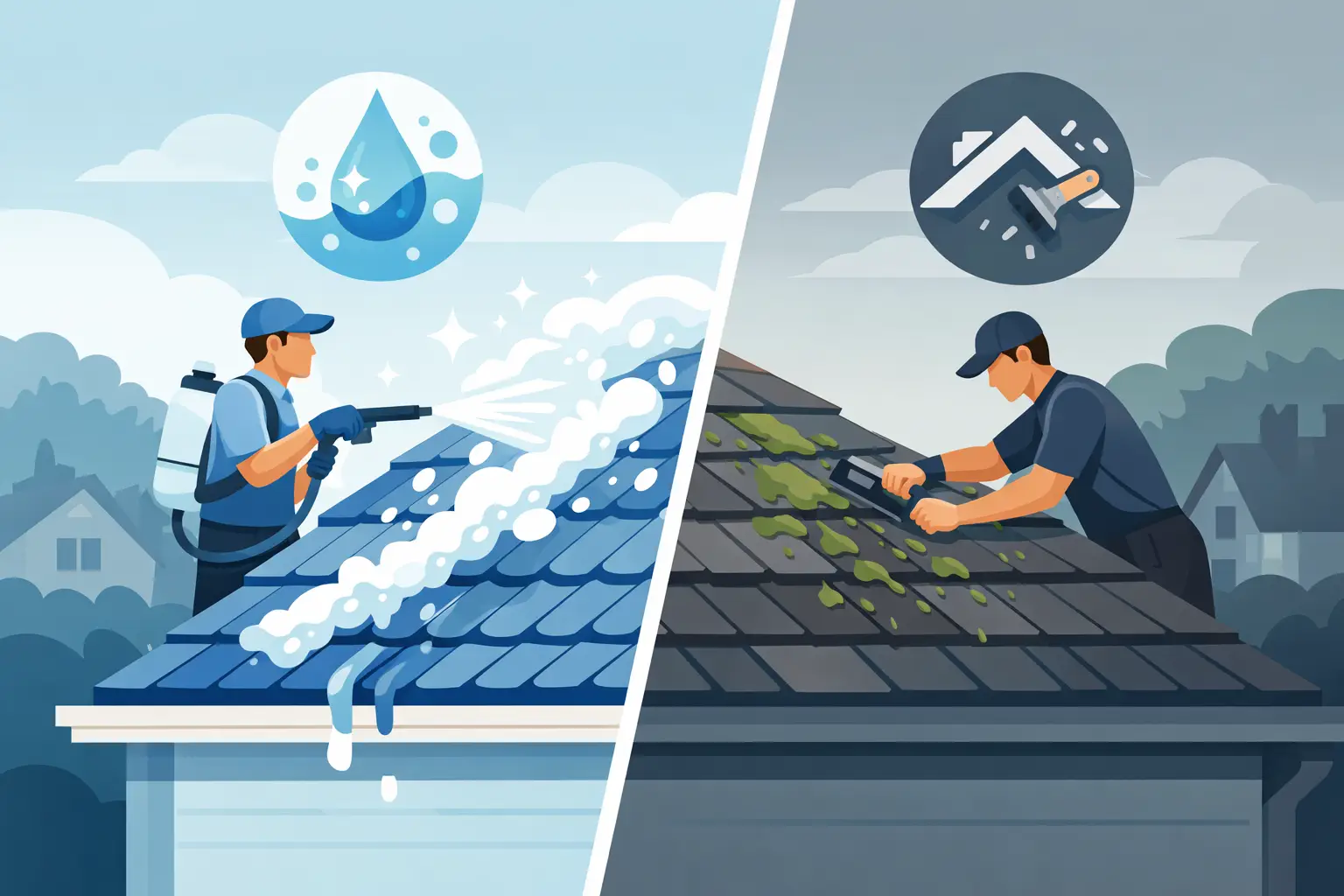
Soft washing uses a low-pressure application of a purpose-made cleaning treatment to kill organic growth such as moss, algae, lichen, and mildew. It is not pressure washing. The solution does the cleaning work, while the water pressure is kept low enough to avoid forcing water beneath shingles or damaging delicate roof materials.
Roof scraping is a manual method. A contractor uses a shaped scraper or brush to lift thicker moss deposits from the roof surface. It gives an immediate visual result because much of the moss is physically removed during the visit. However, scraping alone does not always deal with the roots, spores, or staining left behind.
Neither approach is automatically right for every property. A sound roof with light algae staining may benefit from a carefully controlled soft wash. A roof carrying heavy, thick moss may need some manual removal first, followed by a treatment that helps prevent quick regrowth.
Why Moss Removal Needs More Than a Quick Clean
Moss is not just sitting on top of the roof. It grows into gaps, around flashing, beneath the lower edge of shingles, and along areas where water drains slowly. Pulling it away too aggressively can disturb the roof covering. Leaving it untreated can allow the problem to return quickly.
The debris also has to go somewhere. When moss is scraped from a roof without proper collection and gutter protection, it often lands in the gutters. That can block outlets and downspouts, leading to overflowing water during the next heavy rain. Water then runs down walls, onto fascia boards, or behind the guttering where damage can develop out of sight.
That is why roof cleaning should be treated as part of exterior maintenance, not as a stand-alone cosmetic job. The roof, gutters, downspouts, fascia, and soffits all need to be considered together.
When Soft Washing Is the Better Option
Soft washing is often the safer choice for asphalt shingle roofs, particularly where the issue is algae, black streaking, light moss, or lichen staining. High-pressure cleaning can remove the protective granules from shingles and shorten their service life. A proper soft wash avoids that risk by using low pressure and a suitable cleaning solution.
The treatment kills the biological growth rather than simply moving it elsewhere. Some dead moss and lichen may take time to weather away after treatment, especially where it has built up over several years. That slower finish can concern homeowners who expect a roof to look brand-new the same day, but patience is usually safer than aggressive cleaning.
Soft washing can also be useful on roofs where walking directly on the covering should be kept to a minimum. Reducing foot traffic helps limit the chance of cracked tiles, scuffed shingles, or disturbed flashing. The exact method still depends on roof pitch, access, material condition, and nearby landscaping.
The limits of soft washing
Soft washing is not a cure for a failing roof. It will not repair cracked shingles, loose ridge caps, worn flashing, or rotten roof decking. Cleaning can also expose defects that moss and dirt had been hiding. That is not a reason to avoid the work. It is a reason to inspect the roof before any cleaning begins.
Cleaning treatments must also be applied responsibly. Plants, lawns, patios, windows, and drainage areas should be protected, and runoff should be controlled. A careless application can damage landscaping or leave residues where they should not be.
When Roof Scraping Has a Place
Roof scraping can be useful where moss has formed a deep, dense layer that would otherwise fall away in large clumps after treatment. Removing the worst of that material by hand can reduce the weight on the roof and keep large amounts of debris from entering the gutters later.
It is also helpful around areas where moss has built up at the bottom of a roof slope, near valleys, behind chimneys, or around roof penetrations. These are places where trapped debris can slow water flow and make it harder to see the condition of the roof beneath.
The key word is careful. A scraper should be suited to the roof material and used in a direction that does not catch underneath shingle edges or tiles. Harsh wire brushes, blades, and forceful scraping can dislodge granules, crack brittle tiles, or damage waterproofing details. On older roofs, the risk is greater.
Why scraping alone often falls short
A roof can look clean immediately after scraping but still carry moss spores and root-like growth in the surface. Without a follow-up treatment, regrowth can be much quicker than expected. Scraping also creates a large amount of loose debris, which needs to be collected before it can block gutters or downspouts.
For that reason, the best result on a heavily moss-covered roof is often a combination: controlled manual removal of the thickest deposits, followed by a low-pressure treatment. The roof is not attacked with excessive force, and the underlying growth is addressed rather than left to return.
Roof Material Changes the Decision
Asphalt shingles need the most caution. Their surface granules protect against weather and sunlight, so pressure washing and hard scraping are poor choices. Soft washing, carried out with the correct solution and low pressure, is generally the preferred approach for organic staining.
Concrete or clay tiles can withstand different methods, but they are not indestructible. Older tiles may be porous, brittle, or already cracked. Walking over them carelessly or scraping at a bad angle can cause damage that is more expensive than the cleaning job.
Metal roofs usually shed moss more easily, but seams, coatings, fasteners, and drainage channels still need attention. A treatment may be enough for light growth, while manual removal should be limited to areas where it can be done without scratching the finish.
Slate requires specialist care. It can last for generations, but individual slates can crack if handled poorly. The roof structure and fixing method matter as much as the slate itself. This is not a surface to tackle with a high-pressure washer or improvised scraping tools.
What a Proper Roof Cleaning Visit Should Include
Before choosing a method, the contractor should assess the roof rather than offering the same clean for every property. That assessment should look for loose or damaged materials, failing flashing, blocked valleys, signs of leaks, and whether the gutters can safely handle any debris removed from above.
A thorough job should also include protection for the surrounding property. Gutters may need to be cleared before and after the roof work. Downspouts should be checked for flow, and fallen moss should be removed from paths, patios, and garden areas. If gutter brackets, fascia boards, or joints are already failing, cleaning alone will not solve the water-management problem.
This is where an experienced exterior maintenance contractor offers better value than a clean-only service. Steve’s Gutters approaches roof and gutter work as connected parts of the same system, with the ability to identify drainage issues and repairs instead of leaving a homeowner with a clean roof and blocked gutters.
Questions to Ask Before Booking
Ask what method is proposed for your specific roof material and why. A reliable contractor should be able to explain whether they expect to scrape, soft wash, or use both methods, and what result you should expect immediately versus over the following weeks.
You should also ask how gutters and downspouts will be protected and cleared, how plants and surrounding surfaces will be safeguarded, and whether the contractor is insured for roof work. If a quote seems unusually cheap, check whether it includes debris removal, gutter clearing, and a roof inspection rather than only a quick surface treatment.
Be cautious of anyone promising to blast a roof completely clean in a short visit. Fast results achieved with excessive pressure can create costly damage that does not show up until the next spell of heavy rain.
A clean roof should leave your property safer, not create a new problem at the gutter line. Choose the method that suits the roof in front of you, and make sure the work includes the careful inspection and cleanup that protects the rest of the home.
Recommended Posts
Seamless Versus Sectional Gutters: Which Is Best?
October 16, 2026
Can Dirty Gutters Attract Pests? Yes, Here’s Why
October 14, 2026
A Guide to Replacing Fascias on Your Home
October 12, 2026