

Can Dirty Gutters Attract Pests? Yes, Here’s Why

by
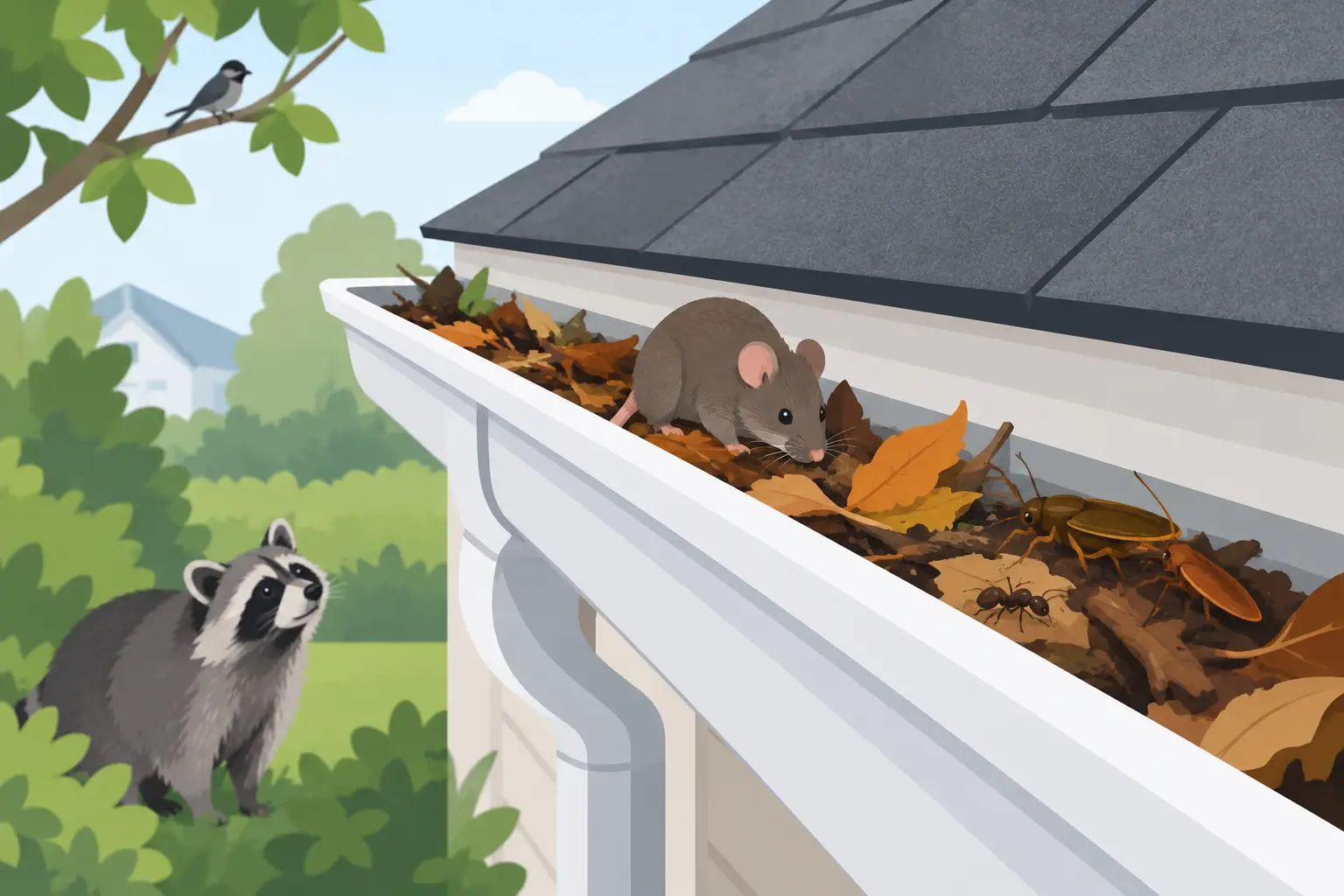
A gutter full of wet leaves may look like a simple cleaning job, but it can become a comfortable place for unwanted visitors. Can dirty gutters attract pests? Yes. Blocked gutters can hold standing water, rotting debris, and nesting material that encourages insects, birds, and small animals to settle close to your home.
The gutter itself is not usually the main attraction. What draws pests is the damp, sheltered environment created when water cannot drain away properly. Left alone, a small blockage can lead to overflowing water, damaged roofline materials, and a pest issue that is much harder to spot from ground level.
Why dirty gutters attract pests
Healthy gutters should carry rainwater quickly from the roof and through the downspipes. When leaves, moss, twigs, roof grit, and other debris collect, water pools behind the blockage. That standing water is the first problem.
Mosquitoes can breed in still water, particularly during warmer months. Flies and other insects are drawn to decomposing organic material, while wasps may use sheltered roofline gaps near clogged gutters to build nests. A dirty gutter does not guarantee an infestation, but it creates conditions pests are far more likely to use.
Wet debris can also become a nesting base. Birds may pull leaves and moss from gutters to build nests elsewhere around the roof, while squirrels and rodents can use overhanging branches, damaged soffits, or loose gutter sections as routes toward the roof space. If the guttering is overflowing regularly, the dampness may soften timber fascias or expose weak points around the eaves.
That is why a proper gutter service is more than removing what can be seen from a ladder or clearing one obvious patch. The downpipes, outlets, gutter joints, brackets, fascias, soffits, and nearby roof areas all need checking.
The pests most commonly linked to blocked gutters
Mosquitoes and moisture-loving insects
Standing water in a blocked gutter can provide a breeding spot for mosquitoes. It does not take a large pond of water to cause trouble. A low section of gutter holding water after every shower can be enough, especially where leaves prevent it from drying out.
Gnats, flies, and other insects may also gather around wet, decomposing matter. If you notice more insect activity around upstairs windows, eaves, or a conservatory roof, it is worth checking whether the guttering is holding water.
Birds and wasps
Birds often investigate gutters because they offer height, cover, and nesting material. A bird nest inside a gutter or downpipe can stop water flow completely. In some cases, it may be necessary to wait until nesting has finished before any work is carried out, depending on the species and local wildlife rules. A professional should assess the situation before attempting removal.
Wasps favor protected places around the roofline. A gutter blockage is not necessarily the nest location, but overflowing water and accumulated debris can make the surrounding area more attractive. Never try to clear a suspected wasp nest yourself from a ladder.
Rodents and squirrels
Rats and mice are usually looking for food, warmth, and access into a building rather than living inside a gutter. However, clogged gutters can contribute to the problem when they cause water damage around eaves, roof edges, or wall openings. Deteriorated fascia boards, loose soffits, and gaps behind guttering can become entry points.
Squirrels can cause similar issues, particularly where tree branches touch or hang over the roof. Keeping gutters clear will not replace proper pest control or tree management, but it removes one avoidable source of damp and hidden roofline damage.
When a blocked gutter becomes a bigger property problem
Pests are only one reason to deal with dirty gutters promptly. Overflowing water runs down walls instead of through the drainage system. Over time, that can stain brickwork, damage render, saturate foundations, and leave damp patches inside the property.
At roof level, constant overflow can rot timber fascia boards and affect soffits. On homes with UPVC roofline, the boards themselves may be more resistant to moisture, but blocked gutters can still affect joints, brackets, seals, and the timber behind older installations. Heavy debris also adds weight. If a gutter bracket pulls loose, the gutter may sag and hold even more water.
Downpipes deserve equal attention. A gutter can look clear along the roof edge but still overflow because the downpipe is blocked below the outlet. Water may back up silently until the next heavy rainfall, when it spills over the front of the gutter and causes obvious damage.
For commercial properties, these issues can affect entrances, walkways, customer areas, and exterior walls. Regular inspection is often cheaper and less disruptive than responding after a leak has developed.
Signs your gutters may be attracting pests
You do not need to climb a ladder to spot every warning sign. Look for water spilling over the gutter during rain, plants growing from the gutter line, dark staining beneath the eaves, or visible leaves packed around outlets. Damp smells in an upstairs room or loft can also point to a leak around the roofline.
Pest activity may be more noticeable early in the morning or toward dusk. Watch for birds repeatedly landing in the same section of gutter, insects gathering around the eaves, or scratching noises in the roof space. These signs do not always mean the gutters are the cause, but they are a sensible reason to arrange an inspection.
A gutter that has pulled away from the fascia, visibly sags, or has water sitting in it on a dry day needs attention. Cleaning may solve the issue, but sometimes the fall is wrong, a joint has failed, or the brackets need replacing. Simply removing debris without correcting the fault can mean the problem returns quickly.
Cleaning alone is not always enough
A quick vacuum clean can remove loose leaves from accessible gutter runs, but it may not reveal damage, blocked downpipes, or failing connections. This is where a hands-on inspection matters. The aim should be to get water flowing properly and identify anything likely to cause repeat blockages or leaks.
A thorough service should clear the gutter channels and outlets, check that downpipes are flowing, remove build-up where it is safe to do so, and inspect for sagging sections, loose brackets, cracked joints, and roofline damage. If repairs are needed, dealing with them at the same time can prevent another callout after the next spell of heavy rain.
There are times when gutter replacement is the better value option. Old cast iron can be repaired in some cases, while aluminum and UPVC systems may need new sections where they are badly distorted or repeatedly leaking. The right answer depends on the condition of the existing system, not just the visible blockage.
How often should gutters be checked?
Most homes benefit from a gutter check at least once or twice a year, commonly in late fall after leaf drop and again in spring. Properties near mature trees, wooded areas, or moss-heavy roofs may need more frequent cleaning. Flat roofs, extensions, conservatories, and complex rooflines can also collect debris faster than a simple house gutter run.
After a major storm, check from the ground for overflowing water, fallen branches, or loose guttering. Do not put a ladder against damaged gutters or attempt high-level clearing without the right equipment and experience. Working around roof edges, wet surfaces, and hidden nests carries real risk.
Steve’s Gutters approaches gutter work as a complete exterior maintenance job, with cleaning, downpipe clearing, repairs, and roofline checks where needed. That helps homeowners and property managers address the cause of recurring blockages, rather than paying repeatedly for a surface-level clean.
Clear gutters will not solve every pest issue, but they remove standing water, damp debris, and avoidable shelter at the edge of your property. If your gutters are overflowing, sagging, or showing signs of nesting activity, arranging a proper inspection now can protect your home before a minor blockage turns into water damage or an unwanted pest problem.
Recommended Posts
Seamless Versus Sectional Gutters: Which Is Best?
October 16, 2026
A Guide to Replacing Fascias on Your Home
October 12, 2026
Driveway Jet Washing Benefits for Your Property
October 10, 2026