

A Guide to Replacing Fascias on Your Home

by
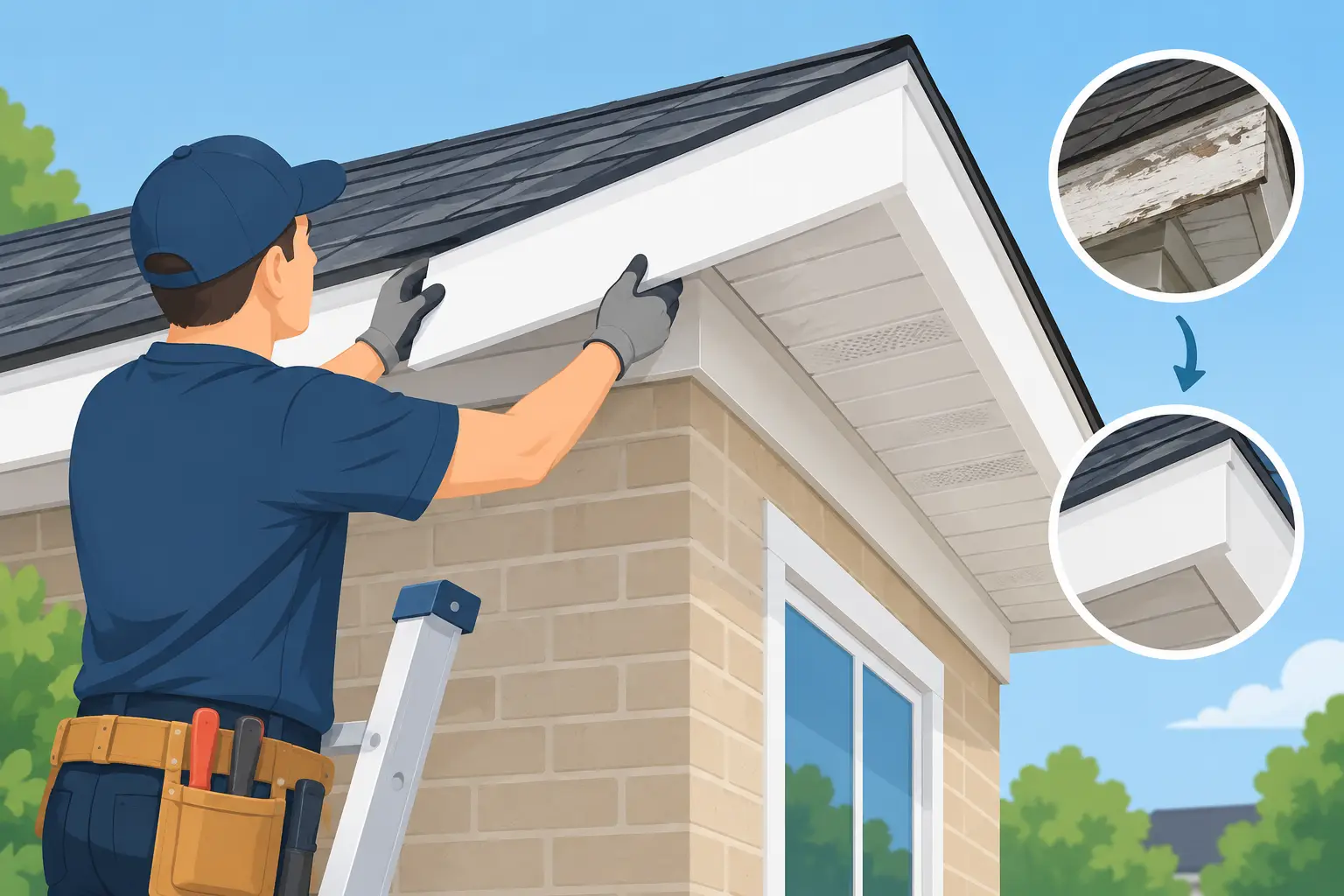
A guide to replacing fascias starts with one simple question: is the board itself failing, or is it showing the effects of a gutter problem that has been left too long? Fascia boards sit at the roof edge, behind the gutters. When they rot, split, sag, or pull away, they can no longer provide a sound fixing point for the guttering. That is when a small overflow can turn into damp walls, damaged roof timbers, and a much larger repair bill.
For most homeowners, fascia replacement is not a job to judge from ground level alone. A proper inspection should include the gutters, downpipes, soffits, roof edge, and the condition of the timber behind any existing cladding. The aim is to fix the source of the problem, not simply cover it up.
When Fascias Need Replacing
Fascias do a lot of work in a small space. They give the roofline a clean finish, support the bottom row of roof tiles, provide a fixing point for gutters, and help protect the exposed ends of roof rafters from rain. Traditional timber fascias can last for many years, but only if paintwork and guttering are maintained.
Peeling paint alone does not always mean replacement is necessary. It may be possible to prepare and repaint sound timber. Replacement is more likely when the wood feels soft, has deep cracks, shows black staining around gutter brackets, or has started to bow. Gutters that slope incorrectly, pull away from the roofline, or repeatedly overflow are also warning signs.
Look closely after heavy rain. Water running down the face of the fascia, dripping behind the gutter, or spilling from joints can saturate the board over time. Blocked downpipes are another common cause. Water backs up, rises in the gutter, and finds its way where it should not be.
Check the Cause Before Fitting New Boards
Installing new fascias without correcting the gutter fault is false economy. The new board may look smart, but it will be exposed to the same water damage if the gutter pitch is wrong, outlet is blocked, or roof valley is sending too much water into one section.
A thorough roofline check should establish whether gutters are clear and securely fixed, downpipes are flowing freely, and joints are watertight. It should also identify slipped tiles, damaged felt at the roof edge, or moss buildup that is directing water over the gutter instead of into it.
This matters particularly on extensions, conservatories, and properties with older gutter systems. A section of fascia can fail because a small area of guttering has been holding standing water for years. Replacing only the visibly damaged section can be appropriate, but only when the surrounding boards and fixing points are genuinely sound.
Choosing Between Timber and uPVC Fascias
The right material depends on the property, budget, and the level of future maintenance you are comfortable with. Timber remains a suitable option for period homes where original details matter. Properly primed, painted, and maintained timber can look excellent, but it needs regular attention. Neglected paintwork is usually where trouble begins.
uPVC fascia boards are the most common choice for modern roofline replacement. They do not rot, do not need painting, and are available in white, black, anthracite gray, and wood-effect finishes. They are practical for many homes, but quality and installation matter. Thin cover boards are designed to cap sound existing timber, not hide rotten timber underneath.
If the old timber fascia is soft or structurally compromised, it should be removed and replaced with a full replacement board. This gives the installer a chance to inspect the rafter ends, roof felt, and ventilation before the new roofline goes on. Covering damaged wood can trap moisture and leave the real problem out of sight.
What a Proper Fascia Replacement Involves
Fascia replacement should be treated as a roofline job, not just a cosmetic upgrade. Safe access comes first. Working at roof level with ladders, gutters, and long lengths of board carries real risk, especially around conservatories, uneven ground, or overhead cables.
The existing gutters and downpipes are normally removed or supported before the old fascia is taken down. This is when hidden issues become visible. The installer should check the condition of the rafters and replace any decayed timber before fitting new boards. If roof felt has deteriorated at the edge, it may need a suitable support tray so rainwater drains into the gutter rather than behind it.
New fascia boards must be fixed straight, securely, and at the correct height for the roof tiles. Soffits are then fitted or renewed as needed, with ventilation included where the roof construction requires it. Finally, the guttering is refitted with the right fall toward the downpipe, securely bracketed, and tested with water.
A neat-looking gutter line is not enough. The practical test is whether water flows freely to the outlet without pooling, overflowing, or running behind the fascia.
Fascias, Soffits, and Gutters Should Work Together
Homeowners often ask whether fascias can be replaced without changing the soffits or gutters. Sometimes they can. If the soffits are in good condition and the gutters are correctly sized, clean, and securely fixed, there may be no reason to replace everything.
In many cases, however, tackling the full roofline at once makes better financial sense. Removing and refitting old gutters adds labor, and tired guttering can spoil the appearance of new fascias. A new fascia also deserves properly positioned brackets and watertight joints, rather than old fittings that are close to failure.
There is no one-size-fits-all answer. A well-maintained aluminum or cast-iron gutter system may be worth retaining, particularly on a character property. On a standard home with aging plastic guttering, replacing fascias, soffits, and gutters together can provide a cleaner finish and reduce the chance of another access job in a few years.
Common Mistakes to Avoid
The most expensive mistakes are usually the ones hidden behind a fresh exterior finish. Avoid fitting uPVC over rotten timber, using fascia boards as a substitute for proper roof repairs, or reusing gutters that are cracked, poorly sloped, or full of debris.
Another issue is poor ventilation. Some roofs need airflow at the eaves to help control condensation in the loft. Blocking every gap during a roofline upgrade can create moisture problems above the ceiling, even if the outside of the home looks perfect. The correct ventilation arrangement depends on the roof design and insulation, so it should be assessed rather than guessed.
Do not overlook cleaning either. New gutters and fascias will not stay trouble-free if leaves, moss, and silt are allowed to block outlets. Regular gutter cleaning and downpipe checks are cheaper than repeated water damage repairs.
When to Call a Professional
Minor painting or cleaning may be manageable from ground level, but fascia replacement is best left to an insured exterior maintenance specialist. The work involves access equipment, roof-edge safety, gutter alignment, and the ability to spot damage that is not visible from below.
A reliable contractor should explain what has failed, whether the board needs full replacement or can be repaired, and what will happen to the guttering. Ask whether rotten timber will be removed, how ventilation will be handled, and whether the gutters will be checked and tested before the job is signed off. Clear answers are a good sign that the work is being planned properly.
New fascias should give your home more than a tidier roofline. They should provide a dry, secure fixing for gutters and protect the roof edge for years to come. If you have noticed overflowing gutters, stained boards, or sections pulling away, arrange an inspection before the next spell of heavy rain turns a manageable repair into hidden structural damage.
Recommended Posts
Seamless Versus Sectional Gutters: Which Is Best?
October 16, 2026
Can Dirty Gutters Attract Pests? Yes, Here’s Why
October 14, 2026
Driveway Jet Washing Benefits for Your Property
October 10, 2026