

Seamless Versus Sectional Gutters: Which Is Best?

by
A gutter can look fine from the ground while quietly sending water behind the fascia, down exterior walls, or toward the foundation. That is why the choice between seamless versus sectional gutters matters more than most homeowners expect. Both can direct rainwater safely away from a property when fitted correctly, but they differ in where they are likely to leak, how they are repaired, and what they cost over time.
For most homes, the right answer comes down to the shape of the roofline, the material you want, the condition of the existing system, and whether you are solving a one-off problem or replacing aging gutters for the long haul.
Seamless Versus Sectional Gutters: The Main Difference
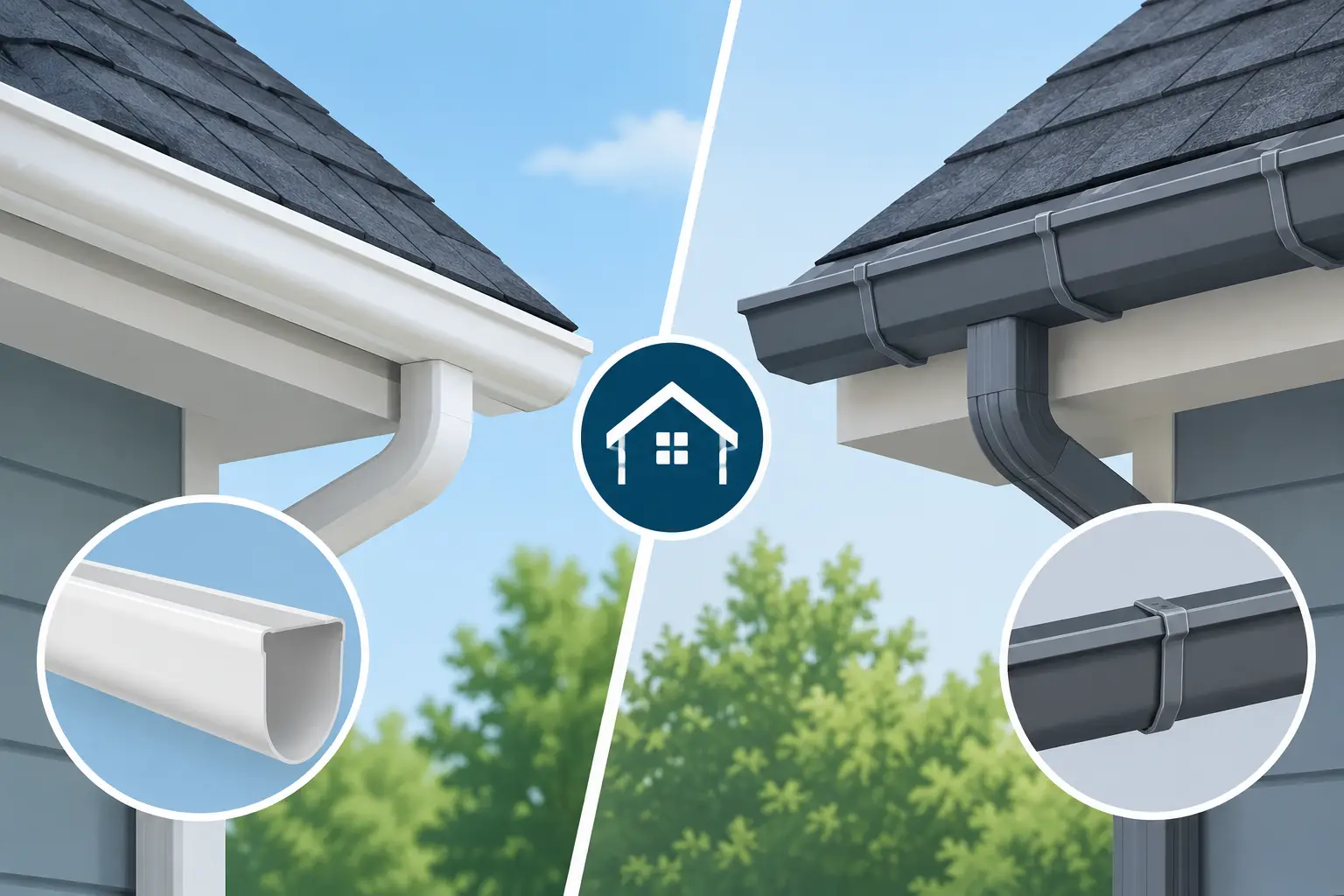
Sectional gutters are made from pre-cut lengths joined together with connectors. You may see these in vinyl, aluminum, steel, and other common gutter materials. They are widely available and can be installed in standard lengths around straightforward rooflines.
Continuous-run gutters are formed to the exact length of each roof edge, usually on site using a specialist machine. They still need joints at corners, outlets, and end caps, but there are far fewer joins along the straight runs. Fewer joins generally means fewer places for water to work through as the system ages.
Neither type will perform well if it has the wrong fall, undersized downspouts, loose brackets, or persistent blockages. The gutter itself is only one part of the drainage system. A proper assessment should also look at the roof edge, fascia boards, downpipes, outlets, and where the water finishes once it reaches ground level.
Why Joints Are Often the Deciding Factor
Every joint in a sectional system relies on a connector and sealant to remain watertight. Sun, frost, standing water, movement, and debris all take their toll. Over time, sealant can shrink or split, and sections can shift slightly as brackets loosen or the gutter fills with heavy wet leaves.
This does not mean sectional gutters are automatically poor quality. A well-installed system with sound brackets and regular cleaning can give good service for years. The trade-off is maintenance. More joints create more points that should be inspected, cleaned, and resealed when necessary.
Continuous-run gutters reduce this concern along long straight sections. That is particularly useful on larger detached homes, extensions, garages, and commercial properties where a lengthy roof edge would otherwise need several connections. With fewer interruption points, water has a cleaner route toward the outlet.
Corners and downpipe outlets still deserve attention on either system. These are natural stress points, and a blocked downpipe can force water back up until it escapes from a joint, corner, or overflowing front edge.
Cost: Upfront Price Versus Long-Term Value
Sectional gutters usually have the lower upfront material cost. Individual lengths can be bought easily, and a damaged section can often be replaced without changing the whole run. For a small shed, short porch roof, or simple repair, this can make good financial sense.
Continuous-run aluminum gutters normally cost more to install because they are measured and formed for the property. The installation is more specialized, and access equipment may be needed depending on height and layout. However, the added cost can be worthwhile when replacing a full system, especially where repeated joint leaks have become a frustration.
The cheapest option is not always the best value. If a sectional gutter is chosen solely to reduce the first bill but needs frequent resealing, cleaning, and callouts, the saving can disappear. On the other hand, fitting a custom-made system to a small, temporary structure may be more than the job requires.
A sensible quote should set out what is being replaced, the material proposed, the number and size of downpipes, access needs, and whether fascia repairs are required before new gutters are fitted. New gutters fixed onto rotten or loose fascia boards are unlikely to stay correctly aligned.
Installation Quality Matters More Than the Label
A gutter must slope gently toward its outlet. Too little fall allows standing water and debris to collect. Too much fall can look untidy and may leave the high end too close to the roof edge, allowing water to overshoot in heavy rain. The correct position depends on the roof covering, pitch, and the volume of water expected from that section of roof.
Brackets need secure fixing at suitable intervals. This becomes particularly important in areas with snow, heavy rain, or mature trees. A gutter loaded with wet leaves and trapped water is far heavier than it appears from the ground.
Downpipe capacity also matters. A wide gutter feeding into one undersized or blocked downpipe can still overflow during a storm. Properties with large roof areas, conservatories, awkward valleys, or extensions may need extra outlets or revised pipe positions to cope properly.
This is why replacement work should not be treated as a simple swap of old plastic for new plastic. Before installation, the contractor should identify why the old system failed. The cause might be split joints, but it could just as easily be poor drainage, sagging fascia, missing brackets, or roof moss continually washing into the outlets.
Repairs Are Usually Easier With Sectional Gutters
One advantage of sectional gutters is straightforward spot repair. If one length cracks after an impact or a joint begins to drip, it is often possible to replace or reseal that local section. This can be useful where most of the system is still in sound condition.
Continuous-run gutters can also be repaired. Small holes, loose outlets, damaged corners, and bracket problems are all repairable in many cases. But if a long run is badly bent, severely corroded, or damaged by a falling branch, replacing that run may require it to be formed again to size.
Material makes a difference here. Vinyl is affordable and does not rust, but it can become brittle in harsh weather and may expand or contract noticeably. Aluminum is lightweight, durable, and a popular choice for formed gutter runs. Steel is strong but needs suitable protection against corrosion. Cast iron has a traditional appearance that suits some older properties, though it is heavier and requires more care to keep its finish in good order.
The best repair decision depends on the age of the system. Repairing one failed joint on a relatively new gutter is sensible. Repeatedly patching a system with multiple leaks, sagging runs, and tired fascia boards is usually false economy.
Which Option Suits Your Property?
Sectional gutters can be a sensible fit for modest budgets, short roof runs, outbuildings, and isolated repairs. They are practical where future changes may be likely or where matching an existing system is the priority.
Continuous-run gutters are often the stronger choice for full replacements on homes with long, uninterrupted rooflines. They offer a tidier finish and reduce the number of straight-run joints that need ongoing attention. They are especially worth considering if you have experienced recurring drips at connectors or staining below old gutter joints.
For period properties, appearance may influence the choice as much as drainage performance. Cast iron-style systems can preserve the look of an older building, while aluminum or UPVC may be better suited to newer homes, extensions, and low-maintenance rooflines.
Whatever material you choose, do not overlook cleaning. Gutters full of moss, leaves, roof grit, and nesting material will overflow whether they have two joints or twenty. Downpipes need checking too, because a hidden blockage can make a sound gutter look faulty.
Get the Whole Roofline Checked
When water is appearing where it should not, a close inspection is more useful than guessing from ground level. Look for staining on walls, damp patches near ceilings, drips at joins, overflowing corners, sagging sections, and water pooling near the foundation. These signs can point to a gutter problem, but they can also reveal issues with fascia, roof coverings, or drainage below.
Steve’s Gutters approaches replacement and repair work with the full system in mind: gutter runs, outlets, downpipes, brackets, and roofline condition. That helps prevent a clean-looking installation from hiding the same drainage problem underneath.
If your gutters are leaking at several points, pulling away from the roofline, or overflowing after every heavy shower, arrange a proper assessment before the next spell of wet weather. The right system is the one that fits your property, drains freely, and can be maintained without turning a small leak into expensive water damage.
Recommended Posts

Can Dirty Gutters Attract Pests? Yes, Here’s Why
October 14, 2026
A Guide to Replacing Fascias on Your Home
October 12, 2026

Driveway Jet Washing Benefits for Your Property
October 10, 2026