

Homeowner Guide to Gutter Maintenance


by
You usually notice gutter trouble after the damage starts. Water spills over the edge during a storm, a downspout gushes where it should drain cleanly, or a damp patch appears on an exterior wall. A proper homeowner guide to gutter maintenance starts before that point, because gutters are there to move water away from your roof, siding, foundation, and walkways – and once that system stops doing its job, the repair bill can climb fast.
For most homes, gutter maintenance is not complicated, but it does need to be done properly. The biggest mistake homeowners make is treating it as a quick clean and nothing more. Leaves and sludge are only part of the problem. Loose brackets, failing joints, sagging runs, blocked downspouts, roof moss, and worn fascia can all affect how well your guttering works. If you only remove debris and ignore the rest, you may still end up with leaks and overflow the next time heavy rain hits.
Why gutter maintenance matters more than most homeowners think
Gutters do a simple job, but they protect several expensive parts of a property at once. When water is carried away correctly, your roofline stays drier, the walls below are less likely to stain or saturate, and the ground around the foundation is less likely to erode or hold excess moisture.
When gutters are neglected, the warning signs often seem minor at first. You might see a small drip from a joint or a bit of overflow at one corner. Left alone, those small faults can lead to rotting trim, damaged soffits, mildew on masonry, slippery paths, and in some cases interior damp issues. That is why regular checks are cheaper than waiting for a clear failure.
There is also a timing issue. A gutter that just about copes in light rain can fail badly in a downpour. Many emergency callouts happen because a system looked acceptable in dry weather, but hidden debris or a blocked downspout caused a backup when rainfall increased.
A homeowner guide to gutter maintenance by season
The best maintenance schedule depends on the trees around your property, the roof design, and the age of the gutter system. A house surrounded by mature trees will need more attention than an open-site property. Older gutters with patched joints may also need more frequent checks.
As a general rule, inspect your gutters in spring and again in fall. Spring is a good time to check for winter movement, joint failure, and debris that has built up over wet months. Fall is essential because leaves, seed pods, and moss can quickly block water flow.
If your home sits under heavy tree cover, you may need additional checks during late fall or after storms. It depends on what is dropping onto the roof. Pine needles, moss, and small twigs can be just as troublesome as broad leaves because they compact into a dense blockage.
What to look for during a gutter inspection
A useful inspection is not just a glance from the driveway. You want to know whether the whole system is catching water, moving it correctly, and discharging it safely away from the house.
Start with the obvious signs. Overflow marks, staining on the siding, green growth near joints, and puddling at the base of downspouts all suggest the system is underperforming. Look for gutters pulling away from the fascia, sections that dip in the middle, and corners where seals may have failed.
Downspouts matter just as much as the gutters themselves. A clear gutter run still will not work if the downspout is blocked. If water backs up at one end, the blockage may be lower down than you think. You should also check where the water exits. If it drains too close to the foundation, you can still end up with moisture problems even when the gutter is technically clear.
If you can safely see the roofline, watch for moss buildup and slipped roofing material. Gutter problems and roofline problems often show up together. That is one reason experienced contractors do more than vacuum out debris and leave.
Cleaning gutters the right way
Cleaning works best when it is done thoroughly and with the whole system in mind. Removing surface debris is the first step, not the last one. Silt, sludge, and compacted organic matter need to come out as well, especially near outlets where clogs often begin.
After clearing the channel, the gutters should be tested with water to confirm they are flowing properly. This is where hidden issues show up. You may find that a section is holding water because the pitch is off, or that a joint leaks under pressure even though it looked fine when dry.
Downspouts should also be checked and cleared fully. A partial blockage can be deceptive because some water still passes through. During heavy rain, that restriction becomes a backup point and causes overflow.
Homeowners often ask about gutter guards. They can help in some situations, but they are not a cure-all. On homes with certain leaf types or heavy moss, guards can still trap debris on top or allow fine material underneath. They may reduce cleaning frequency, but they rarely remove the need for inspection and maintenance altogether.
Common gutter problems that need more than cleaning
Some issues cannot be solved with a scoop and rinse. If a gutter run is sagging, the brackets may need replacing or refixing. If water leaks from seams or corners, the seals or joints may have failed. If sections are warped, cracked, or badly rusted, repair may only be a short-term fix.
Material matters here. Aluminum, vinyl, steel, and older cast systems all age differently. A newer aluminum system with one leaking joint might be worth repairing. An older installation with multiple weak points may be better replaced section by section or in full. The right answer depends on age, condition, and whether previous repairs have already been attempted.
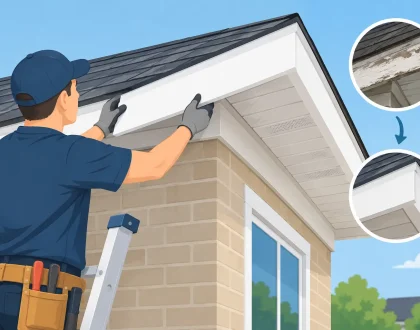
Fascia and soffit condition should not be ignored either. If timber or trim behind the gutter has softened due to long-term leaks, simply reattaching the gutter to damaged material will not hold well. The supporting structure needs to be sound.
Safety matters more than saving an hour
Many homeowners are comfortable doing basic property upkeep, but gutters are one of those jobs where the risk is easy to underestimate. Working at height near roof edges, especially on wet ground or uneven surfaces, is where accidents happen. Conservatories, extensions, and awkward rear access make the job even trickier.
There is also the issue of spotting defects properly. A clean-looking gutter can still be poorly pitched, partly blocked, or coming loose in places that are not obvious without the right access and experience. That is why professional servicing often catches problems a quick DIY clean misses.
If you do inspect your own gutters, keep it to safe ground-level checks unless you are fully equipped and confident. Saving money is one thing. A fall, damaged roofline, or broken gutter section costs more.
When to call a professional
Call a professional if you see repeated overflow, leaking joints, sagging sections, blocked downspouts that do not clear easily, or signs of rot around the roofline. The same applies if your property has difficult access, second-story elevations, conservatory roofing below the gutters, or older systems that may need repair work alongside cleaning.
This is where a specialist service has real value. Proper gutter maintenance is not just about removal of debris. It is inspection, flow testing, downspout clearing, checking brackets and seals, and being able to repair or replace sections if needed. A provider that only offers a quick vacuum clean may leave you with the original problem still in place.
For homeowners who want the job done once and done properly, experienced companies such as Steve’s Gutters focus on the whole roofline, not just what is easy to reach. That approach usually saves money over time because issues are found early and fixed before water damage spreads.
Making gutter maintenance part of routine home care
The most cost-effective approach is to treat gutters like any other protective part of the house. They do not need constant attention, but they do need scheduled checks. If you wait until water is pouring over the side, the maintenance window has already passed.
A simple habit works well. Check the system in spring and fall, watch how it performs during heavy rain, and act on small signs before they turn into repairs to siding, fascia, or foundations. Homes in leafy areas may need more frequent service, while newer homes in open locations may need less. It depends on the property, but no home benefits from neglect.
Good gutter maintenance is not glamorous, and that is exactly the point. It is quiet prevention. When it is done right, nothing dramatic happens – and that is what every homeowner should want.
Recommended Posts

Seamless Versus Sectional Gutters: Which Is Best?
October 16, 2026

Can Dirty Gutters Attract Pests? Yes, Here’s Why
October 14, 2026
A Guide to Replacing Fascias on Your Home
October 12, 2026