

Why Is Rainwater Overflowing Your Guttering?

by
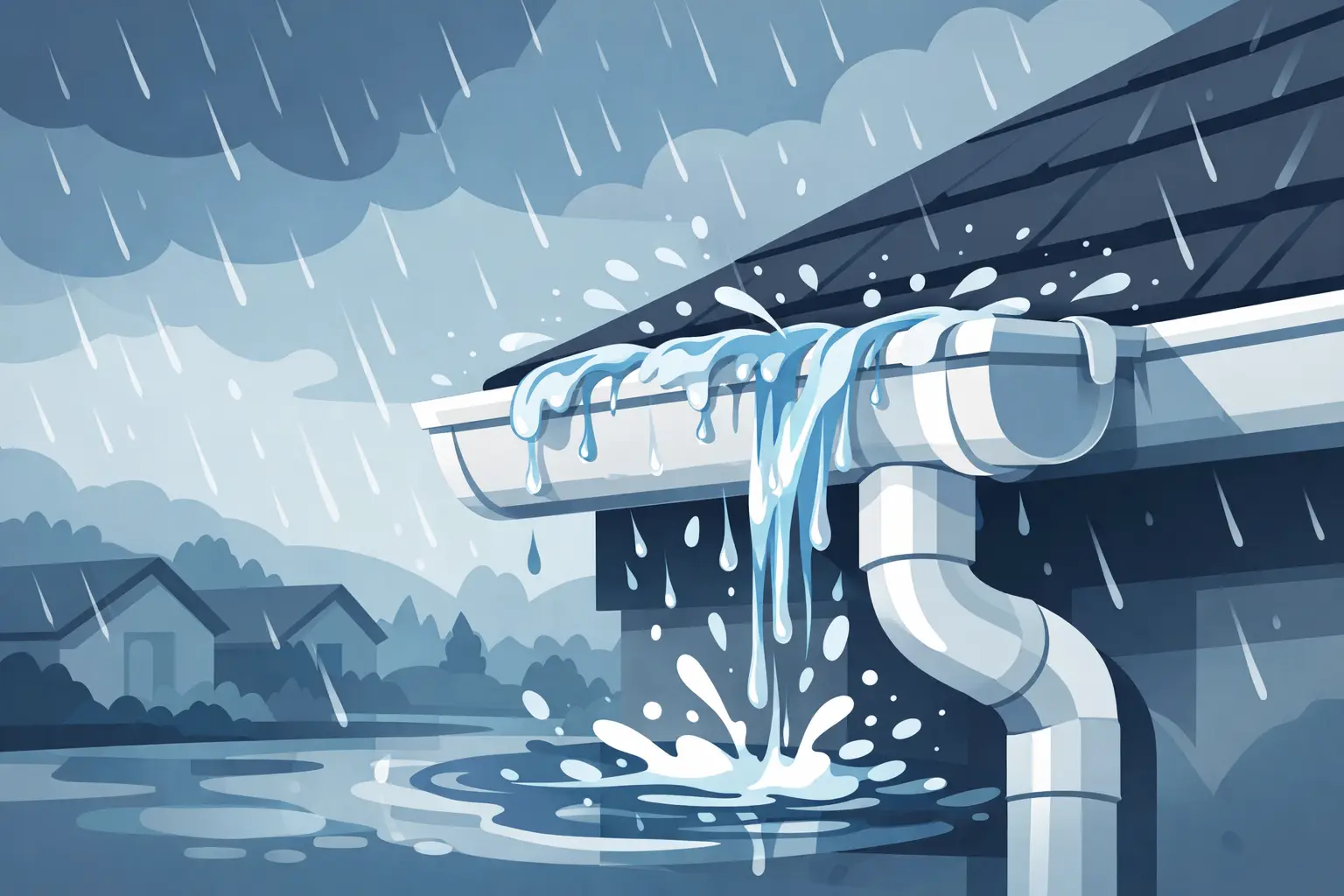
Water pouring over the front of a gutter during heavy rain is more than an annoyance. It can soak brickwork, stain siding, flood paths, rot timber, and send water toward the foundation. If you are asking, “why is rainwater overflowing guttering?”, the answer is usually not simply that it rained too hard. A properly sized, clear, and correctly fitted gutter system should carry ordinary heavy rainfall safely to the downspouts.
The key is finding where the water is being held back, diverted, or allowed to escape. Some causes need a straightforward clean. Others point to loose brackets, a failed joint, poor gutter pitch, or a system that is too small for the roof. Sorting the real cause early is usually far less expensive than repairing water damage later.
Why Is Rainwater Overflowing Guttering During Rain?
Most overflowing gutters come down to one of three things: a blockage, a drainage problem, or a fitting issue. The location of the overflow gives a useful clue. Water spilling over at one point may indicate a local blockage or sag. Water overflowing along most of the run often suggests that the gutter is not draining toward the downspout properly, or that the downspout itself is blocked.
Do not assume a gutter is clear just because you cannot see leaves from ground level. Debris often collects at the outlet where the downspout connects, beneath a layer of silt, moss, and wet leaf matter. Water then fills the gutter and has nowhere to go but over the edge.
Leaves, Moss, and Roof Debris
Leaves are the usual suspect, especially near mature trees, but they are not the only problem. Moss washed from a roof can form a dense plug in a gutter or downspout. Small twigs, broken roof tiles, bird nesting material, and even tennis balls can stop water flow.
A gutter can also look relatively clear while a compacted layer of mud sits in the bottom. This reduces the available capacity and slows the water before it reaches the outlet. During a downpour, the remaining channel is simply not large enough to cope.
Roof moss deserves particular attention. It holds moisture, breaks away in clumps, and repeatedly returns to the gutter after every spell of wet weather. Clearing the gutter without addressing heavy moss growth on the roof may only provide a short-term fix.
A Blocked or Poorly Draining Downspout
When a downspout is blocked, the gutter fills from the outlet backward. You may see water rising near the downspout, overflowing at a joint, or backing up beneath the roof edge. The blockage may be at the top bend, in the vertical pipe, or underground where the downspout joins a drain.
A quick check during dry weather is useful. Water poured carefully into the gutter near the outlet should travel freely through the downspout and discharge where expected. If it pools, trickles slowly, or comes back out at a joint, the downspout needs clearing or further investigation.
Downspouts can also be too few or too narrow for a large roof area. This is more common on extensions, conservatories, garages, and altered rooflines where the original drainage arrangement was never updated.
Incorrect Gutter Pitch
Gutters are not meant to sit perfectly level. They need a slight fall toward the downspout so rainwater can drain away. If brackets have moved, timber fascia boards have deteriorated, or the gutter was installed without enough pitch, water will sit in low spots rather than flow.
Standing water adds weight. Over time, that weight can pull the gutter farther out of line, creating a bigger sag and making overflow more likely. You may notice a section that visibly dips, water remaining in the gutter days after rain, or overflow occurring well away from the downspout.
Correcting the pitch means resetting the brackets to create a consistent fall. It is not always a simple case of pushing the gutter back into place, particularly where the fascia board is soft, split, or unable to hold fixings securely.
Gutter Damage That Lets Water Escape
Not every apparent overflow is caused by a blockage. Water can escape through failed joints, cracks, loose end caps, or gaps where two gutter sections meet. In heavy rain, these faults can look very similar to water spilling over the front edge.
Look for drips from the underside of the gutter when rain is light or has just stopped. A leak at a union joint often leaves a dark damp patch on the wall directly below. Cracked plastic can be difficult to spot from the ground, while older cast iron gutters may rust through at seams or low points.
Sealant can sometimes help with a minor joint issue, but it is not a cure for distorted fittings, badly cracked sections, or gutters pulling away from the building. A proper repair addresses the cause, including worn seals, failed brackets, and any damaged gutter length.
Loose Brackets and Failing Fascia Boards
A gutter is only as secure as the brackets and fascia behind it. Brackets can snap, pull loose, or become spaced too far apart. This lets the gutter bow under the weight of water and debris. Once it sags, water slows down, collects, and eventually spills over.
If the fascia board is rotting, a new bracket may not hold for long. This is why a full roofline check matters. Replacing a broken clip without checking the board behind it can leave the same problem waiting for the next period of heavy rain.
Signs of trouble include gutters visibly leaning forward, gaps between the gutter and roof edge, peeling paint on timber fascia, and stains below bracket positions. These are worth dealing with before a section of gutter comes loose altogether.
When the Gutter Is Too Small for the Roof
Sometimes the gutter is clean, pitched correctly, and in sound condition, but it still cannot handle the volume of water coming off the roof. A steep roof, a large roof area, or several roof slopes draining into one short run can overwhelm standard guttering in a serious storm.
This can also happen after an extension or conservatory has been added. Water that once drained across a wide gutter run may now be concentrated into one corner. Valleys, where two roof slopes meet, are another common pressure point because they channel a large amount of rain into a small area.
A larger-capacity gutter, an additional downspout, or a revised layout may be the right answer. This depends on the roof design and where the water can safely discharge. Bigger guttering is not automatically necessary, but it is worth considering when recurring overflow happens despite regular cleaning and sound repairs.
What You Can Safely Check From the Ground
A visual check after rainfall can tell you a lot without climbing a ladder. Note whether water overflows near a downspout, at the middle of a run, from a corner, or across the entire length. Check for obvious sagging, detached brackets, leaking joints, and water marks on walls.
Also look at the ground below. Persistent puddles near the foundation, washed-out soil, slippery paths, or damp patches on exterior walls show that the drainage issue is affecting more than the gutter itself.
Avoid leaning ladders against guttering or attempting repairs in wet, windy conditions. Gutters can be fragile, and working at height around a slippery roof edge carries real risk. For upper stories, commercial buildings, or any gutter that looks loose, professional inspection is the sensible option.
The Right Fix Is More Than a Quick Clean
Cleaning is often the first step, but it should not be the only step. A worthwhile gutter service checks the full route water takes: the roof edge, gutter channel, outlets, downspouts, brackets, joints, and fascia condition. That is how you find out whether debris caused the overflow or merely exposed a repair problem that was already there.
At Steve’s Gutters, the approach is to inspect, clear, and repair where needed rather than treating every overflow as a cleaning-only job. For homeowners and property managers, that means clearer advice on whether a blocked downspout needs clearing, a joint needs replacing, or an aging gutter run is ready for renewal.
Regular maintenance is particularly worthwhile in fall, after prolonged windy weather, and where roofs collect moss. Properties near trees may need more frequent attention than open sites. There is no single schedule that suits every building, but waiting until water is pouring down the wall is rarely the best time to act.
A gutter should quietly move rain away from your property. If it is overflowing, treat it as an early warning rather than something to put off until the next storm. A proper inspection now can protect the roofline, walls, and foundation from a much larger repair later.
Recommended Posts

Seamless Versus Sectional Gutters: Which Is Best?
October 16, 2026

Can Dirty Gutters Attract Pests? Yes, Here’s Why
October 14, 2026
A Guide to Replacing Fascias on Your Home
October 12, 2026