

Why Are Gutters Dripping From the Joints?

by
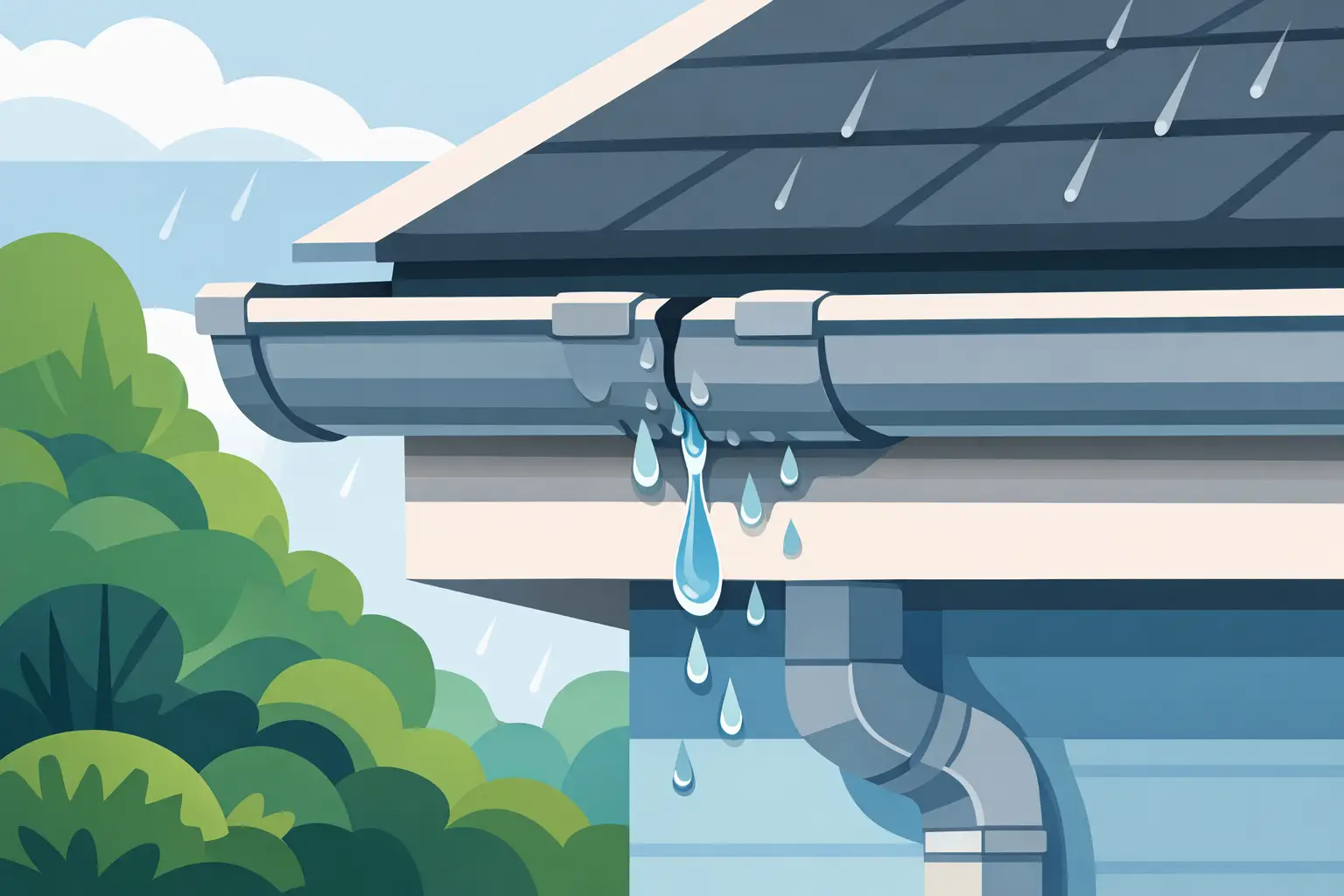
You usually notice it during a steady rain. Not a dramatic overflow, just a regular drip from a gutter joint, corner, or section that should be carrying water away cleanly. If you are asking why are gutters dripping, the answer is usually simple: something is blocked, worn out, loose, or pitched the wrong way. The trick is knowing whether it is a minor repair or a sign the system needs more attention.
Why are gutters dripping in the first place?
A gutter should collect rainwater, move it along the run, and send it down the downspout without leaking from the seams. When water starts dripping from anywhere other than the outlet, it means the system is not staying watertight under load.
In some cases, the cause is obvious. Leaves, moss, and roof grit build up inside the gutter and hold water where it should not sit. In other cases, the gutter itself is the issue. Seals shrink, brackets loosen, joints pull apart, and long runs start to sag. A small drip can look harmless, but repeated leaking can stain walls, soak fascia boards, and leave wet patches around foundations.
That is why a proper inspection matters. A quick clean alone will not solve every leak if the real problem is movement, bad alignment, or failed fittings.
The most common reasons gutters drip
Blockages are forcing water to escape
This is one of the most common causes. When leaves, moss, twigs, and debris collect in the gutter channel, rainwater cannot flow freely to the downspout. Instead, it backs up and finds the weakest point. That may be a joint, an end cap, or a low section where water has been sitting for too long.
This is especially common after storms or during fall, but it can happen at any time if moss from the roof is washing down into the system. If the downspout is blocked as well, the problem gets worse quickly because the gutter fills faster than it can drain.
The gutter joints have worn out
Most sectional gutter systems rely on unions and rubber seals to stay watertight. Over time, those seals harden, crack, flatten, or shift out of place. Once that happens, rainwater starts escaping through the joint instead of staying inside the run.
Temperature changes can make this worse. Gutters expand in heat and contract in cold weather. After enough movement, older joints can start leaking even if they looked fine from the ground a few months earlier.
The gutter is sagging or pitched incorrectly
Gutters are meant to have a slight fall toward the downspout. If they are too flat, water sits in the channel. If they dip in the middle or sag between brackets, water collects in the wrong spots and often drips from seams or over the front edge.
This can happen because brackets have come loose, fixings have pulled away from the fascia, or the original installation was not set at the right angle. It is a common issue on older properties and on runs that have carried standing water for too long.
Cracks, holes, or split sections
Not every drip comes from a joint. Plastic gutters can crack from age, impact, or freezing conditions. Metal systems can corrode and develop pinholes or splits. Even a small opening will leak steadily during rain.
These faults are easy to miss from ground level, especially if the gutter is dirty. What looks like a harmless drip may be coming from a fine crack that only opens when the system fills with water.
Water is overshooting the gutter
Sometimes the gutter is not technically leaking at all. If rainwater is running too fast off the roof, or the gutter is fitted too low or too far forward, water can shoot past the channel and fall straight to the ground. To a homeowner, it still looks like the gutter is dripping or failing.
This is more common on steeper roofs, conservatories, extensions, and properties where roofing work has altered the way water comes off the roofline.
Why are gutters dripping from the joints?
If the leak is coming from a joint specifically, the usual causes are failed seals, movement in the gutter run, or water backing up due to a blockage. It can be one issue or a combination of several.
A blocked gutter puts extra weight on the system. That weight strains the brackets and joints. Once the run begins to move, the seal inside the connector may no longer sit tight. At that point, even moderate rain can produce a steady drip.
This is why joint leaks should not be treated as just a sealing problem. You can replace a union, but if the gutter is full of debris, pitched wrong, or unsupported, the leak often comes back.
When a dripping gutter is more than a small nuisance
A lot of people leave gutter leaks alone because the drip seems minor. The trouble is where that water lands. If it is falling close to the wall, it can leave staining, encourage algae growth, and add moisture to areas that should stay dry. Around doors, patios, and entryways, it also creates slippery surfaces.
On some homes, repeated dripping can affect fascia boards, soffits, render, or brickwork. Around the base of the property, poor drainage can contribute to puddling and soil washout. Commercial buildings have the same problem, often on a larger scale, especially where foot traffic is involved.
The longer the leak continues, the more likely it is that a simple repair turns into a bigger job.
What can be fixed and what usually needs replacing?
There is no one answer because it depends on the age of the system and what caused the leak. A blocked gutter with sound brackets and healthy joints may only need a proper clean and a downspout check. A leaking union can often be repaired or replaced if the surrounding sections are still in good shape.
But there are times when repair is not the best value. If several joints are failing, the gutter line is warped, the brackets are pulling away, or the material has become brittle, replacing sections or the full run is often the more sensible option. Paying for repeat patch repairs on a tired system usually costs more in the long run.
That is one reason experienced gutter specialists do more than vacuum out debris. A proper service should include inspection, cleaning, downspout testing, and the ability to carry out repairs if they are needed.
Signs you should get it checked sooner rather than later
If you can see water dripping in dry weather, that may be trapped water draining from a sagging section. If the leak only appears in heavy rain, the system may be undersized, blocked, or struggling at one low point. If the fascia looks wet or stained, the drip has probably been there for a while.
Other warning signs include overflowing at corners, plants growing in the gutter, water marks on exterior walls, loose brackets, and puddles forming directly below the same spot every time it rains. None of these signs improve on their own.
Can you inspect a dripping gutter yourself?
You can often spot the symptoms from the ground, but diagnosing the real cause is harder without a close look. Buildup at the edge, visible sagging, or water escaping from a joint are all clues, but working at height carries obvious risks.
For most homeowners and property managers, the safer option is to have it inspected properly. That way, you know whether the problem is a blockage, a failed part, or a wider issue with the roofline. A good contractor should explain what they found, what needs doing now, and what can reasonably wait.
The value of fixing the actual cause
A dripping gutter is not always a big repair, but it is rarely a problem worth ignoring. The best result comes from treating the cause, not just the symptom. If the gutter needs cleaning, clean it properly. If the joint has failed, replace it. If the run is badly aligned or worn out, fix the structure instead of trying to seal over the issue.
At Steve’s Gutters, that practical approach is what separates proper gutter service from a quick surface clean. When rainwater is controlled the way it should be, the rest of the property is better protected too.
If your gutters are dripping every time it rains, treat that as your early warning, not something to put off until the damage becomes obvious.
Recommended Posts
Seamless Versus Sectional Gutters: Which Is Best?
October 16, 2026
Can Dirty Gutters Attract Pests? Yes, Here’s Why
October 14, 2026
A Guide to Replacing Fascias on Your Home
October 12, 2026