

When Should Soffits Be Replaced? Key Warning Signs

by
A stained patch beneath the edge of the roof can look minor from the ground. But when water has reached the soffit, the trouble may already extend behind the fascia board, into the eaves, or along the gutter line. When should soffits be replaced? The short answer is when they are soft, damaged, poorly ventilated, or no longer protecting the roof edge from water and pests.
Soffits are the finished panels on the underside of your roof overhang. They help close off the eaves, support airflow through the roof space, and give the roofline a clean appearance. Because they sit directly below the gutters and fascia, they often show the first visible signs of an ongoing leak, overflowing gutter, or failing roof edge.
Replacing soffits at the right time is not just about improving curb appeal. It can prevent a relatively contained roofline repair from becoming rotten wood, damaged insulation, pest entry, or water damage inside the property.
When Should Soffits Be Replaced Rather Than Repaired?
A small localized problem can sometimes be repaired. A loose panel, a cracked vent cover, or a short section damaged by an isolated overflow may not require a full replacement. The key is finding out why the damage happened before covering it up.
Replacement is usually the better option when the material has deteriorated over a wider area, water damage has softened the boards, or the existing system is old enough that another section is likely to fail soon. If the soffits are timber and have been painted over repeatedly, there may be hidden rot beneath the surface. A fresh coat of paint can make the roofline look better temporarily, but it does not restore strength to decayed wood.
It also depends on the condition of the fascia and gutters. Soffits, fascia boards, and gutters work as one system. If a gutter has been leaking behind the fascia for months, replacing only the visible soffit panel may leave wet or weakened timber in place. A proper inspection should check the gutter fall, brackets, joints, downpipes, fascia condition, and the roof edge before deciding on the scope of work.
Signs Your Soffits Need Attention
Soft, Crumbling, or Rotten Areas
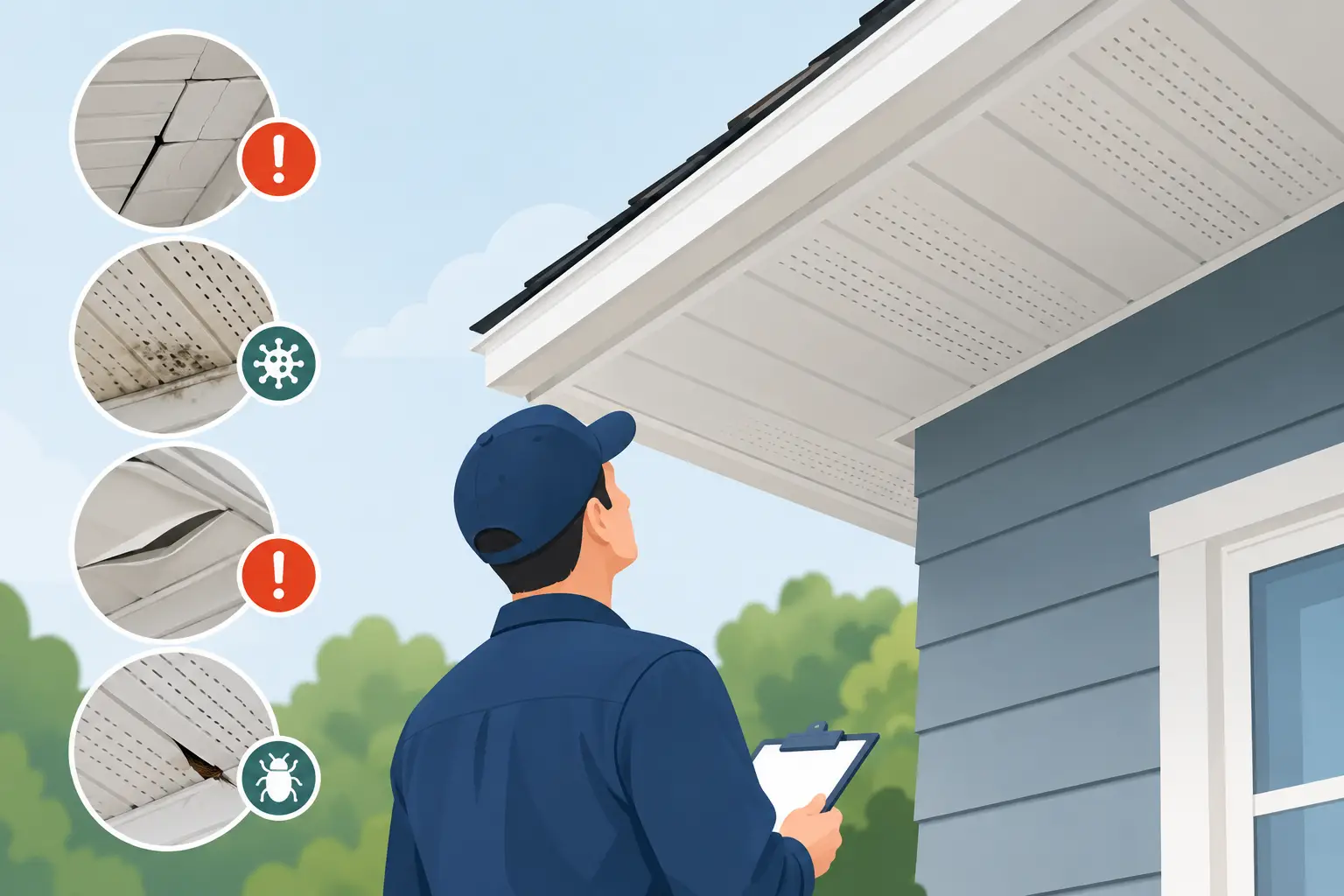
Wood soffits should feel firm. If a board is soft when carefully pressed, flakes away at the edges, or has dark and spongy patches, moisture has likely been entering for some time. Rot does not stop on its own. Once the board loses strength, it can spread to the fascia and the rafter ends behind it.
Do not rely on a ground-level inspection alone. The worst damage is often hidden under peeling paint, behind gutters, or at the corners where water collects. This is one reason roofline work is best assessed safely from a ladder or access equipment by someone who can inspect the full system.
Peeling Paint, Blistering, or Persistent Stains
Paint that keeps peeling from timber soffits is often a moisture warning, not simply a decorating issue. Water may be running behind the gutter, spilling over during rain, or soaking into an unsealed joint. Brown staining, black marks, and bubbling paint deserve attention, especially if they return shortly after repainting.
UPVC soffits do not rot, but they can still become stained, warped, cracked, or poorly fixed. Dirt alone can often be cleaned, while distortion or open joints may point to water exposure, heat movement, or a problem with the boards behind them.
Sagging Panels or Gaps Along the Eaves
Soffits should sit straight and secure beneath the fascia. Sagging sections, visible gaps, missing panels, or loose trim are signs that the fixings or underlying timber may be failing. Open gaps also give birds, wasps, squirrels, and other pests a route into the roof space.
A gap may seem small, but pests can widen it quickly. Nesting material can block ventilation points, create odor issues, and make future roofline repairs more difficult. Any loose section should be inspected before it becomes a larger opening.
Poor Roof Ventilation
Many soffits include vents that allow air to move through the attic or roof space. Good ventilation helps control condensation and reduces excess heat buildup. If vents are blocked by paint, insulation, debris, nests, or an incorrect installation, moisture can build up inside the roof structure even when the roof covering appears sound.
Signs of poor ventilation can include condensation in the attic, moldy insulation, musty smells, or dampness around rafters. Soffit replacement may be part of the solution, but the ventilation design must suit the roof. Simply adding random openings without considering intake and exhaust airflow can create a poor result.
Repeated Gutter Overflows or Leaks
This is one of the most common causes of soffit damage. A blocked gutter sends water over the front edge or, worse, back toward the fascia and soffit. Leaking joints, incorrect gutter slope, undersized downpipes, and loose brackets can all direct water where it should never go.
If soffit damage is linked to gutter overflow, the gutter problem needs to be fixed at the same time. Clearing debris without checking the downpipe, joints, and gutter alignment can leave the underlying cause in place. Likewise, installing new soffits below a leaking gutter is poor value for money.
Why Delaying Replacement Can Cost More
The soffit itself is usually not the most expensive part of a roofline repair. The added cost comes when moisture reaches the timber behind it. Fascia boards can rot, rafter ends can weaken, and gutters may pull away as their fixings lose a solid surface to hold onto.
Water can also enter wall cavities or the attic, depending on how the roofline is constructed. In colder climates, poor roof ventilation and dampness may contribute to condensation and insulation problems. In warmer, humid areas, trapped moisture can encourage mildew and wood decay. The details vary by property, but water entering the eaves is never something to ignore.
There is also a safety issue. Loose soffit boards, hanging gutters, and rotted fascia should not be treated as a do-it-yourself job from a ladder. Exterior roofline work involves working at height and assessing whether the timber can safely support gutter brackets and access equipment.
What a Proper Soffit Replacement Should Include
A worthwhile replacement begins with inspection, not just fitting new panels over old damage. The contractor should identify whether the problem is caused by the roof covering, flashing, gutter leaks, blocked downpipes, failed fascia, or ventilation issues.
Damaged material should be removed so the structure behind it can be checked. If timber fascia or rafter ends are sound, new soffits can be fitted securely with the right ventilation provisions. If the timber is decayed, it should be repaired or replaced before new roofline boards and gutters are installed.
Many homeowners choose UPVC soffits because they are low maintenance, resist rot, and do not need regular painting. They are a practical option, but quality installation still matters. Poorly fixed UPVC, inadequate ventilation, or gutters installed at the wrong angle can create the same water problems that caused the original damage.
For older or character properties, timber, aluminum, or other materials may be more appropriate. The best choice depends on the property style, local conditions, maintenance expectations, and the condition of the existing roofline. The cheapest material is not always the best value if it does not suit the building or is installed without correcting the cause of the damage.
How to Protect New Soffits
Once soffits have been repaired or replaced, regular gutter maintenance is the simplest way to protect them. Gutters should be cleared before heavy rain seasons and checked after storms, particularly where there are nearby trees. Downpipes need to run freely, gutter joints should not drip, and water should flow toward the outlets rather than sitting in long sections of gutter.
From the ground, look out for overflow marks, water running down the fascia, sagging gutters, bird activity near the eaves, and stains under the roof edge. These early warnings are easier and less expensive to deal with than advanced rot.
At Steve’s Gutters, roofline work is approached as a complete system, because a clean-looking gutter is of little use if it still leaks, drains poorly, or sends water behind the fascia. A careful inspection helps ensure that replacement work solves the cause of the problem, not only the part you can see.
If you can see staining, sagging, rot, or recurring overflow at the eaves, arrange an inspection before the next period of heavy rain. Acting while the damage is limited gives you more repair options and helps keep the roofline doing the quiet but essential job it was built for.
Recommended Posts
Seamless Versus Sectional Gutters: Which Is Best?
October 16, 2026
Can Dirty Gutters Attract Pests? Yes, Here’s Why
October 14, 2026
A Guide to Replacing Fascias on Your Home
October 12, 2026