

Sagging Gutter Brackets Repair Guide

by
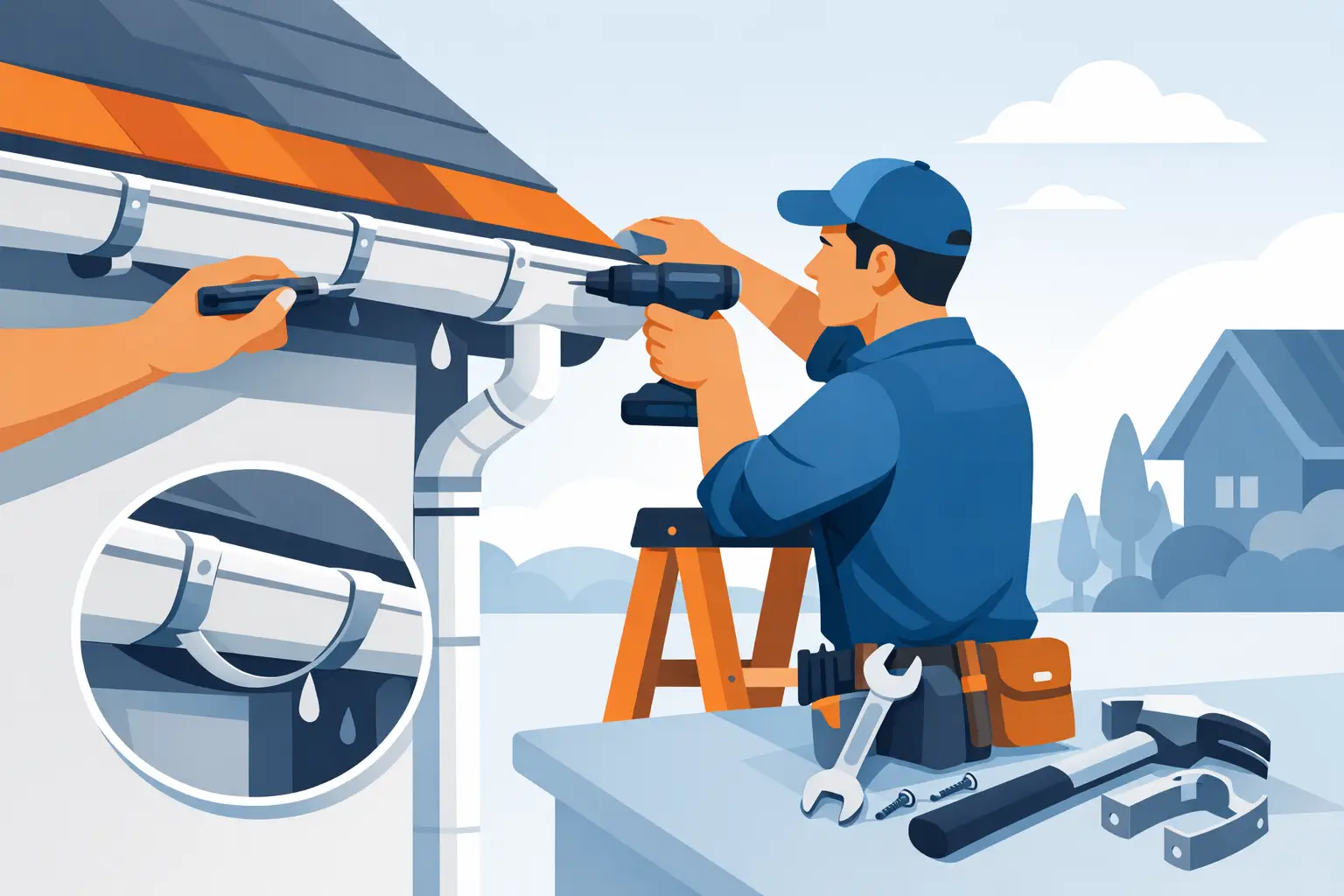
A gutter that pulls away from the roofline rarely stays a small problem for long. Once the brackets start to sag, water stops flowing where it should, joints come under strain, and the fascia behind the gutter can end up taking the hit. That is why sagging gutter brackets repair matters – not just to make the gutter look straight again, but to stop leaks, overflow, and avoidable damage to the property.
In most cases, sagging brackets are a sign that something else has been going on for a while. The gutter may be full of debris and holding extra weight. The original fixings may have loosened over time. The run may have been installed with too much spacing between brackets, or the fascia may have started to soften where water has been getting in. A quick push from the ground will not solve any of that. The fix needs to match the cause.
What causes sagging gutter brackets
Brackets sag for a few common reasons, and more than one can be present at the same time. The most frequent is simple overload. Leaves, moss, mud, and standing water put steady strain on the supports, especially after heavy rain. Plastic guttering is particularly vulnerable because it can flex under weight long before it fully fails.
Poor bracket spacing is another issue. If there are not enough supports along the run, the gutter begins to bow between fixing points. That often shows up near corners, unions, and outlets where water volume is heaviest. On older properties, you also see original brackets still in place long after the gutter itself should have been upgraded.
Then there is the fascia. A bracket is only as secure as the material it is screwed into. If the wood behind the gutter has started to rot, or if a previous repair used fixings that were too short, the bracket may look attached but no longer have any real holding strength. On some jobs the gutter is blamed when the real problem is the roofline behind it.
Weather and age play their part as well. Repeated freezing and thawing can loosen joints and put stress on the line of the gutter. Strong wind can twist sections out of alignment. Over time, even a decent installation can start to shift if it has not been maintained.
Signs you need sagging gutter brackets repair
The obvious sign is a section of gutter dipping in the middle or leaning away from the fascia. But there are other clues worth paying attention to before a bracket gives way completely.
If water spills over one section during rain while the rest of the gutter looks clear, there may be a low point caused by failing brackets. If you can see joints separating, drips at unions, or staining on the wall below, the run may have dropped enough to disturb the fall. You might also notice screws backing out, brackets cracked from strain, or fascia boards showing damp marks behind the gutter.
For property managers and homeowners, one of the biggest warning signs is repeat trouble in the same area. If a gutter has been cleaned but still overflows, the issue may not be blockage at all. It may be that the line of the gutter has already been lost.
How sagging gutter brackets repair is done properly
A proper repair starts with inspection, not guesswork. The first job is to check whether the problem is isolated to a few brackets or whether the entire run has shifted. There is no point replacing one support if the fascia is rotten, the outlet is blocked, and the rest of the gutter is under strain.
Once the cause is identified, the gutter usually needs to be emptied and cleaned before any bracket work begins. That removes the weight and lets the true alignment be checked. After that, damaged or loose brackets can be replaced, additional brackets can be installed where spacing is poor, and the fall can be reset so water runs correctly toward the outlet.
If the screws have pulled from timber that is still sound, longer or more suitable fixings may be enough. If the fascia is soft or split, the bracket repair becomes a roofline repair as well. In that case, securing a new bracket to damaged material only hides the problem for a short time.
On some systems, especially older plastic runs, the gutter itself may have warped after sitting in a sagging position for too long. When that happens, the brackets can be renewed and the line reset, but the gutter section may still need replacing to get a reliable result. This is where experience matters. A repair should solve the failure, not just straighten it for a week.
Repair or replace? It depends on the condition of the full run
Not every sagging gutter needs a full replacement, and not every bracket repair is good value either. The right choice depends on age, material, and how many connected issues are already present.
If the gutter is generally sound, the joints are serviceable, and the problem is limited to a few failed supports, repair is usually the sensible route. Replacing brackets, correcting the fall, clearing the downpipe, and resealing affected joints can restore the system at a reasonable cost.
If the run is brittle, cracked, poorly aligned in several places, and fixed to damaged fascia, replacement often works out better than repeated patch repairs. The same applies when previous work has been piecemeal and the gutter now has multiple weak points. Paying for one repair after another rarely saves money in the long run.
For commercial buildings and larger residential properties, access also affects the decision. If equipment is needed to reach the gutter safely, it can make sense to deal with all failing sections in one visit rather than keep returning to the same elevation.
Why cleaning alone will not fix sagging brackets
This is where many property owners get caught out. A gutter can be emptied and still be structurally unsound. Vacuum cleaning has its place, but if the brackets are loose, broken, or pulling out of the fascia, removing debris only addresses part of the problem.
A proper service checks the bracket spacing, outlet condition, alignment, joints, and the state of the roofline behind the gutter. If those points are ignored, the gutter may look better from the ground but still leak the next time there is heavy rain.
That is why a hands-on repair service is worth more than a clean-only visit when brackets are sagging. You need the cause found and fixed, not just the symptoms cleared away.
Can you repair sagging gutter brackets yourself?
Some homeowners are tempted to tighten a few screws or clip the gutter back into place. On a low, accessible section, that can look straightforward. The risk is that the visible sag is only part of the problem.
If the bracket has failed because the fascia is rotten, more force on the fixing can make it worse. If the gutter is holding standing water because the fall is wrong, moving one bracket may shift the issue further down the run. There is also the basic safety concern. Working at height around wet rooflines and ladders is not something to take lightly.
For minor checks from ground level, it is reasonable to look for obvious overflow, cracks, or detached sections. But once repairs involve access equipment, refixing supports, or assessing fascia condition, it is usually a professional job.
Preventing the same problem from coming back
The best prevention is regular maintenance before weight and water start stressing the supports again. Gutters should be checked routinely, especially after fall leaf drop and after periods of heavy weather. Downpipes should be kept clear so water is not backing up into the run.
It also helps to deal with small shifts early. A bracket that has started to loosen is far easier and cheaper to put right than a full run that has dropped out of line. The same goes for fascia damage. Catch it early and the repair stays local. Leave it too long and the job spreads.
For many homes, the most practical approach is to have cleaning, inspection, and repair handled together. That way the system is not just emptied out, but checked as a working part of the property. Companies like Steve’s Gutters build their reputation on exactly that kind of complete service – not just making gutters look clear, but making sure they are actually doing their job.
If your gutter line is dipping, leaking, or pulling away from the fascia, it is worth dealing with it before the next hard rain does the inspection for you.
Recommended Posts
Seamless Versus Sectional Gutters: Which Is Best?
October 16, 2026
Can Dirty Gutters Attract Pests? Yes, Here’s Why
October 14, 2026
A Guide to Replacing Fascias on Your Home
October 12, 2026