

Roofline Materials: What Works Best for Your Home

by
A leaking gutter is not always a gutter problem. Water can get behind a loose fascia board, through a rotten soffit, or into a failed joint where old roofline materials no longer support the gutter correctly. That is why choosing materials is about more than improving the look of the eaves. It is about keeping rainwater away from the roof structure, walls, and foundations.
For homeowners and property managers, the best option depends on the building, the existing roofline, local weather, budget, and how much maintenance is realistic. A low upfront price can become poor value if the material needs regular repainting or cannot carry the weight of a full gutter during heavy rain.
What counts as roofline material?
The roofline is the edge of the roof where several working parts meet. Fascia boards run along the lower roof edge and provide the fixing point for gutters. Soffits sit underneath the fascia and close off the eaves. Bargeboards finish the sloping edge of a gable roof. Gutters, downpipes, vents, brackets, and trims complete the system.
These parts need to work together. If a fascia board is soft or poorly fixed, replacing only the gutter may be a short-term repair. If soffit ventilation is blocked, moisture can build up in the roof space. A proper inspection looks at the whole roofline before recommending cleaning, repair, or replacement.
Common roofline materials compared
uPVC: practical and low maintenance
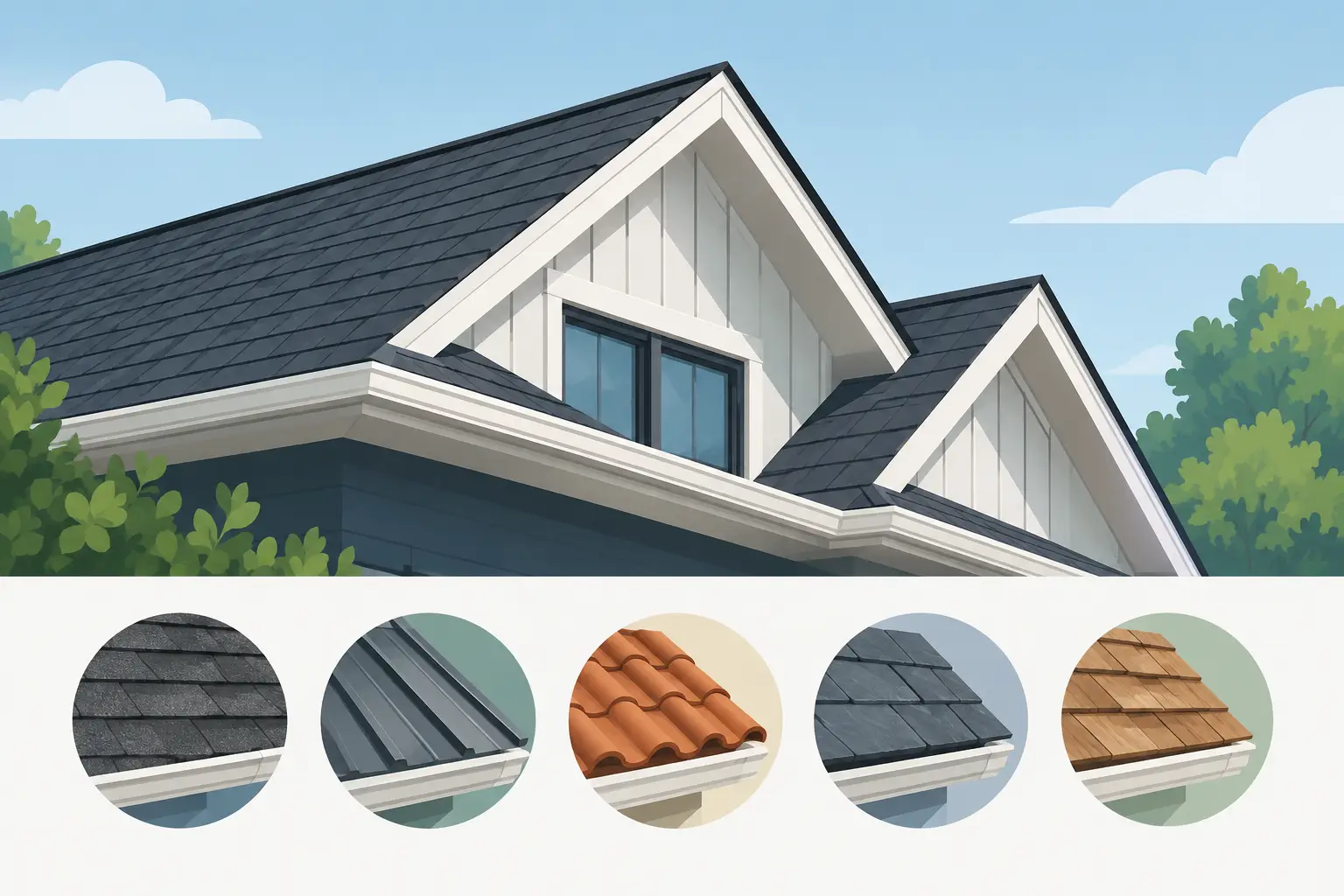
uPVC is the most common choice for modern fascia, soffit, guttering, and downpipes. It is lightweight, does not rot, and needs far less upkeep than timber. A wash to remove traffic film, algae, and cobwebs will normally keep it looking presentable.
It is also available in white, black, gray, brown, and wood-effect finishes, making it suitable for many styles of home. For most standard houses, uPVC offers sensible value because installation is straightforward and replacement parts are widely available.
The trade-off is that cheaper uPVC can become brittle over time, particularly after repeated exposure to strong sun and cold weather. It can also sag if long gutter runs are not bracketed correctly or if the fascia beneath is not sound. The material is low maintenance, not maintenance-free. Gutters still need clearing, outlets need checking, and joints need inspecting for movement or leaks.
Aluminum: clean lines and long service life
Aluminum is a strong option for guttering, particularly on larger homes, commercial properties, and buildings where a sharper finish is wanted. It is light for its strength, corrosion-resistant, and can be formed into long lengths with fewer joints. Fewer joints can mean fewer places for leaks to develop.
Aluminum gutters cost more than standard uPVC, and repairs or alterations may require a more specialist approach. Color-matched finishes are available, but a damaged coating should be dealt with promptly to preserve the appearance. It is often a good investment where long runs, high water flow, or a more premium finish make standard plastic guttering less suitable.
Aluminum fascia and soffit systems are less common on typical homes, but they can suit commercial properties and modern builds. The key is ensuring the system is designed and fixed properly, not simply fitted over failing timber.
Cast iron: traditional appearance, serious maintenance
Cast iron is still the right choice for some period properties, listed buildings, and homes where original character matters. It has a solid, traditional appearance that plastic cannot fully copy, and a well-maintained cast iron system can last for decades.
It is heavier than uPVC or aluminum, so brackets, fixings, and the fascia or masonry supporting it must be in good condition. It also needs ongoing attention. Paint failure can lead to rust, and rust can spread quickly around joints, outlets, and fixing points if it is ignored.
Cast iron is not automatically the best option just because a house is older. It needs to be appropriate for the property and the budget available for future upkeep. In some cases, a sympathetic aluminum system provides a practical alternative. In others, retaining and repairing cast iron is the right call.
Timber: attractive but demanding
Timber fascia boards and bargeboards can look excellent on older houses and character properties. They can be repaired in sections, shaped to match existing details, and painted in almost any color. Properly installed and maintained timber has a place, especially where preserving the building’s appearance is important.
Its weakness is moisture. Peeling paint, open joints, blocked gutters, and overflowing downpipes all allow water to sit against the timber. Once rot starts behind a gutter, it may not be obvious from ground level. By the time the gutter pulls away, the repair can involve more than replacing a board.
Timber needs regular painting and close inspection. It works best for owners prepared to keep on top of that care. Covering decayed timber with plastic boards may look tidy for a while, but it can trap problems underneath and leave poor fixings for the gutter.
Fiber cement and specialist boards
Fiber cement boards are used on some modern and specialist projects because they are stable, durable, and resistant to rot and insects. They can give a crisp painted finish without the movement associated with timber. However, they are not usually the simplest or lowest-cost answer for a standard fascia and soffit replacement.
These products require correct cutting, sealing, and fixing methods. They are best considered where the wider cladding or exterior design calls for them, rather than as a default roofline material.
Match the gutter to the roofline
A roofline replacement should never be planned as fascia and soffit in isolation. Gutters carry a surprising amount of water in a heavy storm. If the fall is wrong, outlets are undersized, or brackets are spaced too far apart, even good-quality materials will not perform as they should.
For a standard home, uPVC guttering fixed to sound uPVC fascia is often an effective, cost-conscious combination. Larger roofs, long runs, conservatories, and commercial units may benefit from aluminum guttering or a larger gutter profile. Period homes may need cast iron to maintain the right appearance.
Downpipes matter just as much. A blocked, cracked, or undersized downpipe turns a working gutter into an overflowing one. Water then runs down the wall, soaks brickwork, stains render, and can damage the roofline it was meant to protect.
Signs replacement is better than another repair
Not every issue calls for new roofline materials. A leaking union, slipped bracket, or isolated crack can often be repaired. Cleaning out debris and clearing the downpipe may stop an overflow immediately.
Replacement becomes more likely when there is widespread rot, repeated gutter movement, failed boards behind the gutter, cracked plastic across several sections, or evidence of water entering the eaves. Peeling paint on timber, rust around cast iron joints, and sagging gutters are all reasons to arrange a closer inspection.
Watch for staining on exterior walls, drips after rainfall, damp patches near the roof edge, or birds and insects entering gaps at the soffit. These problems are easier and less expensive to address before they affect rafters, insulation, or internal ceilings.
What good installation looks like
The material is only part of the job. Old boards should be assessed before new ones are fitted. Any rotten timber, loose masonry, damaged rafter ends, or failed gutter brackets need attention first. Fascias must be fixed straight and securely, soffits should allow suitable ventilation where required, and gutters need a consistent fall toward the outlets.
A decent contractor will also check the condition of the roof edge, not just attach new plastic to it. That is particularly important where old timber has been hidden under capping boards. The finish may look neat, but the structure behind it still has to support the gutter safely.
Choosing value, not just the lowest price
The cheapest quote may cover only visible boards and gutters. Ask what happens to damaged timber, whether downpipes and outlets are included, how ventilation will be handled, and whether gutter falls will be checked. It is also worth confirming the guarantee, insurance, and the material specification rather than assuming every white fascia board is the same quality.
Steve’s Gutters takes a practical view: inspect the whole working roofline, deal with the cause of water problems, and recommend the repair or replacement that fits the property. A well-chosen system should look clean, carry water properly, and make future maintenance easier.
If your gutters overflow, fascia looks tired, or you can see gaps around the eaves, do not wait for the next hard rain to make the decision for you. A straightforward inspection can show whether a clean and repair is enough or whether the roofline needs work before minor water damage becomes a larger job.
Recommended Posts
Seamless Versus Sectional Gutters: Which Is Best?
October 16, 2026
Can Dirty Gutters Attract Pests? Yes, Here’s Why
October 14, 2026
A Guide to Replacing Fascias on Your Home
October 12, 2026