

Roofline Inspection Before Winter: 7 Key Checks


by
The first heavy winter rain often exposes a problem that has been building quietly since spring: water has nowhere safe to go. A proper roofline inspection before winter looks beyond leaves sitting in a gutter. It checks whether rainwater can travel from the roof, through the gutters and downpipes, and away from the building without soaking the walls, roof edge, or foundations.
For homeowners and property managers, this is sensible preventative maintenance. A small drip from a loose gutter joint or a partially blocked downpipe can become stained brickwork, rotting timber, damp patches, and a much larger repair bill after months of wet, cold weather. The best time to deal with it is before the weather makes access harder and the damage worse.
Why winter is hard on the roofline
Your roofline works as one system. Gutters collect water from the roof, brackets hold them at the correct fall, outlets direct water into downpipes, and fascias and soffits protect the roof edge while providing a sound fixing point. If one part fails, water can overflow or run behind the gutter instead of into it.
Winter brings more than rain. Fallen leaves, moss, twigs, and grit collect in gutters, especially around valley outlets and behind conservatories. Repeated wetting and drying can expose failed seals, while freezing conditions add weight to standing water and make brittle older materials more likely to crack. Wind can also loosen brackets, end caps, and sections that were already moving slightly.
Not every property needs major work before winter. A newer system with clear gutters, secure fittings, and good drainage may only need a professional clean and check. Older properties, homes beneath trees, extensions with flat roofs, and buildings with cast iron guttering often need closer attention. The point is to find out which category your property is in before the weather decides for you.
1. Check that gutters are clear and flowing
A gutter can look clear from ground level but still be blocked at the outlet. Debris tends to compact where the gutter meets the downpipe, creating a dam that sends water over the front edge during a downpour. Moss washed from the roof is another common cause. It holds water and forms a heavy sludge that ordinary rainfall will not clear.
During an inspection, the gutter should be cleared fully, not simply vacuumed where visible debris can be reached. The condition of the gutter base, outlets, corners, and joints needs checking once it is empty. This is when cracks, failed seals, standing water, and hidden corrosion are easiest to spot.
A gutter that holds a shallow amount of water after cleaning may have an incorrect fall or a sagging bracket. The answer is not always replacement. Often, adjusting the brackets or re-aligning a section restores proper flow. Where the guttering is split, badly warped, or repeatedly leaking at several points, replacement can be better value than ongoing patch repairs.
2. Test every downpipe, not just the gutters
A clear gutter does little good if the downpipe is blocked. Water can back up quickly, overflow at the outlet, and pour down the outside wall. The blockage may be near the top, at a bend, at the shoe near ground level, or below ground where the pipe connects to drainage.
Downpipes should be checked for a free flow of water and for secure joints and clips. Look for staining around joins, green growth on the wall, loose pipe sections, or water spilling from the top during rain. These are all signs the water is not traveling as it should.
For commercial premises and larger homes, it is worth checking whether downpipe outlets are being obstructed by leaf litter, gravel, or poorly positioned planters. A blocked gully can cause the same backup as a blocked pipe. Clearing the gutter without dealing with the drainage point leaves half the problem behind.
3. Inspect fascia boards and soffits for early damage
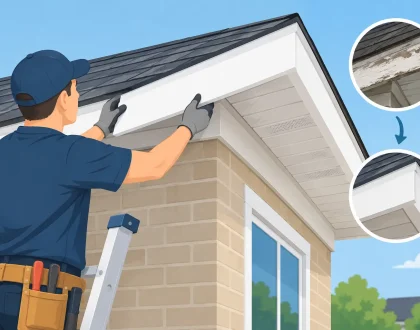
Fascias are the boards fixed along the lower edge of the roof. They support the guttering and protect the ends of the roof rafters. Soffits sit underneath the fascia and close the gap between the roof edge and the wall. When gutters overflow repeatedly, these parts can suffer before the problem becomes obvious indoors.
Check for peeling paint, soft timber, swollen boards, cracks, staining, or gaps where the fascia meets the roofline. On UPVC rooflines, look for sagging sections, damaged joints, and signs that the fixing beneath has weakened. UPVC is low maintenance, but it is not maintenance-free. A loose gutter can still pull on its fascia board, and dirt or algae can hide developing issues.
Ventilation also matters. Some soffits include vents that help air circulate in the roof space. Blocked or damaged ventilation can contribute to condensation problems, particularly in older properties. It does not mean every soffit issue requires a full replacement, but it should be assessed rather than covered up.
4. Look closely at joints, brackets, and gutter alignment
Gutter systems usually fail first at the smaller components. Rubber seals dry out, corner joints shift, brackets snap, and end caps loosen. A tiny gap can release a surprising amount of water during prolonged rain, often in one concentrated stream against the wall or below a window.
Signs worth acting on include water marks below a joint, gutters visibly dipping between brackets, a downpipe that moves when touched, or rainwater shooting past an outlet. On a dry day, these faults can appear minor. In winter, when the system is handling frequent heavy rainfall, they become much more significant.
Older cast iron gutters deserve particular care. They are durable and can suit period properties well, but rust, failing paint, and movement at joints need professional attention. Aluminum and UPVC systems have different strengths, but both still rely on correct fitting, sound brackets, and a clear route to drainage.
5. Check the roof edge for moss and slipped materials
A roofline inspection is not a substitute for a full roof survey, but the roof edge should never be ignored. Broken or slipped tiles, damaged flashing, and heavy moss growth near the gutter can all affect how water enters the drainage system.
Moss is not automatically a reason to clean a whole roof. The right approach depends on the roof material, its age, the amount of growth, and whether debris is already washing into gutters. Aggressive cleaning methods can damage some tiles, so this is a job for an experienced exterior maintenance team using an appropriate method.
Pay particular attention to valleys, where two roof slopes meet. These channels collect a high volume of water and debris. If a valley outlet is blocked, water can overflow into gutters or, in more serious cases, find its way beneath roof coverings.
6. Inspect conservatories, extensions, and hard-to-reach areas
Conservatory gutters and the narrow rooflines around extensions are easy to overlook. They can also be difficult to access safely and are prone to leaf buildup, algae, and leaks at joints. Water overflowing from a conservatory gutter may run onto frames, seals, patio areas, or nearby walls.
These sections should be included in the same inspection as the main roofline. A house can have perfectly clear front gutters while the rear extension is overflowing every time it rains. If the property has several roof levels, each one needs a clear drainage route rather than relying on a quick visual check from the driveway.
7. Know when to call a professional
Working at height without the right equipment is not worth the risk. Ladders need stable ground, safe positioning, and the experience to work around fragile gutters, conservatory roofs, and uneven surfaces. This is especially true if you have noticed active leaks, loose sections, damaged fascias, or a suspected roof issue.
A professional inspection should involve more than removing leaves. It should include clearing gutters and downpipes, checking flow, assessing brackets and joints, identifying repair needs, and explaining whether a repair, clean, or replacement is the sensible option. That gives you a clear picture of the work needed rather than a temporary fix that fails in the next storm.
At Steve’s Gutters, the focus is on dealing with the full roofline problem, including cleaning, repairs, and replacement where required. A clear quote and a straightforward explanation of the condition of the system help homeowners make a decision before winter weather turns a manageable issue into water damage.
A dry, clear day before the cold sets in is a good time to arrange the inspection. Once gutters are flowing properly and the roofline is secure, you can face the next spell of rain knowing the water has somewhere safe to go.
Recommended Posts

Seamless Versus Sectional Gutters: Which Is Best?
October 16, 2026

Can Dirty Gutters Attract Pests? Yes, Here’s Why
October 14, 2026
A Guide to Replacing Fascias on Your Home
October 12, 2026