

Moss on Roof Risks Every Owner Should Know

by
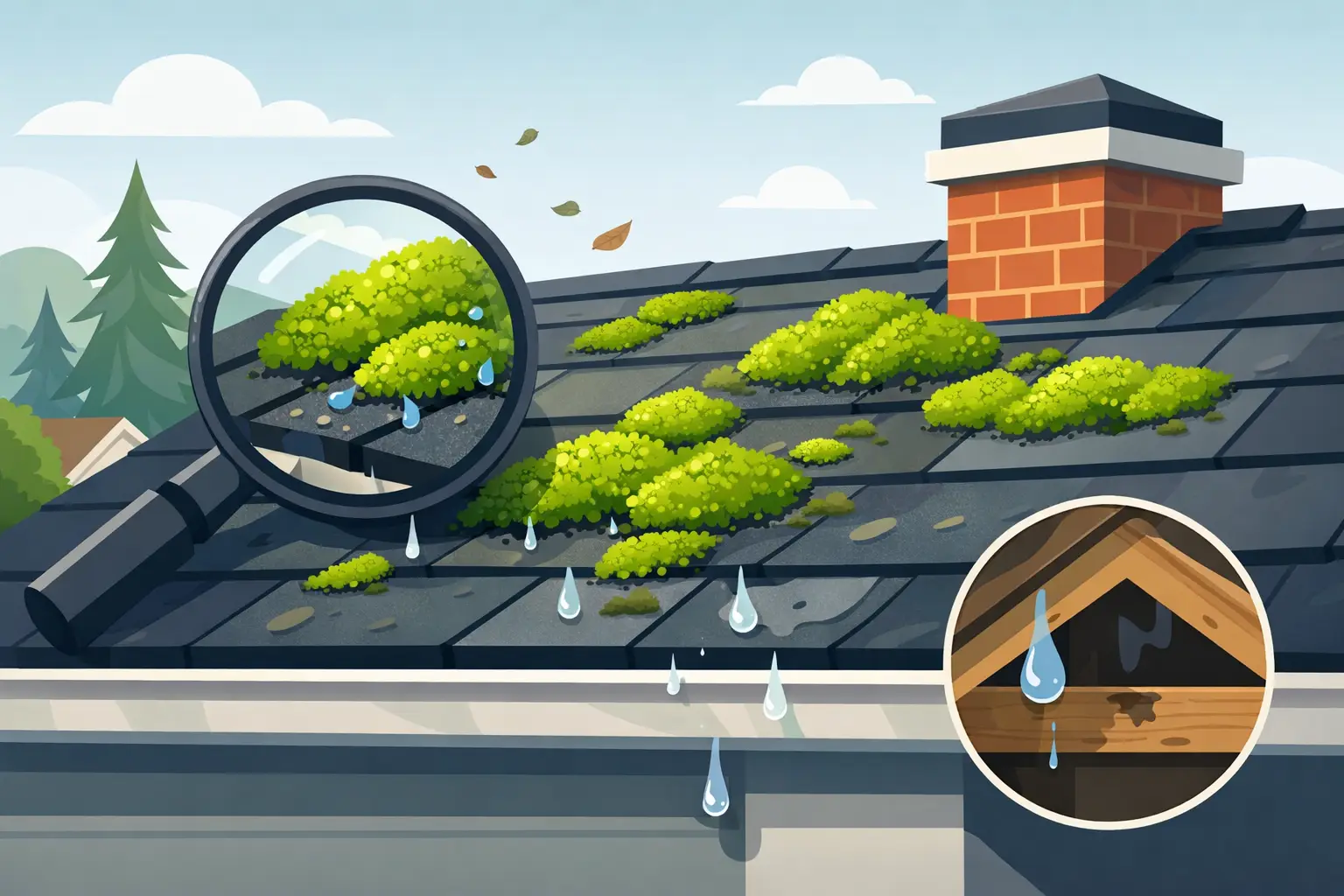
A roof can look mostly fine from the ground and still be quietly heading toward trouble. That is what makes moss on roof risks easy to ignore at first. A patch of green may seem harmless, but once moss starts holding moisture against roofing materials, it can shorten the life of the roof, contribute to gutter problems, and turn a small maintenance issue into a much larger repair bill.
Why moss on roof risks are more serious than they look
Moss is not just sitting on the surface like loose dirt. It grows into damp areas, holds water, and spreads where sunlight is limited. On shaded roof slopes, around chimneys, beneath overhanging trees, and on older roofs, it often gains a foothold faster than people expect.
The main issue is trapped moisture. Roofing materials are designed to shed water, dry out, and protect the structure below. Moss interferes with that process. It keeps surfaces wet for longer, and over time that can weaken shingles, encourage granule loss, and create conditions where roof edges, flashing, and timber beneath are under more strain than they should be.
That is why this is not just a cleaning issue. It is a roof care issue, a drainage issue, and in many cases a property maintenance issue that affects more than one part of the exterior.
The damage moss can cause over time
If moss is left in place, the damage usually builds gradually rather than all at once. That slow pace is part of the problem, because homeowners often do not notice it until a leak, overflow, or visible deterioration forces attention.
Shortened roof life
On asphalt shingle roofs, moss can lift shingle edges as it thickens. Once that happens, water can work its way into places it should not reach. During colder spells, trapped moisture may also expand and contract, putting further stress on the roof covering.
On tile roofs, moss can settle between joints and hold dampness against the surface. The tile itself may not fail immediately, but repeated moisture exposure can affect underlayment, battens, and the overall condition of the roof system. It depends on the age of the roof, the material used, and how long the moss has been there.
Gutter blockages and overflow
One of the most common knock-on problems is gutter blockage. Moss does not stay neatly on the roof. Rain, wind, and natural breakdown carry it into the gutters and downspouts, where it mixes with silt, leaves, and other debris.
That is when drainage starts to fail. Water spills over the front edge, runs down walls, saturates areas around the foundation, and in some cases damages fascia, soffits, and exterior finishes. A lot of people focus on the roof growth itself, but the guttering below often takes the first visible hit.
Hidden water entry
Moss does not always create a leak by itself, but it increases the chances. If it masks damaged shingles, loose flashing, cracked mortar, or blocked roof valleys, water can begin entering the property before the actual cause is obvious from the ground.
This is especially common on older homes or extensions where the roofline has several junctions. Valleys, dormers, and low-slope sections deserve particular attention because moss buildup in those areas can slow water runoff and keep vulnerable spots damp for longer.
Added weight and surface stress
When moss becomes thick and saturated, it adds weight to the roof surface. On a sound roof this may not be a major structural issue on its own, but on tired roofing materials, weak points are more likely to show up. The bigger concern is that prolonged wet coverage prevents the roof from drying properly, which increases wear over time.
When moss is most likely to become a problem
Not every patch of moss means the roof is on the verge of failure. A small amount on a newer roof may be manageable if it is dealt with early and the drainage is still working as it should. The trouble comes when the conditions that support moss are left unchanged.
Shade is a big factor. Trees that hang over the roof reduce sunlight and drop organic debris that feeds damp growth. Poor ventilation, aging shingles, and roofs that already hold moisture because of layout or drainage issues also make matters worse.
If you have noticed repeated gutter blockages, dark streaking, damp spots in the attic, or moss returning soon after surface cleaning, that usually points to a bigger maintenance need rather than a one-time tidy-up.
Why DIY removal can make things worse
It is understandable that homeowners want to deal with moss quickly, especially when it is visible from the driveway. But roof cleaning is one of those jobs where the wrong method often causes as much damage as the problem itself.
Aggressive scraping can strip protective granules from asphalt shingles. Pressure washing can drive water under the roof covering, loosen materials, and leave the surface more vulnerable than before. Walking on a mossy roof is also a slip hazard, particularly on steeper pitches or older roofs where the surface may already be fragile.
A proper approach starts with inspection. You need to know whether the moss is simply surface growth or whether it has already contributed to damaged shingles, cracked tiles, blocked gutters, or weakened roofline components. Cleaning without checking the condition of the roof first is how important issues get missed.
What proper treatment should include
A worthwhile service does more than remove what you can see. The roof, gutters, and downspouts work together, so they should be assessed together.
That usually means clearing the moss safely, checking for broken or lifted roofing materials, removing debris from gutters, ensuring downspouts are flowing properly, and looking at nearby roofline items such as fascia and soffits. If those parts are ignored, the problem often returns or continues causing water management issues after the roof surface has been cleaned.
This is where experience matters. A contractor who only offers a quick wash may leave behind the actual reason the exterior is struggling. A more complete service identifies what needs cleaning, what needs repair, and what may need replacement before minor damage becomes expensive.
For that reason, many property owners prefer a company that handles exterior maintenance as a whole rather than treating the roof and gutters as separate jobs. That practical approach is the one Steve’s Gutters has built its reputation on.
Signs you should not wait
Some roofs can be monitored and scheduled for maintenance at a sensible time. Others need attention sooner. If moss is thick enough to be visible in clumps, if gutter overflow is already happening, or if you can see loose shingles, slipped tiles, or staining on exterior walls, it is best not to put it off.
The same applies if you manage a rental property or commercial building. Small roofline issues become tenant complaints quickly once leaks, overflow, or damp marks appear. Preventive maintenance is almost always cheaper than emergency repair, and it causes far less disruption.
Preventing moss from coming back
You cannot always stop moss entirely, especially on shaded roofs in damp climates, but you can reduce the conditions that help it spread. Keeping gutters clear, trimming back overhanging branches, and dealing with minor roof defects early all make a difference.
Regular inspection matters more than most people realize. Moss is easier and cheaper to address when it first appears than when it has had several seasons to settle in, trap moisture, and wash debris into the gutter system. If a roof has a history of moss growth, periodic checks are a sensible part of routine exterior maintenance.
A clean-looking roof is not the main goal. The real goal is a roof that sheds water properly, a gutter system that drains properly, and a property exterior that is not being quietly damaged by avoidable neglect.
If you can already see moss from the ground, the safest move is to have the roof and guttering checked before the next spell of heavy rain turns a manageable maintenance job into a repair problem. A little attention at the right time usually saves a lot more than it costs.
Recommended Posts
Seamless Versus Sectional Gutters: Which Is Best?
October 16, 2026
Can Dirty Gutters Attract Pests? Yes, Here’s Why
October 14, 2026
A Guide to Replacing Fascias on Your Home
October 12, 2026