

Guide to Fascia Board Replacement for Homeowners

by
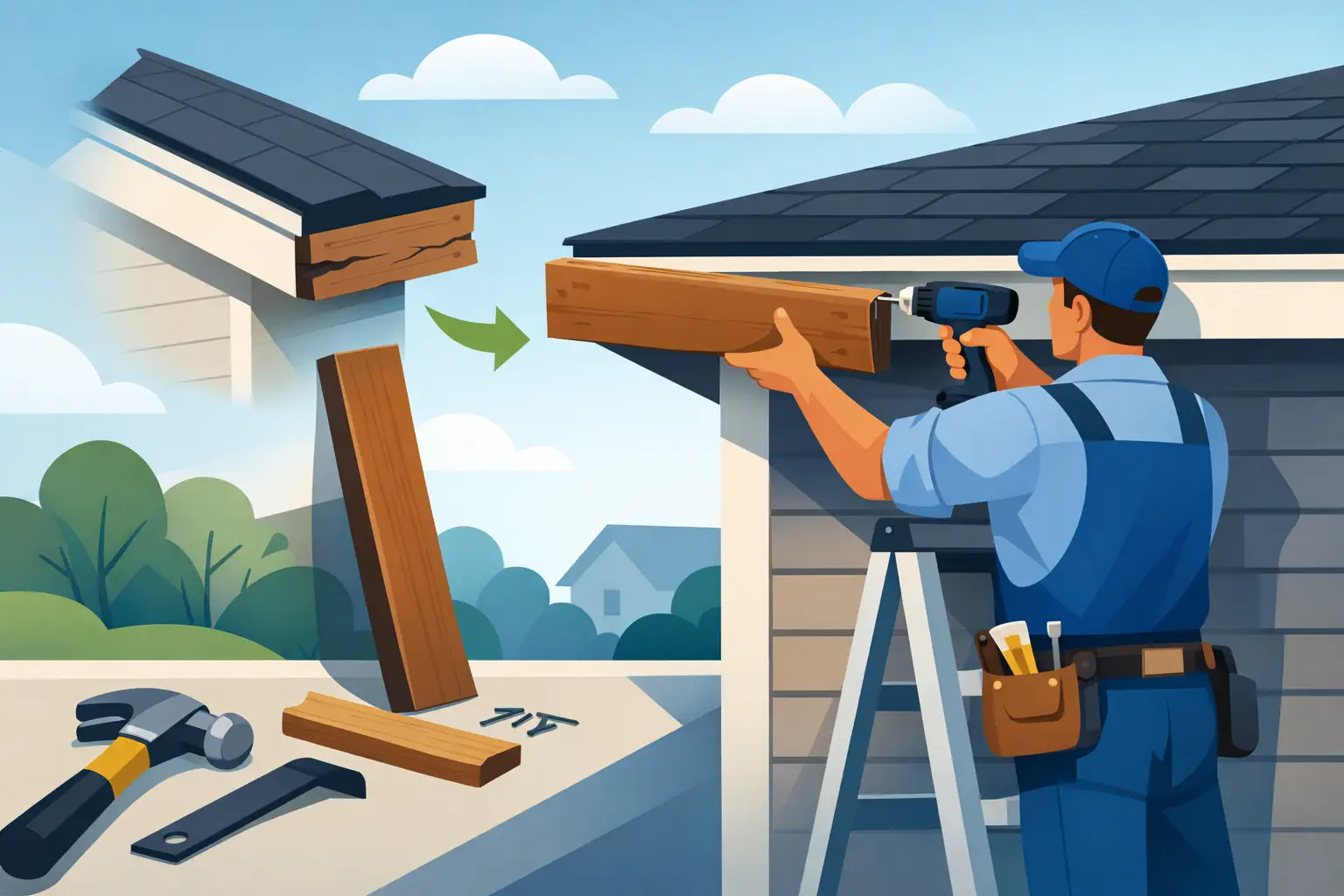
A fascia board can look like a simple strip of trim along the roof edge, but it has a demanding job. It supports the guttering, closes off the roofline, and helps keep rainwater away from the rafters and walls. This guide to fascia board replacement explains what homeowners should look for, what the work involves, and why dealing with damage early can prevent a much larger repair.
When gutters overflow or pull away from the roof, the problem is not always the gutter itself. Water may have been soaking into a worn timber fascia for years. Once the board starts to rot, it loses the strength needed to hold gutter brackets securely. The result can be leaks, sagging gutters, damp patches, and damage to the roof structure behind the board.
When Fascia Board Replacement Is Needed
Fascia boards do not normally fail overnight. In most cases, there are visible warning signs before the damage becomes serious. Peeling paint, soft or crumbling wood, dark staining, and gaps around the gutter line are all worth investigating. So are gutters that have started to slope, sag, or detach from their brackets.
A closer inspection may reveal that the board feels soft when pressed, although this should only be checked from a safe position. If water is running down the outside wall during rain, do not assume the gutter simply needs cleaning. A blockage may be contributing to the issue, but failed joints, poor gutter falls, or rotten fascia can be part of the same problem.
Pest activity can also point to roofline defects. Birds, insects, and small animals can enter through gaps where damaged fascia, soffits, or roof edges have opened up. Left alone, these openings allow wind-driven rain into areas that should stay dry.
What Causes Fascia Boards to Rot?
Timber fascia is durable when it is properly protected and maintained, but it is exposed to the weather every day. Paint breaks down, gutter joints leak, and overflowing gutters repeatedly soak the same section of board. Moisture then works behind the paint surface and into the timber.
The most common causes are blocked gutters, leaking downpipes, damaged roof tiles, and poor gutter installation. In some homes, the original gutter brackets have been fixed through a thin cover board rather than secured into sound timber. That might hold for a while, but it is not a dependable long-term fixing.
Poor ventilation in the roof space can make matters worse. Condensation can form on the inside of the roofline, while rainwater attacks from outside. Before replacing fascia boards, a competent contractor should look for the source of the moisture, not just cover up the visible damage.
A Practical Guide to Fascia Board Replacement
A proper fascia replacement starts with an inspection of the whole roof edge. The condition of the guttering, soffits, rafters, roof tiles, and downpipes all matters. Replacing one section of fascia without addressing a leaking gutter or damaged rafter can lead to the same trouble returning.
The guttering usually needs to be removed or safely supported first. This gives clear access to the fascia and allows the installer to check the brackets, gutter outlets, and the condition of the area behind the board. Any rotten timber should be removed fully rather than covered with a new board.
The next step is checking the rafter ends and fixing points. If they are sound, the new fascia can be installed level and securely. If the rafters have deteriorated, they may need repair before new fascia is fitted. This is one reason fascia work is more than a cosmetic job. The finish may look neat from the ground, but the structure behind it must be solid enough to carry the gutter system.
Once the fascia is fitted, the soffit and ventilation details should be checked. Then the guttering is refitted or replaced with the correct fall toward the downpipe. Water should not sit in the gutter or run away from the outlet. A final water test is a sensible way to confirm that joints, outlets, and downpipes are working as they should.
Choosing Between Timber and uPVC Fascia
The right material depends on the property, budget, and the condition of the existing roofline. Timber is often chosen for period homes or properties where the original appearance matters. It can be repaired and painted, but it needs regular maintenance to keep moisture out.
uPVC fascia is a common choice for homeowners who want a low-maintenance roofline. It does not rot, does not require painting, and is available in white, black, brown, gray, and wood-effect finishes. It is well suited to many modern homes, extensions, garages, and conservatories.
There is an important difference between a thin uPVC capping board and a full replacement fascia board. Capping board is fitted over existing timber and can be suitable only where the original board is dry, sound, and strong. It is not a cure for rotten timber. Full replacement boards are usually the better option where damage is present, because they provide a proper fixing surface for the gutters.
Why Gutter Work Must Be Included
Fascia and guttering work together. A new fascia board will not solve an overflowing gutter, and new gutters will not stay secure if they are attached to decayed timber. Treating the roofline as one system gives a better result and avoids paying for repeat access equipment or callouts.
During replacement, it makes sense to inspect the gutter runs for cracks, loose joints, poor alignment, and inadequate brackets. Downpipes should also be checked for blockages and for signs that water is backing up at the outlet. A simple obstruction underground or in the downpipe can make even a new gutter overflow.
For this reason, a full roofline inspection is usually better value than a quick, clean-only visit. The aim is to identify why water is escaping and put the fault right, not just remove the visible debris.
Can You Replace Fascia Boards Yourself?
Small decorative repairs may be within reach for an experienced homeowner, but full fascia replacement is often best left to a professional. The work takes place at roof level, involves handling long boards and gutter sections, and may reveal hidden timber damage once the old fascia is removed.
Safety is the main concern. Ladders are not always suitable for extended roofline work, especially where gutters are unstable or access is limited by conservatories, uneven ground, or landscaping. Proper access equipment and safe working practices matter as much as the quality of the new boards.
There is also the question of diagnosis. If a contractor finds damaged rafters, a failed roof edge, or persistent water ingress, they can advise on the right repair before new materials are installed. Covering over a problem may look acceptable for a short time, but it often costs more when the work has to be redone.
What Affects the Cost of Replacement?
Fascia board replacement costs vary with the length of the roofline, the height of the property, access requirements, material choice, and the condition of the timber beneath. A straightforward single-story section with sound rafters will cost less than a full replacement around a two-story home with failing gutters and concealed rot.
It is worth asking what is included in a quote. A clear proposal should state whether old materials will be removed, whether gutters and downpipes will be inspected, what type of fascia board is being fitted, and whether damaged timber repairs are included if found. Cheap prices can sometimes reflect a capping-only approach or work that does not address the underlying cause.
A professional, insured service should explain the options plainly and recommend only the work the roofline needs. That gives homeowners a fair basis for deciding whether a targeted repair or a full replacement is the better investment.
Keeping New Fascia Boards in Good Condition
Even low-maintenance uPVC rooflines benefit from regular checks. Keep gutters clear, make sure downpipes are flowing freely, and look for water marks after heavy rain. Cleaning the exterior occasionally also helps spot cracks, loose brackets, or failing sealant before they become bigger issues.
If you can see water overflowing, guttering pulling away, or timber showing signs of rot, arrange an inspection before the next spell of bad weather. A sound fascia board is one of those parts of a home that rarely gets noticed when it is working properly, which is exactly how it should be.
Recommended Posts
Seamless Versus Sectional Gutters: Which Is Best?
October 16, 2026
Can Dirty Gutters Attract Pests? Yes, Here’s Why
October 14, 2026
A Guide to Replacing Fascias on Your Home
October 12, 2026