

An Example of Leaking Gutter Repair Done Right

by
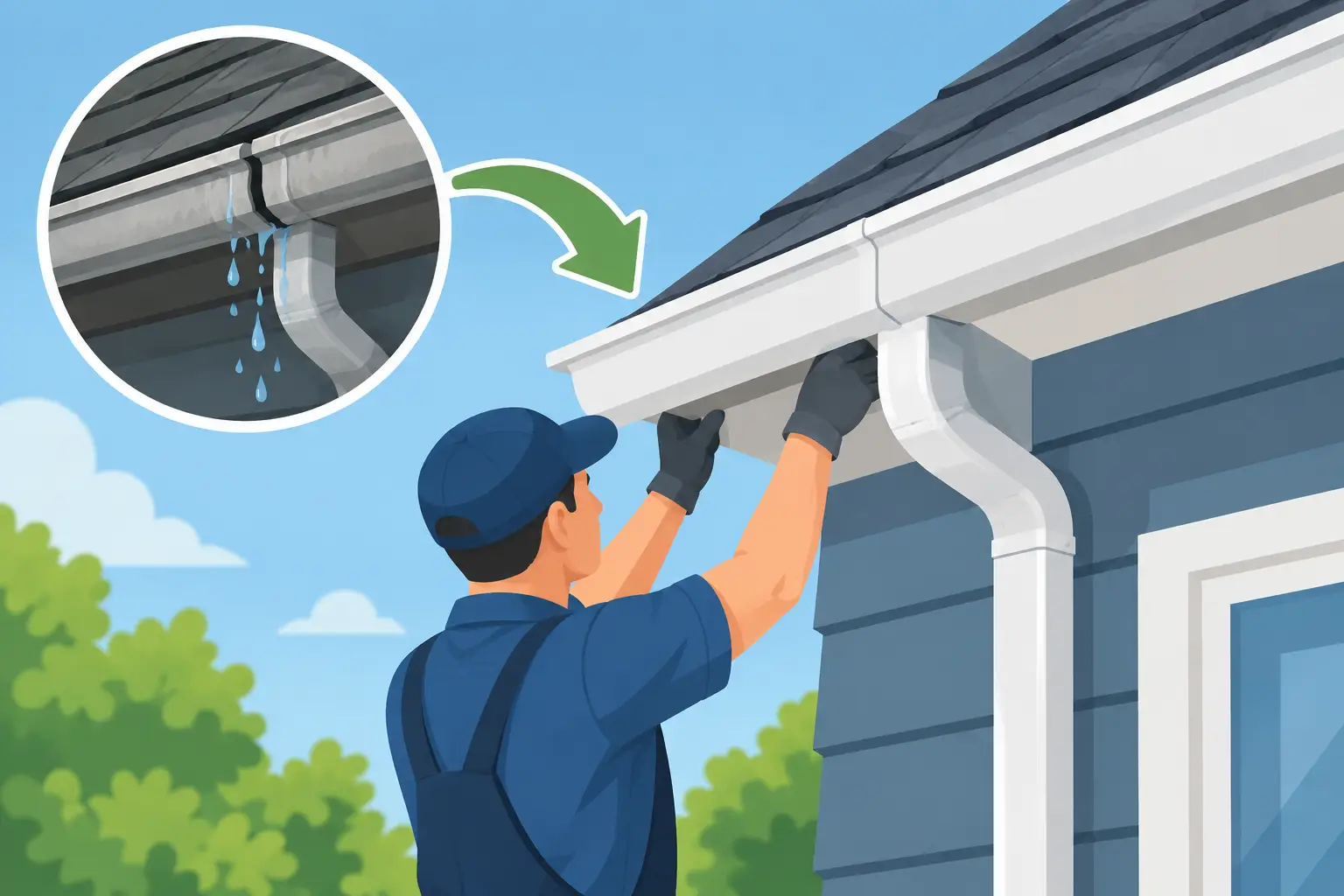
A wet line down the siding after every shower is not just an annoyance. It is a sign that water is escaping where it should be controlled. This example of leaking gutter repair shows why the visible drip is not always the real problem, and why a proper repair starts with inspection rather than simply applying sealant.
A homeowner had noticed water spilling from one corner of the gutter above a single-story extension. The joint looked like the obvious culprit. There was staining on the wall below it, dampness around the window frame, and a patch of moss growing where water had repeatedly landed. But the gutter was also holding leaves and roof grit, and the downspout was running slowly. Repairing the corner alone would have left the main cause in place.
Example of Leaking Gutter Repair: Finding the Cause
The first job is to establish whether the gutter is leaking, overflowing, or both. These problems can look identical from the ground, but they need different repairs.
In this case, debris had built up behind the outlet to the downspout. During a light shower, water could still escape through the pipe. During heavier rain, the restriction caused water to rise until it flowed over the gutter edge and through the corner joint. The constant pressure had also weakened the old rubber seal inside the fitting.
A sound inspection checks more than the wet spot. A gutter specialist should look along the full run for the following issues:
- Blocked gutter channels, outlets, and downspouts
- Loose brackets, sagging sections, and poor gutter slope
- Split joints, worn seals, cracks, and failed end caps
- Damage to fascia boards, soffits, roof edges, and surrounding masonry
This broader check matters because water follows the easiest path. A leak at one joint may be caused by a blockage several feet away, a downspout that cannot clear properly, or a gutter run that has dropped out of line.
The Repair Was More Than a Quick Seal
Once access was set up safely, the gutter was cleared by hand and all debris was removed from the outlet. The downspout was then checked and cleared so water could move freely from roof level to the drain point. Cleaning first gave a clear view of the condition of the joint and the gutter brackets.
The corner fitting was removed rather than coated over with sealant. The old seal had become flattened and brittle, which is common on older plastic gutter systems exposed to years of sun, frost, and movement. The gutter ends were cleaned, the fitting was checked for distortion, and a new watertight seal was installed before the joint was refitted securely.
Two nearby brackets were also replaced. One had loosened from the fascia, allowing the gutter to dip slightly at the corner. That small dip encouraged water and debris to sit against the joint instead of moving toward the outlet. The gutter was realigned to maintain a steady fall toward the downspout.
Finally, the section was water-tested. This is a simple but worthwhile step. Water was run through the gutter to confirm that it traveled cleanly to the outlet, stayed inside the gutter during flow, and did not escape from the repaired connection. A repair should be proven before the equipment is packed away.
Why Sealant Alone Often Fails
Sealant has a place in minor gutter repairs, but it is not a cure for every leak. If a joint is loose, a gutter is misaligned, or standing water is constantly pressing against a fitting, surface sealant may only provide a short-term patch.
It also depends on the type and age of the system. A sound aluminum or cast-iron gutter may be worth carefully repairing because the main lengths are still in good condition. A tired plastic system with several cracked fittings, bowed runs, and loose brackets may cost more to keep patching than to replace in sections or fully renew.
The same applies to fascia damage. If water has been running behind the gutter for a long time, the fascia board may be soft or deteriorated. Fixing the gutter without addressing damaged roofline materials can leave the property exposed. A full inspection allows the homeowner to make an informed decision rather than discovering another issue after the repair is finished.
Signs Your Gutter Needs Attention Now
You do not have to wait for water to pour over the edge before arranging a repair. Staining on walls, peeling paint, green algae, damp patches around windows, and water pooling near the foundation are all warning signs. So are gutters that visibly sag, pull away from the fascia, or drip long after the rain has stopped.
Watch the gutter during rainfall if it is safe to do so from ground level. Overflow at the middle of a run often points to a blockage or insufficient capacity. Water escaping at a join may indicate a failed seal, but it can also mean the run is holding water because it has lost its slope. Dripping from behind the gutter usually deserves prompt attention, as it may be reaching the fascia and roof structure.
For commercial properties, the stakes can be higher. Overflowing gutters above entrances, walkways, loading areas, or flat-roof drainage points can create slip risks as well as building damage. Regular checks are particularly useful on larger buildings where leaves collect in long gutter runs or hidden outlets.
When Repair Is Sensible and When Replacement Is Better
A targeted repair is good value when the issue is local: one failed corner, a cracked outlet, loose brackets, a blocked downspout, or a short damaged gutter length. The goal is to restore drainage properly without replacing materials that are still serviceable.
Replacement becomes the sensible option when faults are repeated across the system. Multiple leaking joints, widespread cracking, corroded metal, severely warped gutters, or rotten fascia boards usually point to a bigger problem. New gutters can be fitted in UPVC, aluminum, or cast iron depending on the look of the property, expected lifespan, budget, and maintenance preference.
Material choice is not just about appearance. UPVC is widely used and practical for many homes, but it can expand and contract with temperature changes. Aluminum is lightweight, durable, and often a good choice for longer runs. Cast iron suits certain period properties and can last well when maintained, although it is heavier and needs proper installation. A good recommendation should be based on the building, not on a one-size-fits-all answer.
Prevention Starts With Proper Gutter Servicing
The best leaking gutter repair is often the one that prevents the next leak. Clearing leaves before they compact around outlets, checking downspouts, and spotting loose brackets early can stop small defects becoming stained walls, damaged fascia, or drainage issues around the property.
For homes close to mature trees, a check after the main leaf fall and again before periods of heavy rain is sensible. Properties with mossy roofs may need more frequent attention because moss and grit wash into the gutters. Roof cleaning, gutter clearing, and minor repairs work best when treated as connected jobs rather than separate problems.
Steve’s Gutters approaches gutter work with that wider view: inspect the run, clear the blockage, repair the fault, check the downspout, and make sure the water has somewhere to go. That is the difference between a quick patch and a repair that protects the building.
If you can see water where it should not be, do not assume the drip tells the whole story. Have the gutter system checked safely and properly, then deal with the cause before the next heavy rain turns a small repair into a larger property bill.
Recommended Posts
Seamless Versus Sectional Gutters: Which Is Best?
October 16, 2026

Can Dirty Gutters Attract Pests? Yes, Here’s Why
October 14, 2026
A Guide to Replacing Fascias on Your Home
October 12, 2026