

Driveway Pressure Washing: When It’s Worth It

by
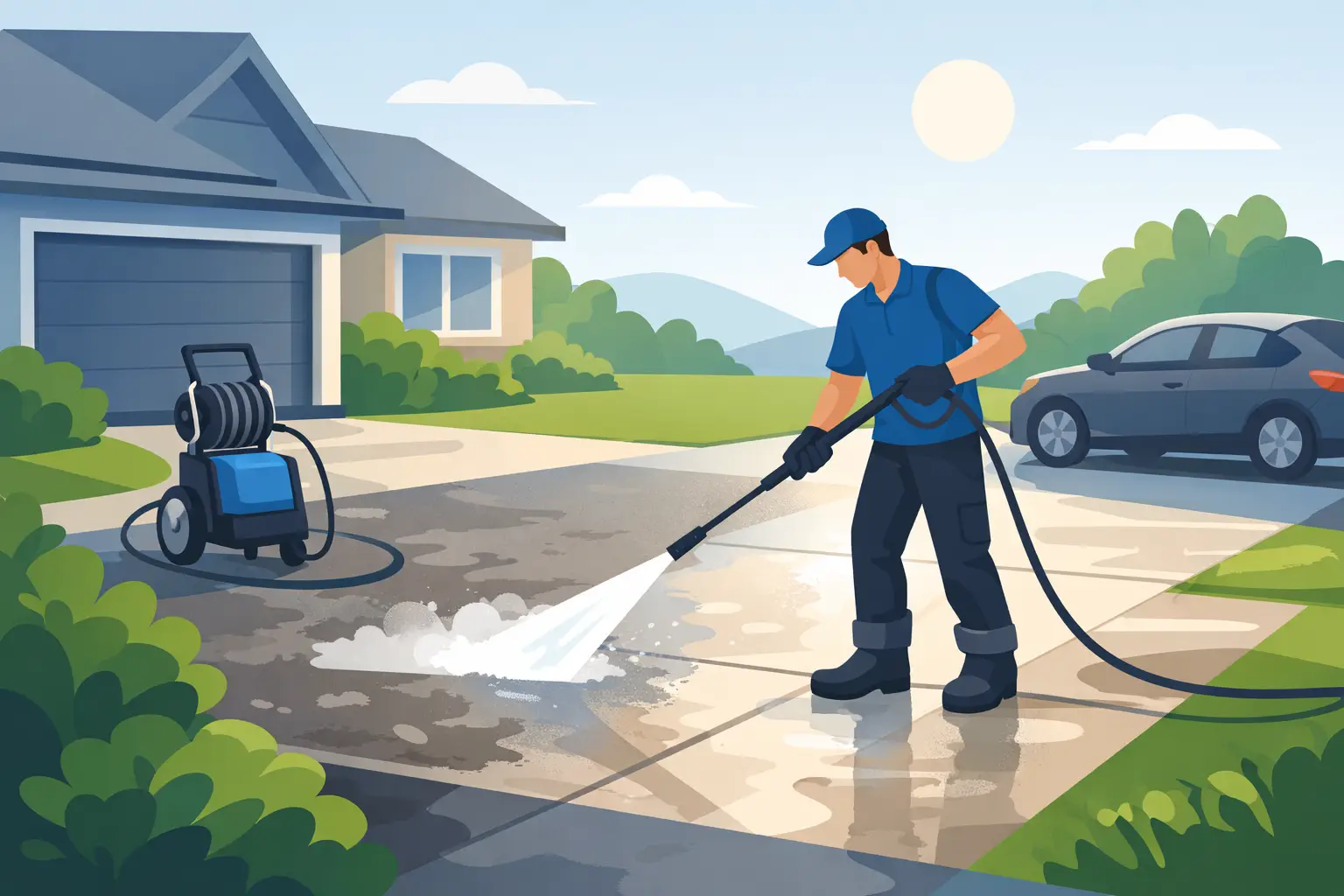
A driveway can look worn out long before the concrete or paving actually needs replacing. Tire marks, green algae, oil spots, and ground-in dirt gradually change the appearance of the whole property. Professional driveway pressure washing is a practical way to bring the surface back to a cleaner, safer condition without the cost and disruption of new paving.
The key is using the right method for the material and the staining. More pressure is not always better. A good cleaning job removes the buildup while protecting joints, edges, drainage areas, and the driveway surface itself.
What driveway pressure washing can remove
Most driveways collect a mixture of everyday dirt and organic growth. Rain carries debris into low spots, vehicles leave behind rubber and oil, and shaded areas stay damp long enough for algae and mildew to take hold. On block paving, weeds and moss often establish themselves in the joints as well.
Pressure washing can make a major difference to dirt, mud, algae, mildew, moss, leaf stains, tire marks, and general weathering. It is especially effective where the driveway has become slippery during wet weather. A clean surface is easier to inspect too, so small cracks, loose blocks, failing joint material, or drainage issues are less likely to go unnoticed.
Oil staining is different. Fresh spills respond far better than old, deeply absorbed marks. A professional may need to use an appropriate degreasing treatment before cleaning, and even then, a long-standing oil stain may lighten rather than disappear completely. Honest expectations matter more than promising a perfect result where the surface has been permanently marked.
Why the right equipment and technique matter
A domestic pressure washer can be useful for a small patio or a quick rinse, but driveways are larger, tougher surfaces with more opportunities for damage. Poor technique can leave visible striping, blast jointing sand out from between paving blocks, or force water beneath loose areas. It can also spread dirty water across walls, garage doors, and nearby paths.
Professional driveway cleaning is about control as much as power. The operator should adjust the pressure, nozzle, distance, and cleaning pattern to suit the surface. A rotary surface cleaner is often the best choice for broad areas of concrete or paving because it gives a more even finish than sweeping a narrow jet back and forth by hand.
The material makes a real difference. Concrete can usually tolerate a thorough clean when it is sound, but damaged or flaking concrete needs a cautious approach. Block paving needs care around the joints. Natural stone, especially softer or more porous varieties, can be marked or eroded if treated aggressively. Asphalt and tarmac are generally not suitable for high-pressure cleaning in the same way as concrete or paving, as the surface can be damaged by excessive force.
A reliable exterior maintenance contractor will assess the driveway before starting rather than treating every surface as if it were identical.
Cleaning block paving properly
Block paving often produces the most dramatic before-and-after result, but it also needs the most follow-up work. Cleaning removes moss, weeds, dirt, and loose material from the joints. That is necessary, but those joints then need to be restored once the area has dried.
Re-sanding is normally part of a proper block paving clean. Kiln-dried sand is brushed into the joints to help keep the blocks stable and reduce movement. Skipping this step can leave the surface looking clean but less secure, particularly on an older driveway where jointing material was already low.
Sealing can be considered after cleaning and re-sanding, but it is not automatically the right choice. A suitable sealer may improve resistance to staining and make future maintenance easier. However, it should only be applied to a fully dry, well-prepared surface, and the wrong product can leave a patchy or overly glossy finish. It depends on the paving type, its condition, and how the driveway is used.
When should you book driveway pressure washing?
There is no single schedule that suits every property. A sunny, open driveway may only need a professional clean every couple of years. A north-facing driveway beneath trees may need attention more often because moisture, leaf debris, and shade encourage green growth.
It is worth arranging cleaning when algae makes the surface slick, the driveway has become noticeably darker than surrounding paths, weeds are growing through the joints, or oil and tire marks are affecting the appearance of the front of the property. Many homeowners choose to have it done in spring, when winter grime is most visible, or before putting a property on the market.
Property managers may need a more regular plan, particularly for communal paths, parking areas, or entrances where appearance and slip hazards affect residents and visitors. In these settings, cleaning should be coordinated around vehicle access, pedestrian safety, and suitable drainage.
Preparation helps deliver a better result
Before a cleaning visit, clear vehicles, bins, planters, and movable furniture from the driveway if possible. This gives the operator access to the full surface and avoids working around obstacles that can leave uneven areas behind.
Doors and windows should be closed, and nearby items that could be affected by spray should be moved or protected. If the driveway drains toward a garage, lower-level entrance, or public sidewalk, the contractor should understand that before work begins. Water management is part of a responsible job, especially where dirt, cleaning products, or runoff could enter drains.
If you have noticed sunken blocks, crumbling concrete, loose edging, or standing water after rain, point it out during the inspection. Pressure washing can improve the look of a driveway, but it cannot correct a structural or drainage problem on its own. In some cases, a repair should be completed before cleaning. In others, cleaning makes the repair need much easier to see.
Can you do it yourself?
For a small area of sound concrete with light dirt, a homeowner can achieve a decent result with the right equipment, time, and care. Start at a low setting, keep the nozzle moving, and test an inconspicuous area first. Never aim high pressure directly at cracks, loose mortar, damaged paving, or the joints of block paving.
The trade-off is time and consistency. A driveway can take longer than expected with a domestic machine, and uneven passes can leave lines that only become clear once the surface dries. Heavy organic growth, old stains, large areas, and block paving that needs re-sanding are usually better handled professionally.
There is also a safety issue. Pressure washers can cause serious injury, and wet surfaces quickly become slippery. Suitable footwear, controlled working areas, and care around electrical outlets, glass, and vehicles are essential.
Choose a contractor who looks beyond the surface
The best driveway cleaning service does not simply arrive, wash the area quickly, and leave. It considers the paving material, condition, staining, drainage, edges, and any aftercare required. Ask whether re-sanding is included for block paving, how oil stains will be treated, and whether the quote covers the full area.
You should also expect clear pricing, insured work, and a respectful approach to your property. Steve’s Gutters brings the same practical mindset used in exterior maintenance work: inspect the issue properly, use the right method, and avoid a short-term fix that creates another problem later.
A cleaner driveway is not just about appearances. It can make the entrance to your home safer, easier to maintain, and more welcoming every time you come through the gate. When the surface needs attention, deal with it before a season of rain, shade, and vehicle traffic turns a manageable clean into a bigger repair job.
Recommended Posts
Seamless Versus Sectional Gutters: Which Is Best?
October 16, 2026
Can Dirty Gutters Attract Pests? Yes, Here’s Why
October 14, 2026
A Guide to Replacing Fascias on Your Home
October 12, 2026