

Do Gutters Affect Damp? Yes – Here’s How

by
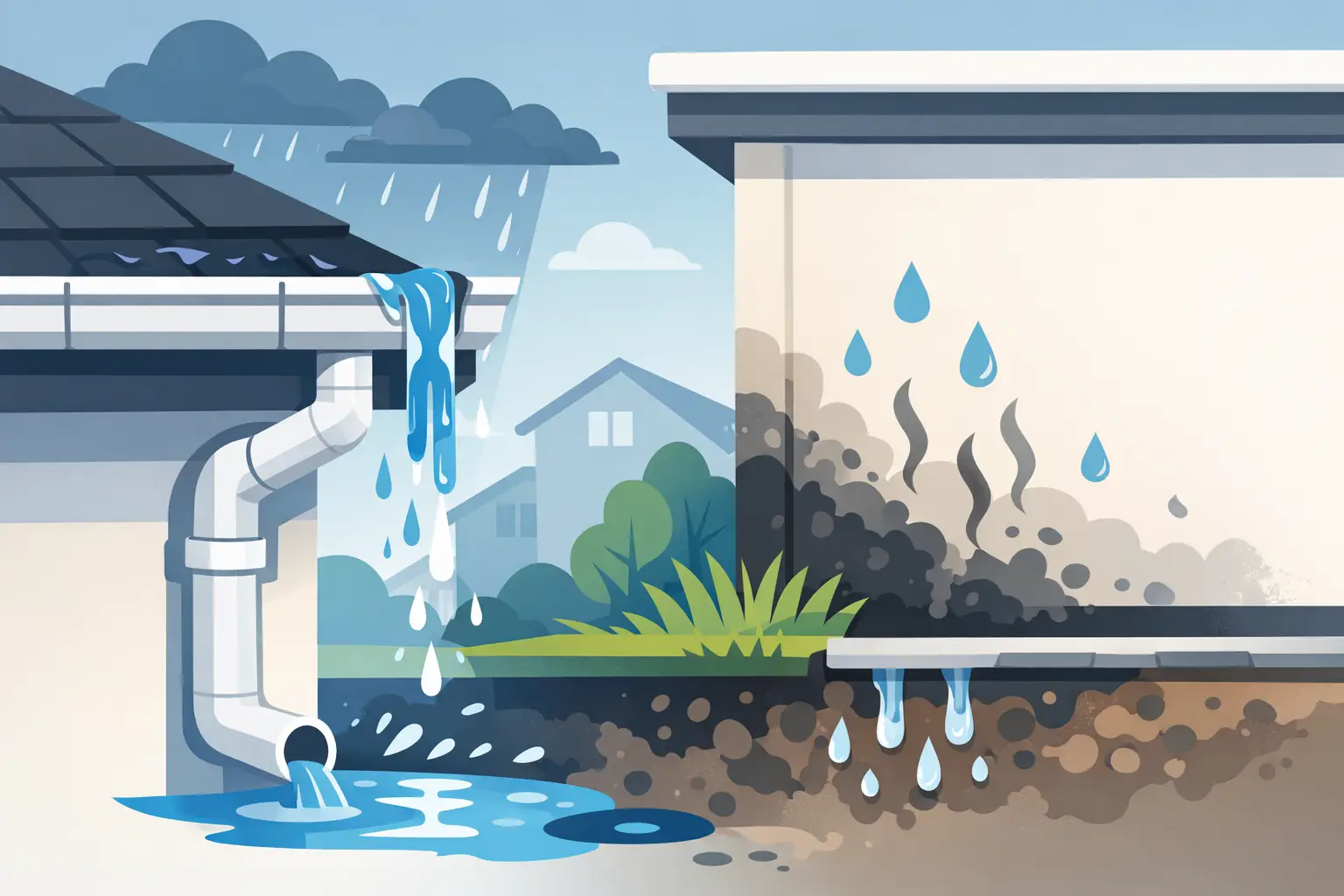
A damp patch on an inside wall rarely starts inside the house. More often, the trouble begins outside, where rainwater is meant to be carried safely away. So if you are asking do gutters affect damp, the short answer is yes – and in many properties, they are one of the first things worth checking.
When gutters are blocked, leaking, poorly pitched, or simply too worn out to do their job, water runs where it should not. Instead of moving into the downpipe and away from the building, it spills down exterior walls, soaks masonry, saturates joints, and can eventually work its way indoors. What starts as a small overflow at roof level can turn into peeling paint, stained plaster, mold growth, and costly repair work.
Do gutters affect damp around the home?
They certainly can, but not every damp issue is caused by guttering. Damp is one of those problems that needs a proper look rather than guesswork. Condensation, plumbing leaks, roof defects, cracked render, and ground-level drainage issues can all play a part. Still, gutters are a common cause because they deal with such a large volume of water every time it rains.
A working gutter system has a simple job. It catches rainwater from the roof, channels it to the downpipes, and sends it away from the walls and foundation. If that system fails, the building takes the hit. On a heavy downpour, even a small blockage can force gallons of water over the edge and straight onto the brickwork below.
This is why gutter problems are often dismissed for too long. Homeowners see a bit of dripping or a patch of green staining and put it down to the weather. By the time damp becomes visible indoors, the issue may have been building for months.
How bad gutters lead to damp
The link between faulty gutters and damp is straightforward. Water repeatedly wets parts of the property that should stay relatively dry. Once that happens often enough, materials begin to absorb and hold moisture.
Blocked gutters are one of the most common culprits. Leaves, moss from the roof, silt, and debris build up in the channel until rainwater cannot flow freely. It backs up and spills over the front or rear edge. If that overflow lands on walls, window heads, soffits, or along the base of the property, damp conditions follow.
Leaking joints can do the same thing, though in a more targeted way. A single failed seal may not look dramatic, but if water drips from the same spot every time it rains, it can saturate one section of wall. That is often when you see a stubborn damp patch appear indoors in a very specific area.
Poor pitch is another issue. Gutters need the right fall so water moves toward the outlet. If sections sag or brackets loosen, water sits in the run instead of draining away. Standing water adds weight, puts strain on fixings, and tends to find weak points. In colder spells it can make matters worse.
Downpipes matter just as much. A blocked or disconnected downpipe means water has nowhere to go. It may overflow at the top, spill from a joint midway down, or dump directly at the base of the wall if the lower section is cracked or missing. That can contribute to penetrating damp and, in some cases, rising moisture problems around the lower masonry.
Signs your gutters may be causing damp
You do not always need to see water pouring over the side to know something is wrong. Some of the clearest signs show up after repeated wet weather rather than during one dramatic storm.
Look for staining on brickwork, green algae, dark vertical lines beneath the gutter, peeling paint around upper walls, and damp patches that seem to worsen after rain. You may also notice overflowing corners, water marks around fascia boards, or puddling near the foundation. Inside the property, the clues can include mold on external-facing walls, bubbling plaster, musty smells, and cold damp patches near ceilings or upstairs corners.
If the problem is more advanced, timber around the roofline may begin to suffer as well. Fascias and soffits exposed to regular overflow can rot, weaken, or discolor. That is why a proper inspection should never stop at cleaning out debris. The whole roofline needs checking.
Why the cause is not always obvious
One of the trickiest parts of damp diagnosis is that the symptom can show up far away from the source. Water does not always enter and appear in the same place. It can track along brickwork, cavity walls, rafters, or internal finishes before becoming visible.
That means the damp patch on a bedroom wall may be linked to a leaking joint above a bay window, or an overflowing valley feeding too much water into an undersized gutter. This is where experience matters. A quick vacuum clean without checking joints, brackets, outlets, and downpipes may leave the actual problem untouched.
It also depends on the age and design of the property. Older homes with solid walls can absorb moisture differently than newer cavity-wall construction. Conservatories, extensions, dormers, and low-level roof sections can all create awkward drainage points where gutter issues become more likely.
Cleaning helps, but repairs are often the real answer
A lot of gutter trouble starts with blockages, so cleaning is essential. But cleaning alone is not always enough. If the gutter is cracked, misaligned, loose on the brackets, or joined badly, it can still leak and overflow once the debris is gone.
That is where many homeowners get frustrated. They pay for a basic clean, the gutters look tidier, but the wall is still getting wet. The reason is simple – the service dealt with the symptom, not the fault.
A proper gutter service should include clearing debris, checking every run, testing flow where needed, inspecting downpipes, and spotting defects that will keep causing problems. In some cases, a small repair solves it. In others, replacing a failing section is the more cost-effective option, especially if the material is brittle, warped, or at the end of its life.
When damp from gutters becomes expensive
Left alone, bad guttering can create far more than cosmetic damage. Persistent water on walls can damage plaster, decoration, insulation, and timber. It can stain masonry, weaken mortar joints, and encourage mold that is unpleasant to live with and harder to remove than many people expect.
At foundation level, repeated discharge from leaking or poorly directed downpipes can oversaturate the ground next to the property. That may not trigger a major issue overnight, but over time it can contribute to movement, surface damage, and drainage problems around paths, patios, and entrances.
Commercial properties face the same risks, often on a larger scale. Water staining on exterior walls, slippery walkways, and internal damp complaints can quickly become a maintenance and liability issue if gutter defects are ignored.
What to do if you suspect gutters are causing damp
Start outside, not inside. If you can safely view the guttering from ground level, look for obvious overflow marks, sagging sections, vegetation growth, stains, and joints that appear to be dripping or separated. Check whether downpipes seem blocked and whether rainwater is being carried away properly at ground level.
If damp patches seem to worsen after rainfall, that is another useful clue. Timing matters. Condensation tends to build with indoor humidity and poor ventilation, while gutter-related damp often becomes more noticeable after wet weather.
The safest next step is to have the system inspected properly. That means more than asking whether the gutters need emptying. You want to know whether they are sound, aligned correctly, draining fully, and protecting the property as they should. A dependable contractor should be able to tell you whether cleaning, repair, or replacement is the sensible route.
For many homeowners and property managers, this is why using a specialist makes better value than going for the cheapest clean-only option. A full check can catch split joints, failed brackets, blocked downpipes, and roofline wear before they turn into internal repairs.
At Steve’s Gutters, that practical approach matters because guttering should not just look clear from the ground. It should work properly in heavy rain, protect the walls, and move water safely away from the building.
If you have damp and the cause is unclear, do not assume it is rising damp and do not assume it is only condensation either. Gutters are one of the most overlooked parts of the property, yet they handle one of the biggest jobs. Catch the problem early, and a simple fix may save you a much bigger repair bill later.
Recommended Posts
Seamless Versus Sectional Gutters: Which Is Best?
October 16, 2026

Can Dirty Gutters Attract Pests? Yes, Here’s Why
October 14, 2026
A Guide to Replacing Fascias on Your Home
October 12, 2026