

Can Sagging Gutters Be Repaired? What to Know

by
A gutter that sags between brackets is not just an eyesore. It can hold standing water, overflow against brickwork, and pull further away from the roofline every time it rains. So, can sagging gutters be repaired? In many cases, yes. The right repair depends on why the gutter has dropped, how long the problem has been left, and whether the guttering itself is still in sound condition.
A proper inspection matters because sagging is often the visible symptom of a wider issue. A blocked downspout, loose brackets, worn fascia boards, poor original installation, or a section of gutter that is simply past its useful life can all cause the same result. Cleaning alone may remove the weight of debris, but it will not fix failed supports or damaged roofline boards.
Why Gutters Start to Sag
Gutters are designed to carry rainwater along a gentle fall toward the downspout. When that line changes, water starts sitting in low spots. The extra weight of pooled water, wet leaves, moss, and roof grit then puts more strain on the brackets, joints, and fascia board.
The most common cause is a buildup of debris. Leaves, moss, and sludge can become surprisingly heavy when soaked, especially in a long run of guttering. If the downspout is also blocked, rainwater has nowhere to go, and the gutter can fill like a trough.
Loose, missing, or broken brackets are another frequent cause. Plastic brackets can become brittle over time, while metal fixings may corrode or work loose. Brackets that were spaced too far apart during installation may not be able to support the gutter when it is full of water.
Sometimes the problem is behind the gutter. Fascia boards provide the fixing point for most gutter brackets. If timber fascia has softened through rot, the screws may no longer hold securely. Fitting new brackets into weak wood will not provide a lasting repair. The board needs attention first.
Older gutters can also lose their shape. UPVC may warp after years of sun exposure and standing water, while cast iron can corrode around joints and fixings. A sagging section with cracks, splits, or repeated leaks may be better replaced than repeatedly patched.
Can Sagging Gutters Be Repaired Without Replacement?
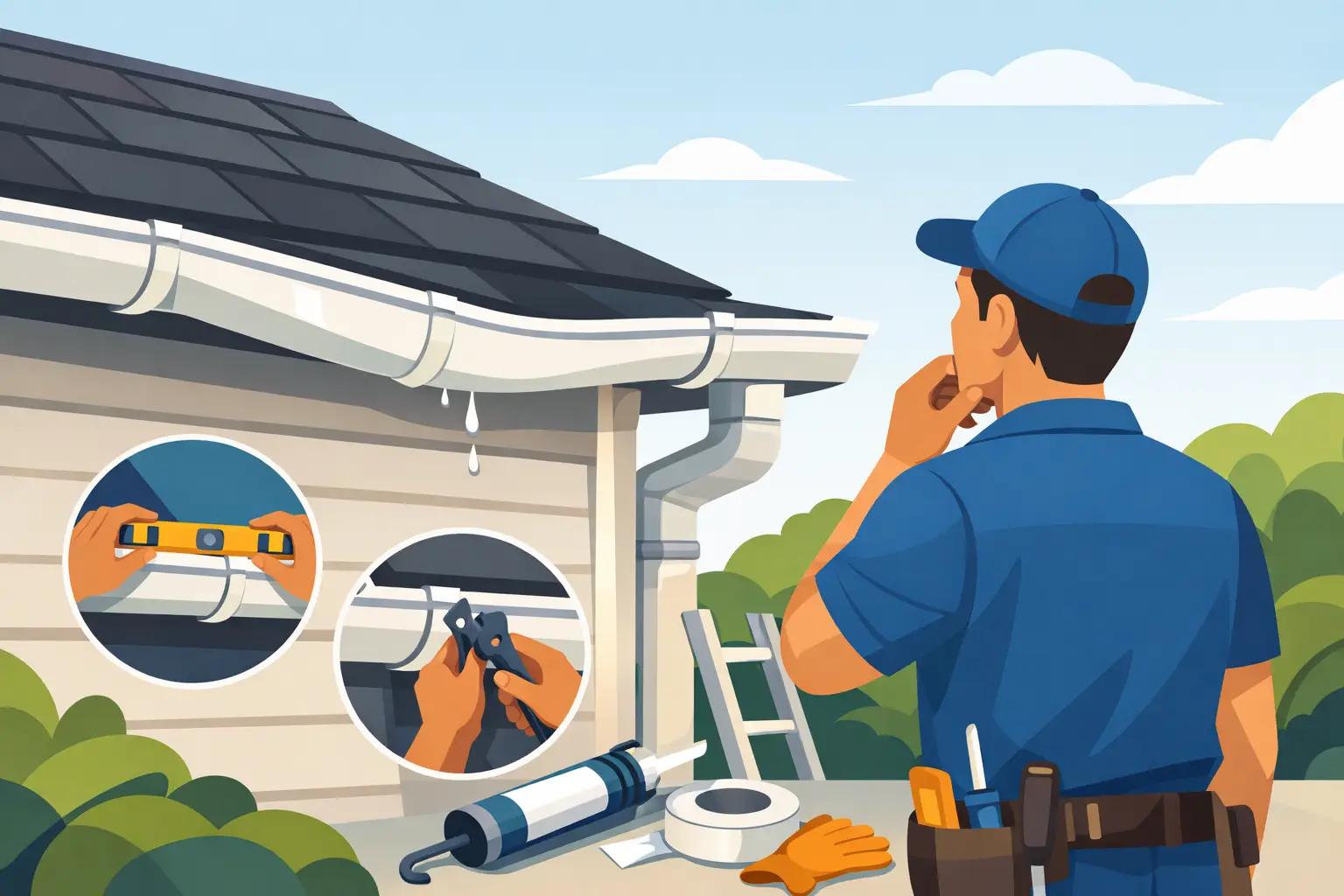
Yes, if the gutter channel is intact and the fascia board is sound. A straightforward repair usually involves clearing the gutter and downspout, resetting the correct fall, and fitting or repositioning secure brackets. The section should then be tested with water to make sure it drains properly and does not leak at the joints.
If only one or two brackets have failed, replacement brackets may solve the issue. The key is not simply putting the gutter back where it was. It needs to be supported at the correct spacing and set to a consistent slope toward the downspout. A gutter that looks level can still be wrong if water is left sitting in it after rainfall.
A loose joint can sometimes make a gutter appear to sag when the real issue is movement between sections. Depending on the material and condition, a contractor may reseat the section, renew a seal, replace a connector, or fit a new length of guttering.
Repairs are usually good value when the rest of the system is in reasonable condition. They become less cost-effective when several sections are distorted, brackets are failing along the full run, or the fascia boards need significant work. In that situation, a partial repair can hold for a while, but it may only delay a more sensible replacement.
When a Repair Is Likely to Last
A repair has a strong chance of lasting when the sagging is limited to one area, the gutter material is not cracked or badly worn, and the supporting fascia is solid. It also helps when the cause is clear, such as a blocked downspout or a bracket that has pulled loose after a period of heavy debris buildup.
Regular cleaning after the repair makes a real difference. Gutters should not be left to carry wet leaves and moss through the winter, particularly on properties surrounded by mature trees. Clearing the system before it becomes overloaded protects both the guttering and the roofline it is attached to.
When Replacement Is the Better Option
Replacement is often the safer choice if gutters are repeatedly sagging in different places, leaking from several joints, or showing cracks and permanent distortion. It may also be needed where corroded cast iron has become thin or where old UPVC no longer holds its shape.
If the fascia and soffits are damaged, gutter replacement may need to be part of a wider roofline repair. This is not an area for a quick fix. Water running behind failed gutters can damage timber, stain walls, and create problems around windows, soffits, and eaves.
A good contractor should explain whether a targeted repair is sensible or whether replacement will save money over the longer term. There is no benefit in recommending a full new system where a few properly fitted brackets will do the job. Equally, there is little value in repeatedly repairing guttering that has reached the end of its serviceable life.
What a Proper Sagging Gutter Repair Involves
A reliable repair starts with an inspection from ground level and, where safe, at roofline level. The gutter should be checked for debris, standing water, leaks, loose joints, cracks, bracket spacing, and the condition of the fascia board. The downspout should be checked as well, because a hidden blockage below can cause water to back up into an otherwise sound gutter.
The gutter is then cleaned out before repairs are made. This matters because a full channel can disguise the true condition of the gutter and make it impossible to set the correct fall accurately.
Once clear, the installer can remove loose brackets, replace damaged fittings, and reset the gutter line. New brackets must be fixed into solid material, not weak timber or existing holes that no longer grip. Where necessary, failed sections, connectors, or downspout components can be replaced at the same time.
Finally, the system should be water-tested. This confirms that water runs freely to the outlet, does not pool in the repaired section, and does not escape from joints. It is a simple but essential part of the job. A gutter can look straight from the ground and still fail during the next heavy shower.
Why Sagging Gutters Should Not Be Ignored
The longer a gutter stays out of line, the more likely it is to cause water damage. Overflowing water may run down exterior walls, soak into brickwork, and splash around the foundation. In colder conditions, standing water can freeze and add further weight to already stressed brackets.
A sagging gutter can also pull on the fascia board. What starts as a loose bracket may eventually become damaged timber and a larger roofline repair. For landlords and property managers, unresolved gutter issues can also lead to complaints about damp, staining, slippery paths, or water spilling near entrances.
The warning signs are usually easy to spot: visible dips in the gutter, water overflowing from the middle rather than at the outlet, drips behind the gutter, loose brackets, stains below the eaves, or sections that move when rainwater collects. These are worth dealing with before the next spell of wet weather.
Should You Repair a Sagging Gutter Yourself?
Minor debris removal from a safely accessible section may be manageable for some homeowners, but working at roof height carries real risk. Ladders need stable ground and proper positioning, and gutters are not designed to take a person’s weight. Pulling on a loose gutter while on a ladder can make the situation worse quickly.
There is also the question of diagnosis. Replacing a visible bracket may seem simple, but if the fascia behind it is rotten or the downspout remains blocked, the sag will return. A professional repair identifies the cause, not just the part that has moved.
For properties with upper stories, extensions, conservatories, older cast iron systems, or suspected fascia damage, it is usually best to arrange an inspection. Steve’s Gutters can clean, assess, repair, or replace guttering as needed, rather than treating a sagging run as a cleaning-only job.
Act Before a Small Dip Becomes a Bigger Repair
Sagging gutters are often repairable, especially when the issue is caught early and the roofline is still sound. The practical next step is to have the system cleared, the downspouts checked, and the brackets and fascia inspected properly. A secure repair now can prevent overflowing water from turning a manageable maintenance job into damaged walls, rotten boards, and a much larger bill later.
Recommended Posts
Seamless Versus Sectional Gutters: Which Is Best?
October 16, 2026
Can Dirty Gutters Attract Pests? Yes, Here’s Why
October 14, 2026
A Guide to Replacing Fascias on Your Home
October 12, 2026