

Best Guttering for Heavy Rain That Works

by
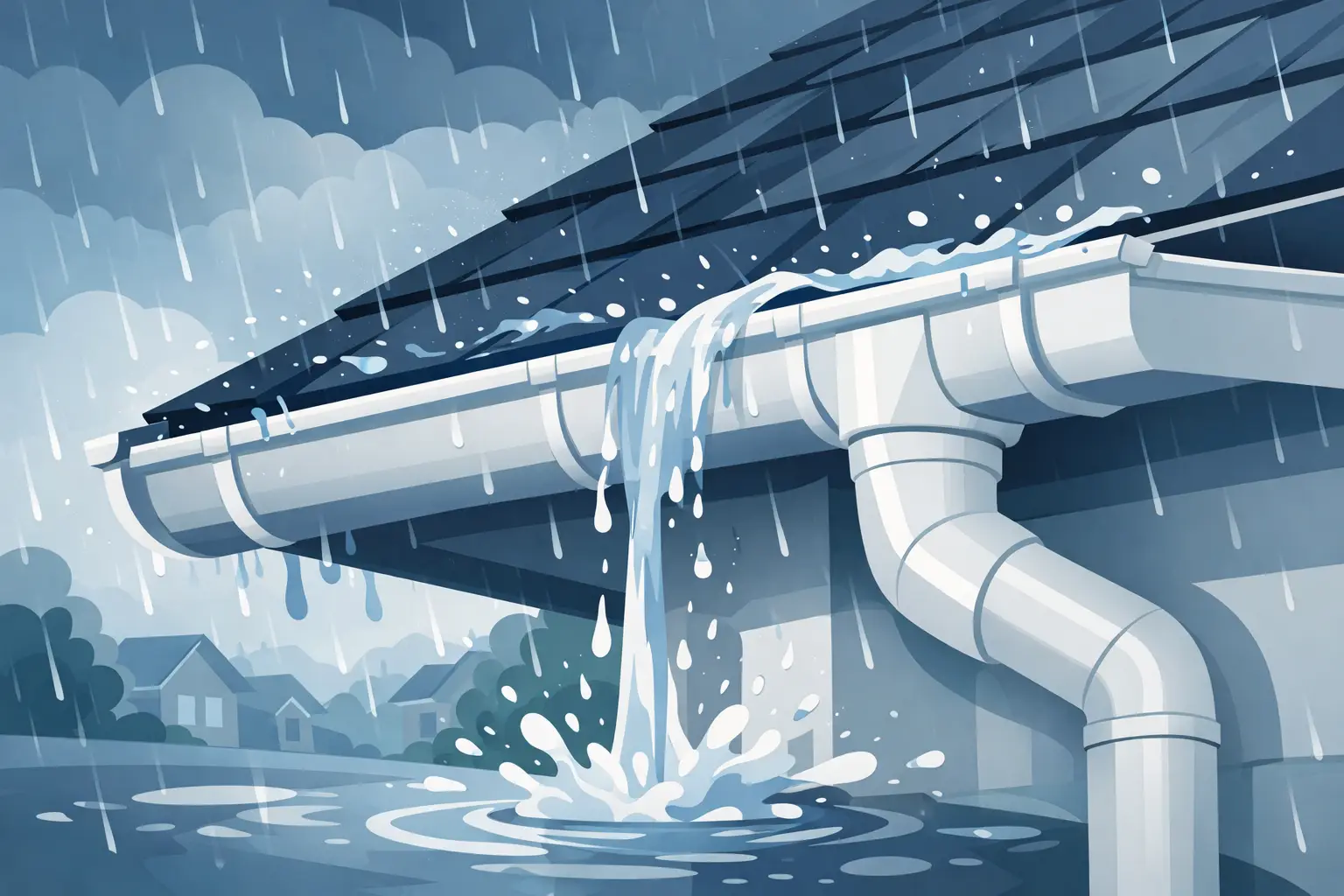
When rainwater spills over the front edge of a gutter, the problem is rarely just the rain. It is usually a gutter system that is too small, poorly pitched, blocked, damaged, or short of downspout capacity. The best guttering for heavy rain is a properly sized system with secure fittings and clear downspouts that can move water away from the building before it reaches walls, foundations, or roofline boards.
For many homes, a standard 5-inch gutter will handle normal rainfall. But properties with large roof areas, steep roofs, roof valleys, or frequent intense storms often need more capacity. Choosing the right replacement is not about buying the biggest gutter available. It is about matching the gutter, outlets, and downspouts to the roof and making sure the whole system is installed correctly.
Why Heavy Rain Overwhelms Gutters
A roof collects far more water than most people expect. During a hard storm, every section of roof sends water toward the eaves at once. A valley, where two roof slopes meet, concentrates that flow into one small area. If the gutter below is narrow or the outlet is restricted, water has nowhere to go except over the side.
Overflow can soak fascia boards, stain brickwork, rot timber trim, and create damp patches around windows. Water landing beside the house can also erode soil, splash dirt onto siding, and add unnecessary pressure around the foundation. On commercial buildings, overflowing gutters can make entranceways slippery and cause water to run down exterior walls.
Leaves and moss make matters worse, but a clean gutter can still overflow if it has been fitted at the wrong angle or has too few downspouts. This is why gutter replacement should start with an assessment of the full drainage route, not simply a measurement along the roof edge.
Best Guttering for Heavy Rain: Start With Size
For most homes that regularly experience heavy downpours, 6-inch K-style aluminum gutters are a sensible starting point. They carry noticeably more water than a standard 5-inch system while still suiting the appearance of many residential properties. Their flat rear and decorative front profile allow them to sit neatly against fascia boards, and they are widely available.
A 5-inch gutter may still be suitable for a small, straightforward roof with several downspouts and no valleys. It can be a cost-effective option where the roof catchment area is modest. The mistake is treating 5-inch guttering as the default for every property, particularly on large extensions, garages, conservatories, or steep roof sections.
Half-round gutters are another option. They have a simple curved profile and can shed debris well when correctly installed. However, they usually hold less water than a similarly sized K-style gutter, so they are not always the first choice where maximum rain capacity is the priority. They can work well on traditional homes when sized appropriately and paired with adequate downspouts.
For very large roofs or commercial properties, oversized gutters and box gutters may be required. These systems need careful design, especially where water is concealed within roof structures. A box gutter failure can cause major internal damage, so capacity, falls, outlets, and emergency overflow routes should all be considered before installation.
Downspouts Matter as Much as the Gutter
A large gutter with one undersized downspout is like a large sink with a blocked drain. Water may collect well for a moment, but it will overflow when the storm keeps coming. Downspouts need to take water out of the gutter quickly and discharge it safely away from the building.
For heavier rainfall, wider downspouts are generally preferable to narrow ones. Rectangular 3-by-4-inch downspouts or larger round downspouts can carry significantly more water than smaller residential sizes. More importantly, the number and location of downspouts must suit the roof layout.
Long gutter runs often benefit from an outlet at each end or an additional outlet near a valley. A downspout placed only at the far end of a long run forces water to travel too far through the gutter during peak rainfall. Where practical, adding an outlet can be more effective than simply replacing the existing gutter with a deeper profile.
The bottom of every downspout also needs attention. Water should flow into a suitable drain, underground leader, or extension that directs it away from the foundation. A gutter system is not doing its job if it collects rain perfectly and then drops it beside the wall.
Choosing the Right Material
Aluminum is often the best all-around choice for heavy-rain guttering. It is lightweight, corrosion-resistant, and available in seamless lengths that reduce the number of joints along a run. Fewer joints mean fewer potential leak points. Quality aluminum gutters also come in a range of colors and can be fitted to suit both modern and traditional homes.
Steel gutters are strong and can cope well with physical impact, but they must be properly coated and maintained to prevent rust. They may suit certain commercial properties or buildings where a tougher material is needed, though the added weight and maintenance requirements should be considered.
Vinyl gutters are affordable and easy to install, but they are not always the best long-term option for severe weather. They can become brittle in cold conditions, warp with heat, and sag when loaded with water, leaves, or ice. A well-fitted vinyl system can be suitable for a smaller budget project, but it is rarely the strongest choice for a large roof that receives repeated heavy rainfall.
Copper and cast iron provide a distinctive appearance and can last for many years when maintained properly. Both are heavier and more expensive than aluminum. Cast iron, in particular, needs regular painting and attention to prevent corrosion. These materials are usually chosen to preserve the character of period homes rather than for capacity alone.
Installation Details That Prevent Overflow
Even the best material and size will fail if installation is poor. Gutters need a consistent slope toward the outlet. Too little slope allows standing water and debris to build up. Too much slope can look unsightly and may cause water to rush past an outlet during intense rainfall.
Hangers should be spaced closely enough to support the gutter under a full water load. Sagging sections create low spots that collect debris and slow drainage. Fascia boards also need to be sound before new gutters are fitted. Fastening a new system to rotted timber only hides the issue until the gutter starts pulling away.
Roof valleys need special attention. If a valley sends a concentrated sheet of water into one point, that area may require a wider gutter, a splash guard, or a revised outlet arrangement. Splash guards can help direct water into the gutter, but they are not a cure for an undersized system or a blocked downspout.
Keep High-Capacity Gutters Clear
Bigger gutters buy you capacity, not freedom from maintenance. Leaves, roof moss, nesting material, and loose granules can still lodge at outlets and downspout bends. A blocked downspout can cause a clean-looking gutter to overflow within minutes of a storm starting.
Gutters should be inspected at least twice a year and after major storms, especially if there are overhanging trees. Look for standing water, drips at joints, loose brackets, stains below the gutter line, and vegetation growing from the channel. These are early warnings that drainage is restricted or the gutter has lost its correct fall.
Gutter guards can reduce the amount of large debris entering the system, but they are not maintenance-free. Fine debris and moss can settle on top of some guards, while poorly fitted guards can restrict water flow in heavy rain. The right guard depends on the roof, nearby trees, and the gutter profile.
When Replacement Is the Better Value
Cleaning and minor repairs are sensible when the existing system is sound. If gutters are repeatedly overflowing despite being cleared, pulling away from the fascia, leaking at several joints, or showing widespread corrosion, replacement is often the more cost-effective answer. Repeated patch repairs can soon cost more than fitting a correctly sized system designed for the roof.
A proper assessment should include the roof area, valleys, gutter run lengths, outlet positions, downspout condition, fascia integrity, and where the water goes once it reaches ground level. That is the difference between a quick gutter swap and a drainage solution that stands up to the next heavy storm.
Before the next period of wet weather, have the system checked while any small faults are still straightforward to fix. A correctly sized gutter and clear downspout may not be the most noticeable improvement to a property, but they can prevent some of the most expensive water damage.
Recommended Posts
Seamless Versus Sectional Gutters: Which Is Best?
October 16, 2026

Can Dirty Gutters Attract Pests? Yes, Here’s Why
October 14, 2026
A Guide to Replacing Fascias on Your Home
October 12, 2026