

Best Signs of Failing Soffits on Your Home

by
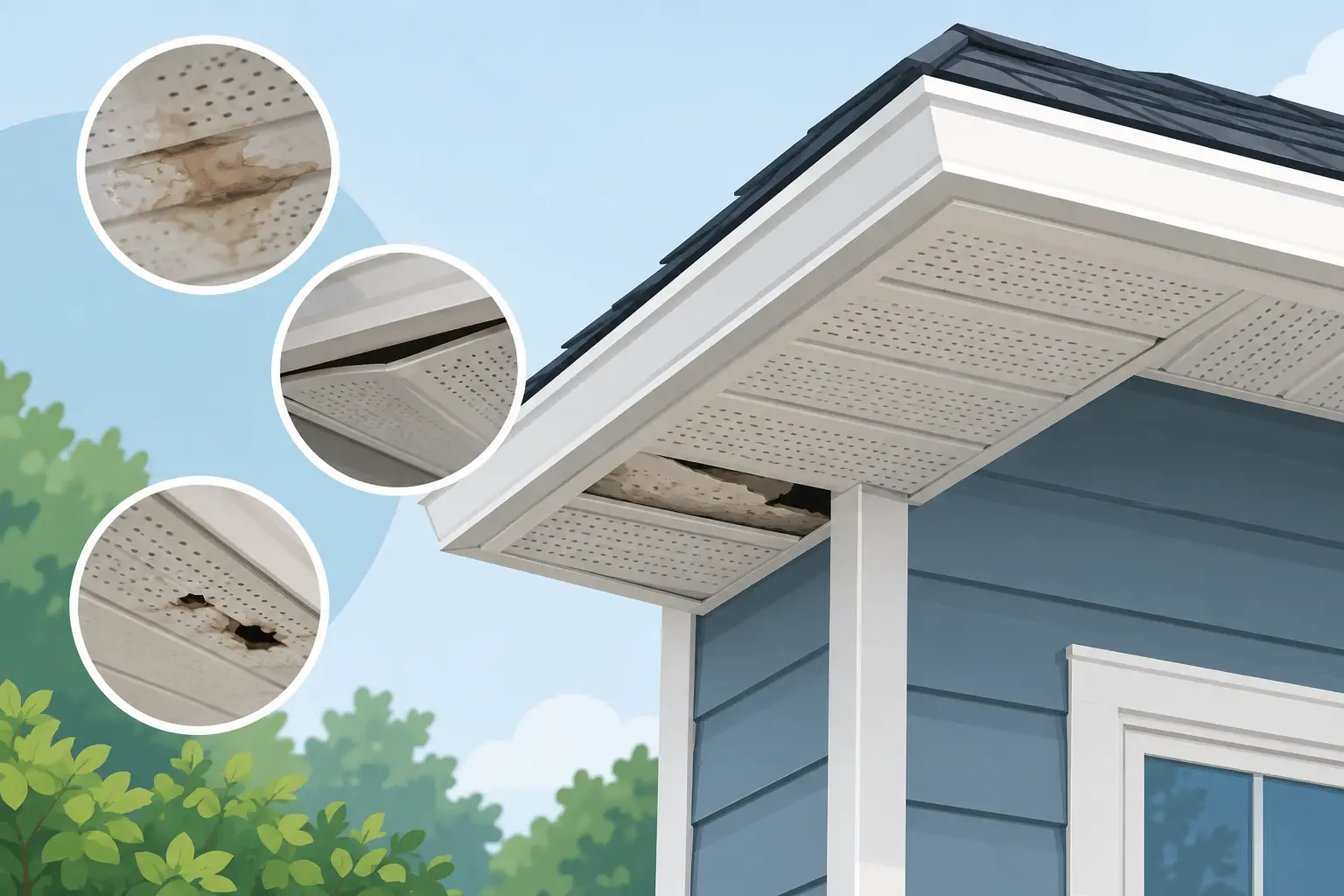
A dark stain beneath the eaves, a gutter that has started pulling away, or birds disappearing into a roof edge are not cosmetic issues to put off. They can be some of the best signs of failing soffits, and they often point to moisture problems that are affecting more than the visible trim.
Soffits sit on the underside of your roof overhang, bridging the gap between the exterior wall and the fascia board. They help give the roofline a neat finish, protect exposed timber, and, where ventilated, allow air to move through the attic. When they deteriorate, water, pests, and poor ventilation can quickly turn a small repair into a larger roofline job.
Best Signs of Failing Soffits to Watch For
Peeling paint, bubbling, or discoloration
Paint that blisters or peels repeatedly around the eaves usually means moisture is getting behind the finish. On timber soffits, this can be the first visible stage of rot. On UPVC soffits, staining may signal overflowing gutters, leaking joints, or water tracking back from the roof edge.
A fresh coat of paint may improve the appearance for a while, but it will not cure the cause. If water is running over the back of a blocked gutter or leaking through a damaged roof edge, the problem will return. The area needs to be inspected before any decorating is done.
Soft, cracked, or sagging boards
Soffits should sit straight and feel secure. Soft spots, cracks, sagging sections, or boards that move when lightly pressed are clear warning signs. Timber can weaken after repeated wetting, while older panels may sag because their fixings have failed or the supporting fascia has deteriorated.
This is not a repair to ignore. A loose soffit can allow rain and wind into the eaves, and it may no longer support gutter brackets properly. Where rot has spread into the fascia or rafter ends, replacing one small section may not be enough. A proper assessment shows how far the damage goes.
Damp patches on exterior walls or ceilings
Water staining near the top of an exterior wall can be linked to a roofline problem, particularly after heavy rain. Inside the property, a damp mark on an upstairs ceiling near an outside wall may indicate a roof leak, but failed gutters and soffits should also be considered.
The key is to look at the pattern. If staining gets worse after rain and sits below an overflowing gutter, the guttering, fascia, and soffit may all be involved. Downspouts should also be checked. A blockage lower down can force water to back up and overflow where it should not.
Gaps where pests can enter
Small gaps in soffits are an easy access point for birds, squirrels, wasps, and insects. You may notice nesting material, droppings, scratching noises in the attic, or activity around one section of the eaves. Pests can enlarge a weak opening and disturb insulation, wiring, and ventilation.
Do not simply block a hole if you are unsure what is inside. Any active nest or wildlife issue may need to be handled appropriately first. Once the area is clear, damaged boards and loose edges should be repaired so the same entry point does not reopen.
Poor attic ventilation
Many homes use vented soffit panels to bring fresh air into the attic. If those vents are blocked by dirt, paint, insulation, insect nests, or failing materials, moisture can build up above the ceiling line. In colder months, that may show up as condensation, musty smells, mold, or damp insulation.
Ventilation is not identical on every roof. Some homes rely on other ventilation methods, and not every soffit has visible vents. Still, if a roofline replacement is being planned, it is worth checking that the new system will provide the right airflow rather than sealing the attic too tightly.
Gutters that overflow or pull away
Gutters and soffits work side by side, so one problem can damage the other. A gutter overflowing in the same place each time may be blocked, incorrectly pitched, undersized for the roof area, or leaking at a joint. Water then runs down the fascia and behind the soffit instead of away through the downspout.
Gutters that appear loose are another concern. The brackets are normally fixed to the fascia, not the soffit, but a failing fascia and wet roofline can affect everything around it. Cleaning the gutter is a sensible first step, but it should be followed by a check of the brackets, joints, fascia condition, and downspout flow.
What Usually Causes Soffits to Fail?
Neglected gutter maintenance is one of the most common causes. Leaves, moss, and debris stop water from moving freely, and the overflow repeatedly wets the roof edge. Even good-quality materials will struggle if they are constantly exposed to standing water.
Age is another factor. Older timber soffits need regular painting and maintenance to resist moisture. Once paint fails and rot takes hold, the decay can spread behind the visible face. UPVC requires less upkeep and will not rot like wood, but it can still crack, discolor, come loose, or suffer from poor installation.
Roof damage can also be the starting point. Broken shingles, failed flashing, or a worn roof edge may let water enter from above. This is why a roofline issue should not be treated as a simple cleaning job without looking at the full route water takes from roof to gutter to downspout.
When to Repair and When to Replace
A localized crack, a loose panel, or a small section of rot may be repairable if the supporting timber is sound and the cause of the damage has been fixed. This is often the most cost-effective option when the rest of the roofline is in good condition.
Replacement makes more sense when rot is widespread, several sections are sagging, gutters are no longer securely supported, or the materials are reaching the end of their useful life. Replacing soffits without addressing damaged fascia boards or leaking gutters can be false economy. The new work needs to be protected by a functioning drainage system.
For many homeowners, a coordinated roofline repair is the practical answer: clear the gutters and downspouts, correct leaks and falls, inspect the fascia, then repair or replace affected soffits. It avoids paying for one surface-level fix only to find water has damaged the neighboring components.
A Safe Way to Check Your Roofline
You can spot many warning signs from the ground. Walk around the property after rain and look for overflowing gutters, dripping joints, stains below the eaves, loose boards, and visible gaps. Binoculars can help you inspect higher areas without climbing.
Avoid leaning ladders against gutters or working near roof edges without the right equipment. Soffits can look solid while the fascia behind them is weakened by rot. A hands-on inspection by an insured exterior maintenance professional is safer and gives you a clearer picture of whether cleaning, repair, or replacement is needed.
A good inspection should look beyond the surface. At Steve’s Gutters, the aim is to identify the reason a roofline is failing, not just make the visible symptom look better for a few weeks. That includes checking gutter flow, downspouts, fixings, fascia condition, and the soffits themselves.
If you have noticed stains, sagging, recurring overflow, or signs of pests around the eaves, arrange an inspection before the next spell of heavy rain. A timely repair can keep water where it belongs and help protect the roofline, attic, and walls underneath it.
Recommended Posts
Seamless Versus Sectional Gutters: Which Is Best?
October 16, 2026
Can Dirty Gutters Attract Pests? Yes, Here’s Why
October 14, 2026
A Guide to Replacing Fascias on Your Home
October 12, 2026