

Fascia Capping Versus Replacement: Which Works?

by
A fascia board can look tired long before it has failed, which is why fascia capping versus replacement is not always a simple choice. Fresh UPVC capping can make a roofline look clean and well-kept. But if the timber underneath is damp, rotten, or no longer secure, covering it can hide a bigger problem rather than solve it.
The right answer depends on the condition of the existing boards, the age of the property, how the gutters are supported, and whether water has been getting behind the roofline. A proper inspection should come before a price, especially where gutters are overflowing, sagging, or leaking at the joints.
What fascia boards actually do
Fascia boards run along the lower edge of the roof, directly behind the gutters. They give the guttering a solid fixing point, close off the roof edge, and help protect the ends of the roof rafters from weather exposure. Soffits fit underneath the fascia and usually provide ventilation to the roof space.
When fascia boards start to fail, the symptoms are often blamed on the gutters. Water may spill over because the gutter has pulled away from a weak board. Gutters can dip in the middle when old fixings have loosened. Peeling paint, black staining, soft timber, and gaps around the soffits can all point to a roofline that needs attention.
This is why a gutter clean alone is not always enough. Clearing debris is worthwhile, but it will not repair decayed timber or strengthen a failing gutter line.
Fascia capping versus replacement: the main difference
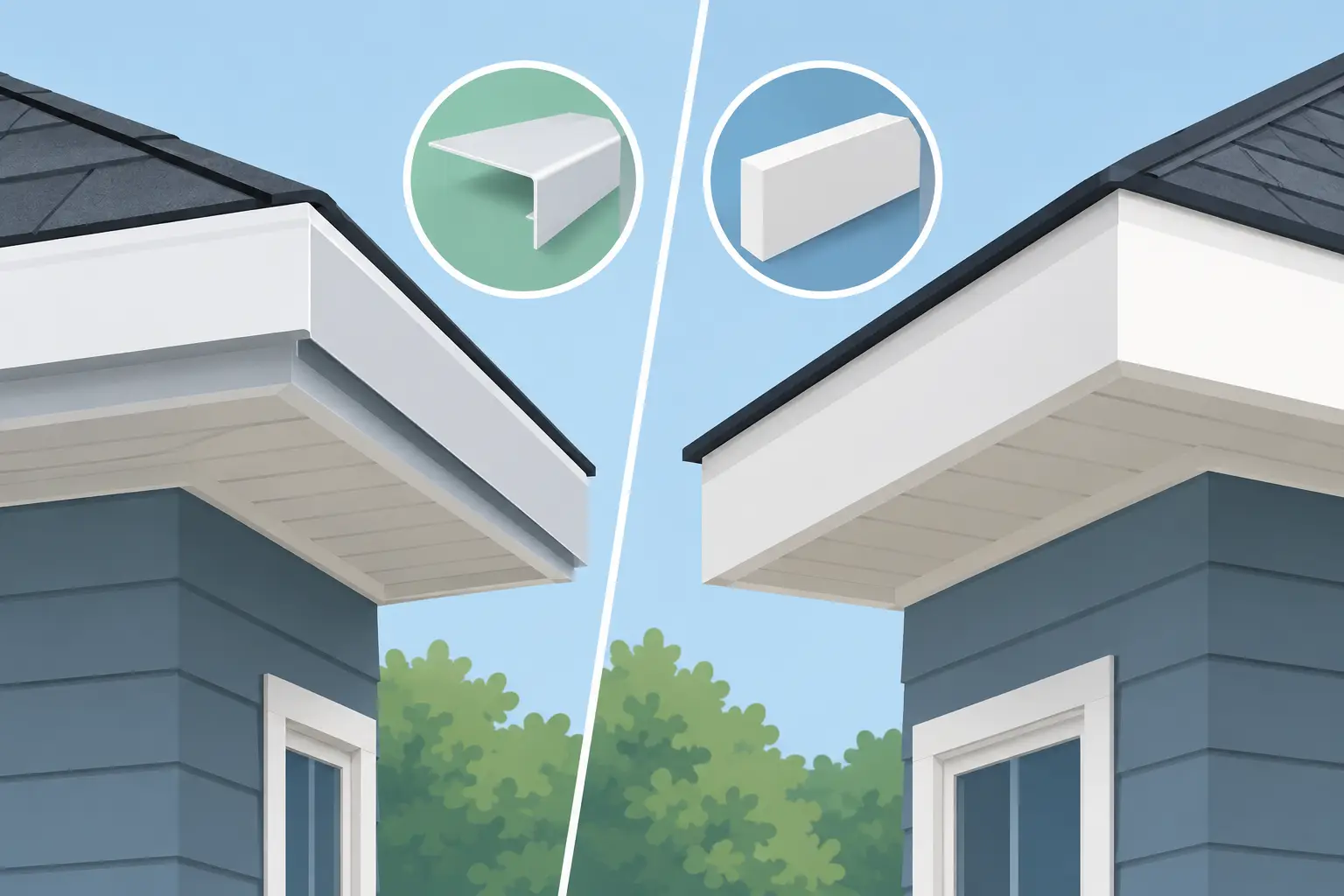
Fascia capping means fitting a thin UPVC cover board over the existing timber fascia. The original board stays in place and the new board is fixed over it. It is commonly chosen where the timber is straight, dry, sound, and still strong enough to carry the weight of the gutters.
Full fascia replacement involves removing the old boards, inspecting the rafter ends and roof edge, and fitting new full-depth UPVC fascia boards. The gutters, downpipes, and often the soffits need to be removed or worked around during the job. It takes more labor, but it allows the installer to see and address issues that capping can conceal.
Neither approach is automatically right for every home. Capping is a sensible, cost-effective finish on good timber. Replacement is the safer long-term choice when there is any doubt about the structure beneath.
When fascia capping can be a good option
Capping is usually suitable when the original timber has been checked closely and found to be dry, firm, and securely attached. The board should not flex under pressure, show signs of rot at the joints, or have persistent staining from leaks. Gutters should also be properly supported, with sound fixings and no major sagging.
On a well-maintained property, a cover board can provide a neat, low-maintenance finish without the disruption and cost of removing the existing roofline. It can also reduce future painting work and freshen the appearance of older timber fascia.
However, capping should not be used simply because it is cheaper. Adding a plastic cover over soft timber does not make the timber strong again. If the old fascia continues to break down behind the cover, the gutter brackets may eventually work loose and water can reach the roof edge.
When full fascia replacement is the better call
Replacement is normally recommended where rot, moisture damage, loose guttering, or insect damage is present. It is also worth considering when the fascia has been covered before, when the board is badly warped, or when water has been running behind the gutter for some time.
Removing the old board gives a clear view of the hidden areas that matter. The installer can check rafter ends, replace damaged timber where needed, correct poor gutter falls, and make sure ventilation is not blocked. Those repairs are much harder to carry out properly when the existing board is left in place.
Full replacement is more involved, but it is not just a cosmetic upgrade. It restores a dependable base for the gutters and gives the roofline a proper fresh start. For properties with repeated leaks or gutters that have pulled away from the house, that extra work is often money well spent.
Signs you should not cap over the existing fascia
A visual check from the ground can reveal a problem, but the decisive inspection is closer to the roofline. Be cautious about capping if you notice any of the following:
- Gutters are sagging, separating from the fascia, or overflowing in the same area repeatedly.
- Timber is soft, split, visibly rotten, or heavily stained beneath gutter joints.
- Paint is peeling in strips, especially near downpipes, corners, and roof valleys.
- Soffits are loose, damp, or showing dark marks and signs of water entry.
- There are gaps at the roof edge, bird access points, or evidence that the fascia has moved.
These signs do not always mean every board must be replaced. Damage can be localized. But they do mean the roofline needs a proper assessment before any new covering is fitted.
Cost, disruption, and long-term value
Capping usually costs less because there is less removal work and fewer materials involved. It can be a practical route for homeowners who have sound timber and want a clean UPVC finish. The job may also be completed more quickly, depending on access and the size of the property.
Replacement costs more because it involves dismantling sections of the existing roofline, removing old materials, and carrying out repairs before new boards go on. If the gutters and downpipes are old or undersized, this is also the best time to replace or upgrade them. Combining the work avoids paying twice for access and labor later.
The cheapest quote is not always the best value. A low price for capping can become expensive if rotten boards, failing brackets, and water damage are left behind. By contrast, full replacement may be unnecessary spending where the timber is in good order. Value comes from doing the level of work the property actually needs.
Gutters must be part of the decision
Fascia boards and gutters work as one system. A new fascia will not stop overflow if the gutters are blocked, incorrectly sloped, or too small for the roof area. Likewise, new gutters cannot perform properly if they are fastened to weak fascia boards.
Before deciding on capping or replacement, check the gutter line for standing water, loose brackets, leaking corners, blocked outlets, and downpipes that are slow to drain. Look for moss and debris on the roof too. During heavy rain, this material can wash into the gutters and create the same overflowing problem again.
At Steve’s Gutters, the practical approach is to inspect the roofline and guttering together. That means identifying whether the problem is simple maintenance, a repair to the gutter system, or a larger fascia and soffit job. It avoids treating the visible symptom while the source of the water damage remains.
Questions to ask before approving the work
Ask whether the existing timber has been tested for softness and checked behind the gutters. Ask how the new gutter brackets will be fixed, whether soffit ventilation will be retained, and what will happen if hidden rot is found once work starts. A reliable contractor should explain the options plainly rather than pushing one method for every house.
Also confirm what is included in the price. Removal and disposal of old materials, gutter refitting, downpipe connections, access equipment, and repairs to damaged rafter ends can all affect the final scope. Clear answers at the start help prevent surprises once the job is underway.
A clean white roofline may look like the goal, but the real purpose is to keep rainwater moving safely away from the building. If the boards underneath are sound, capping can be a sensible finish. If they are not, replacement gives your gutters the secure foundation they need for years of bad weather.
Recommended Posts
Seamless Versus Sectional Gutters: Which Is Best?
October 16, 2026
Can Dirty Gutters Attract Pests? Yes, Here’s Why
October 14, 2026
A Guide to Replacing Fascias on Your Home
October 12, 2026