

Roof Cleaning Methods Review: What Works Best

by
A roof covered in moss may look like a cosmetic issue, but it can quickly become a maintenance problem. Moss holds moisture against tiles or shingles, sheds into gutters, and can contribute to blocked downpipes. This roof cleaning methods review looks at the main ways roofs are cleaned, where each method makes sense, and where a cheaper-looking option can cause unnecessary damage.
The right approach depends on the roof material, its age, the amount of growth present, and the condition of the gutters, flashing, and roofline. A proper job is not simply about making the roof look cleaner from the street. It should remove the cause of blockages, protect the surface, and identify problems that need attention before water gets into the property.
Roof Cleaning Methods Review: The Main Options
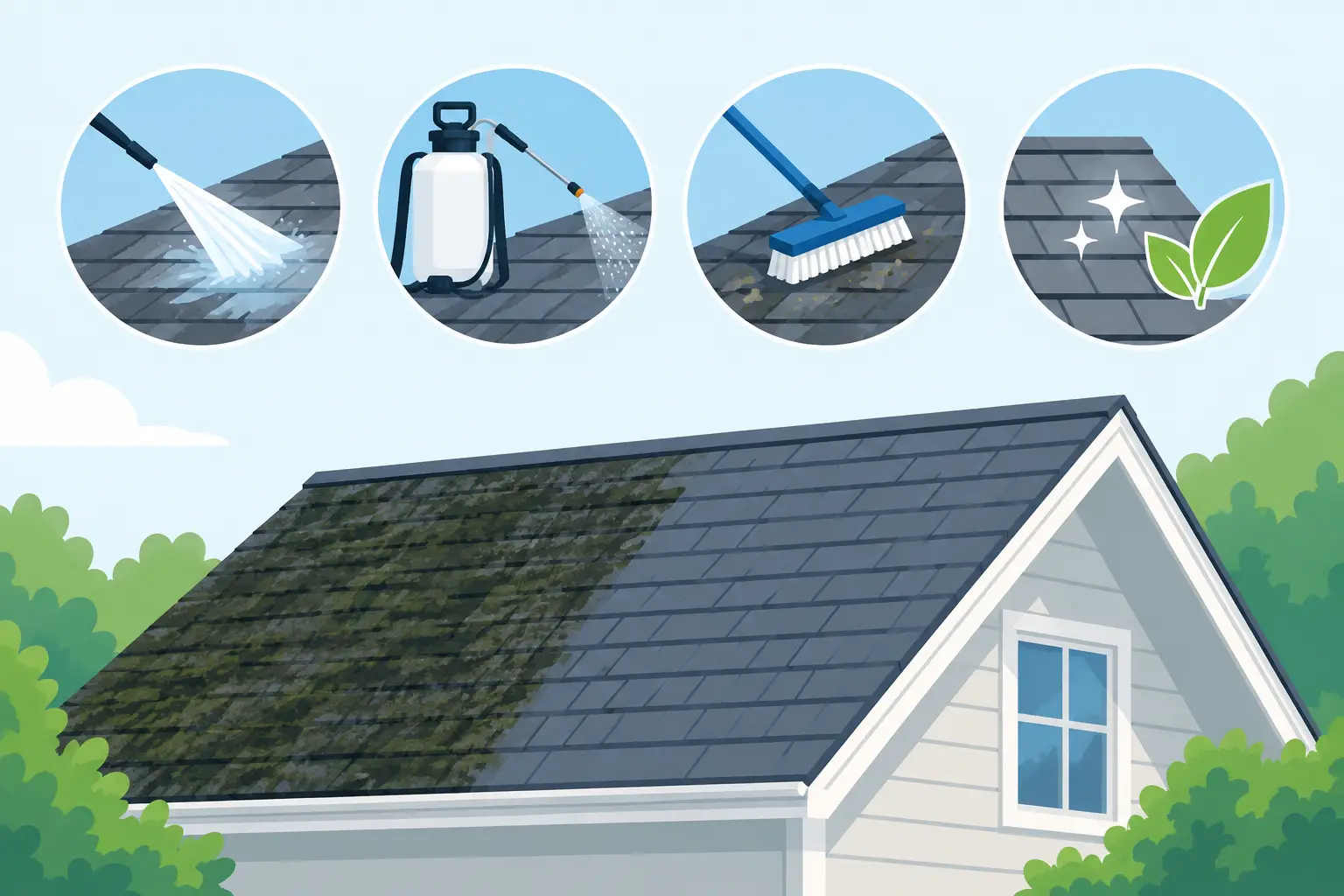
Most roof cleaning work falls into four categories: manual moss removal, soft washing, low-pressure rinsing, and pressure washing. There is no one method that suits every property. The best contractors assess the roof first rather than arriving with one machine and using it on everything.
Manual Moss Removal
Manual removal is often the safest starting point for roofs with heavy moss. A trained technician uses suitable hand tools to lift and scrape away built-up growth without forcing water beneath tiles or shingles. The moss is collected rather than simply pushed into gutters, where it would create a blockage later.
This method is slower than blasting a roof with water, but that is often the point. It gives the contractor a closer look at cracked tiles, loose ridge pieces, failing mortar, damaged flashing, and worn roofline components. For older roofs, fragile tiles, and properties with large amounts of moss, careful manual work is usually the sensible choice.
The trade-off is that manual removal does not always leave the roof looking instantly bright. Dark staining and algae may remain after the bulk of the moss has been cleared. In those cases, a suitable treatment can be applied afterward to deal with remaining organic growth over time.
Soft Washing
Soft washing uses a cleaning solution applied at low pressure to treat algae, lichen, mildew, and fine moss spores. It is designed to clean the roof without the force associated with pressure washing. The treatment does the work, rather than a powerful jet of water.
Soft washing can be effective on many tile, shingle, and roofline surfaces when the correct product, concentration, and application method are used. It is particularly useful after manual removal, as it helps slow the return of organic growth. Results may improve gradually as weather washes away treated staining, so it is not always an instant transformation.
The important point is control. Cleaning solutions must be used responsibly, with care taken around gardens, painted finishes, metalwork, solar panels, and drainage. Gutters and downpipes should also be checked and cleared, as loosened debris can move through the system after treatment.
Low-Pressure Rinsing
Low-pressure rinsing can be used to remove loose dirt and residue after manual cleaning or treatment. Done properly, it is a controlled wash rather than an attempt to strip the roof surface clean in minutes.
This approach may suit more durable roofs in good condition, especially where there is surface dirt but limited heavy moss. However, even low pressure needs judgment. Water should never be directed up under tiles, into laps, or toward vulnerable flashing details. A roof is designed to shed rain from above, not withstand water being driven into every joint.
Low-pressure work also needs to be planned with the gutter system in mind. If debris has been rinsed down from the roof, the gutters, outlets, and downpipes should be cleared before the job is signed off. A clean roof with overflowing gutters is not a complete maintenance service.
Pressure Washing
Pressure washing is the most debated roof-cleaning method because it can produce dramatic before-and-after results. On the right hard surface, such as a driveway or patio, a pressure washer can be very effective. On a roof, it requires far more caution.
High pressure can strip the protective surface from certain tiles, dislodge granules from asphalt shingles, disturb mortar, damage pointing, and force water under coverings. It can also break older or weathered tiles that may have lasted for years if left alone. A roof that looks spotless immediately after aggressive cleaning may be less protected than it was before.
That does not mean pressure washing is never appropriate. Some durable roof materials, in sound condition, may tolerate carefully controlled cleaning by an experienced professional. But it should never be the default choice, and it should not be used simply because it is fast. If a contractor cannot explain why pressure is suitable for your roof, it is reasonable to choose a different method.
What Method Is Best for Your Roof?
For most homes with moss-covered concrete or clay tiles, careful manual removal followed by an appropriate low-pressure treatment is the balanced option. It clears the material that can block gutters while reducing the risk of surface damage. It also gives a clearer view of the roof’s actual condition.
For algae staining or light organic growth, soft washing may be enough. For a relatively clean, durable roof with surface dirt, low-pressure rinsing may be considered after inspection. Pressure washing should be treated as a specialist decision, not a standard add-on.
Roof age matters just as much as roof type. A newer roof with secure tiles and sound flashing can usually handle more than an older roof with brittle materials, previous repairs, or signs of movement. If there are cracked tiles, loose ridges, leaking valleys, or damaged soffits, repairs should take priority over cleaning.
Why Gutter Cleaning Must Be Part of the Job
Moss does not disappear when it leaves the roof. It lands in gutters, collects around outlets, and can pack tightly inside downpipes. The first heavy rain may then send water over the gutter edge, down exterior walls, and into areas where it can damage brickwork, fascias, soffits, and foundations.
That is why roof cleaning should include a check of the drainage path. Gutters need to be cleared, brackets inspected, joints checked for leaks, and downpipes tested to make sure water is moving freely. If the gutter is sagging, split, or incorrectly pitched, cleaning alone will not solve the problem.
A complete exterior maintenance visit can also spot roofline issues that are easy to miss from ground level. Peeling fascias, rotten timber, loose guttering, and damaged seals often show up when work is carried out properly at roof height. Dealing with these defects early is usually far less costly than waiting for a persistent leak.
Questions to Ask Before Booking Roof Cleaning
Before agreeing to any roof cleaning service, ask how the roof will be accessed, what method will be used, and why that method suits your particular material. A dependable contractor should be happy to explain the process in plain language.
You should also ask whether gutter and downpipe clearing is included, how debris will be contained, and whether the team is insured for the work. Price matters, but the lowest quote can become expensive if it only covers a quick wash and leaves blocked outlets, broken tiles, or water damage behind.
Look for a contractor who can handle repairs if they find an issue. There is little value in paying for a roof clean, then having to start again with another company because a cracked tile, leaking joint, or failing gutter needs attention. Steve’s Gutters takes a practical approach: inspect the whole roofline, clear the drainage system, and address the condition of the property rather than treating cleaning as a one-step job.
Keep Growth From Becoming a Bigger Repair
Roof moss and algae will return eventually, especially on shaded properties or homes surrounded by trees. The aim is not to promise a roof will stay spotless forever. The aim is to keep growth under control before it blocks gutters, retains moisture, and hides repair issues.
If you can see moss collecting along the roof edge, vegetation in the gutters, or staining running down exterior walls, arrange an inspection before the next spell of heavy rain. A careful clean at the right time protects more than the appearance of your roof – it helps keep the whole drainage system doing the job it was fitted to do.
Recommended Posts
Seamless Versus Sectional Gutters: Which Is Best?
October 16, 2026
Can Dirty Gutters Attract Pests? Yes, Here’s Why
October 14, 2026
A Guide to Replacing Fascias on Your Home
October 12, 2026