

UPVC or Aluminium Guttering: Which Is Best?

by
A leaking gutter is rarely just a gutter problem. Water that spills over the edge can stain siding, soak fascia boards, flood paths, and work its way toward foundations. When replacement is needed, the usual question is simple: upvc or aluminium guttering? The right answer depends on your property, budget, roofline, and how long you expect the new system to serve you.
For most homes, UPVC guttering is a sensible, cost-effective choice. Aluminum guttering is often the better long-term option where appearance, strength, and low maintenance matter most. Neither material can make up for poor installation, incorrect falls, or a blocked downspout. The system has to be specified and fitted properly from the start.
UPVC or Aluminium Guttering: The Main Difference
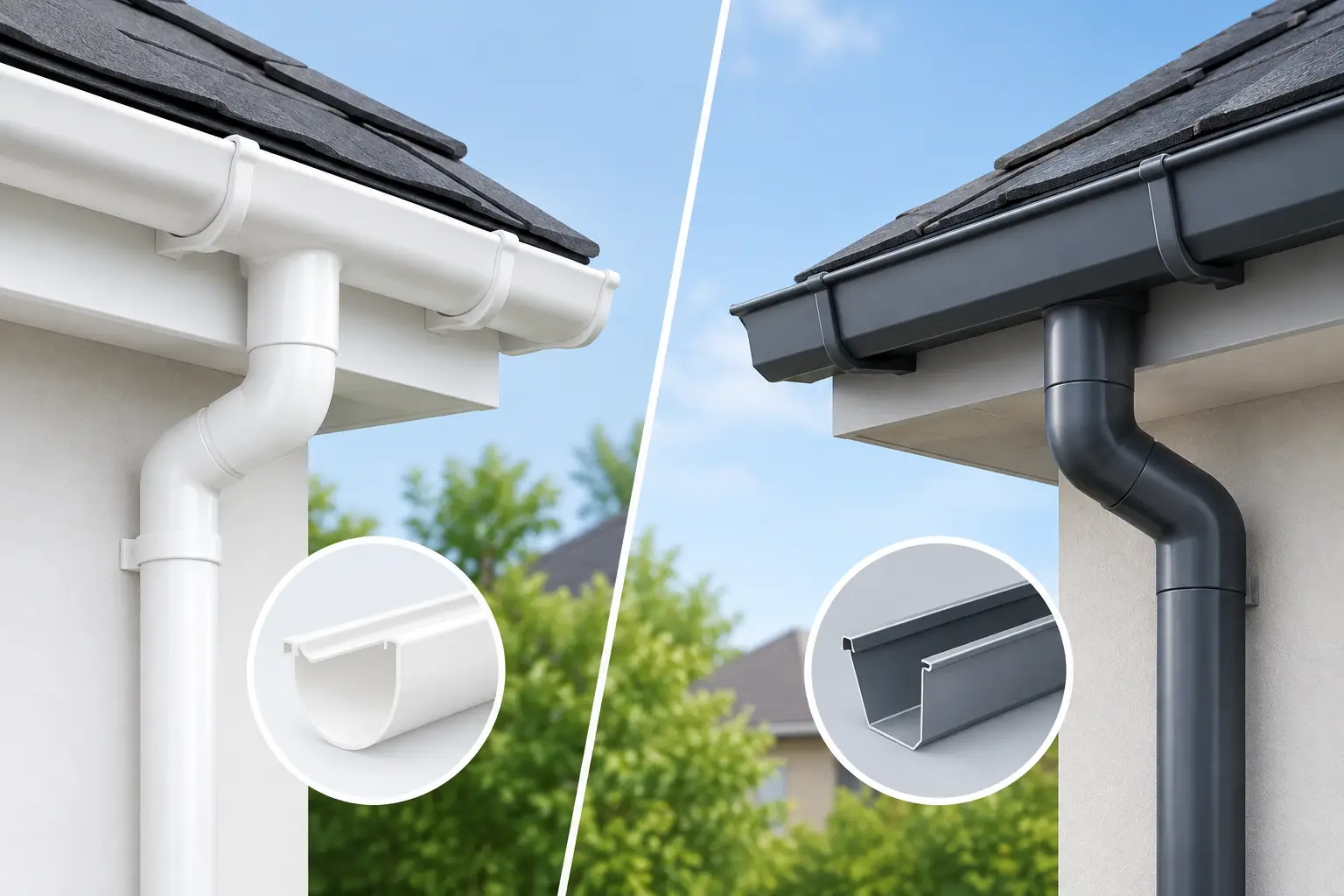
UPVC is a rigid plastic guttering material. It is widely used on modern homes because it is affordable, readily available, and comes in familiar profiles and colors. Sections are normally joined with rubber-sealed fittings, which makes repairs and replacements straightforward.
Aluminum guttering is a lightweight metal system. It can be supplied in pre-formed sections or made as continuous, seamless runs on site. It generally has a sharper, more premium appearance than UPVC and is particularly suited to larger homes, period properties, and commercial buildings where long runs of gutter are needed.
The material matters, but the shape and capacity matter too. A small gutter on a steep roof or a large roof area can overflow regardless of whether it is plastic or metal. Downspouts must also be sized and positioned to move water away quickly during heavy rain.
Why UPVC Guttering Remains a Popular Choice
UPVC has earned its place because it does the everyday job well without putting unnecessary pressure on the budget. It will not rust, it is easy to clean, and individual lengths or fittings can usually be replaced without disturbing the whole run.
For a typical detached, semi-detached, or terraced home, UPVC is often the practical choice. Black, white, brown, gray, and heritage-style finishes allow it to suit most rooflines, while standard parts keep future repairs simple. If a bracket breaks or a joint starts weeping, the affected component can usually be dealt with quickly.
There are trade-offs. UPVC expands and contracts more than metal as temperatures change. A correctly fitted system allows for this movement, but badly installed joints can pull apart or start leaking over time. Plastic can also become brittle after years of sun exposure and severe weather, particularly on exposed elevations.
Its appearance is another consideration. Good-quality UPVC can look neat and smart, but it does not always suit a property with traditional details or high-end exterior finishes. It may also discolor or lose some of its original finish with age, especially where it is rarely cleaned.
When UPVC makes good sense
Choose UPVC when you want a dependable, economical replacement for a standard residential property, and when easy access to replacement parts is a priority. It is also a strong option for rental properties and extensions where sensible maintenance costs are more important than a premium finish.
The key is not to choose the cheapest system available. Thin, low-grade plastic and poorly supported gutter runs tend to sag, especially when filled with rainwater, leaves, and moss. Proper brackets, correct spacing, and secure fascia boards are what keep a UPVC installation performing as it should.
The Case for Aluminum Guttering
Aluminum is lighter than steel but offers greater rigidity than UPVC. It does not rust, and quality painted finishes can retain their appearance for many years. This makes it a strong choice for homeowners who want a clean roofline with fewer visible joints and less risk of sagging.
Seamless aluminum guttering is particularly effective on long elevations. Because it is formed in one continuous length for each run, there are fewer joints where leaks can develop. This does not mean it is maintenance-free, but fewer connections usually mean fewer weak points.
Aluminum also works well when a property needs a more refined finish. It is available in a wide range of colors and profiles, including options that complement older homes more successfully than standard plastic guttering. On larger properties, the straighter lines and reduced number of joints can make a real visual difference.
The higher initial price is the main downside. Repairs can also be more specialized than with UPVC. If a seamless section is badly damaged, it may need professional attention rather than a quick replacement from a local hardware store. Dented aluminum will not spring back like plastic, so ladders, branches, and impact damage need to be considered.
Where aluminum is worth the extra cost
Aluminum is worth considering for larger roof areas, long gutter runs, homes in exposed locations, and properties where curb appeal is a major concern. It is also a good fit where you want a longer-lasting system and are prepared to pay more upfront to reduce the likelihood of frequent replacement.
That said, aluminum is not automatically the best option for every home. A modest property with sound fascia boards and straightforward gutter runs may gain little practical benefit from a premium metal system. The best value comes from matching the material to the building rather than paying for features you do not need.
Installation Matters More Than Most Homeowners Expect
A gutter can be made from excellent material and still fail in the first heavy storm if it has been installed carelessly. The gutter must have the right fall toward the downspout. Too little fall leaves standing water and debris. Too much can make water rush past the downspout during a downpour.
Brackets must be fixed into solid, sound fascia boards at suitable intervals. If the fascia is rotten, loose, or covered over without being checked, the new guttering will eventually pull away. This is why a proper replacement should include an inspection of fascia, soffits, roof edges, joints, outlets, and downspouts, not just a swap of the visible gutter lengths.
Capacity is equally important. A conservatory, flat roof extension, or large rear roof can send a surprising volume of water into one short run. In these cases, a wider profile, additional downspout, or improved drainage route may be needed. Simply replacing like for like can repeat the same overflow problem.
Consider Maintenance Before You Decide
Both UPVC and aluminum need routine maintenance. Leaves, moss, roof grit, and nesting material can block outlets and downspouts, causing water to back up behind the gutter. In freezing weather, trapped water can add weight and strain brackets and joints.
Cleaning gutters at least once or twice a year is sensible for most properties, with more frequent checks near mature trees. During cleaning, look for standing water, loose brackets, staining beneath joints, drips from outlets, and sections that are pulling away from the fascia. These are early warning signs that are cheaper to fix before they become water damage.
Aluminum’s painted surface should be washed gently rather than scrubbed with harsh abrasives. UPVC also benefits from regular cleaning, especially white systems that show dirt and algae more easily. Gutter guards can reduce larger debris, but they are not a substitute for inspection. Fine moss, seeds, and sludge can still collect beneath or around them.
Cost, Lifespan, and Value for Money
UPVC usually costs less to supply and install, making it attractive when several runs, downspouts, and roofline components need replacing at once. With quality materials and correct installation, it can provide many years of reliable service.
Aluminum normally costs more at the outset, particularly when seamless fabrication is involved. Its value lies in durability, appearance, and fewer joints across long runs. For a homeowner planning to stay in the property for many years, that higher initial spend can be justified.
Do not judge value by material cost alone. Include the condition of the fascia, the number of downspouts required, access around the property, roof area, drainage needs, and whether old guttering has caused hidden timber damage. A clear quote should explain what is being replaced and why.
Make the Choice Based on Your Property
If you need a straightforward, tidy, budget-conscious replacement, quality UPVC is hard to beat. If your property has long gutter runs, a demanding roof area, or a finish where every detail counts, aluminum can be the stronger investment.
Before choosing either, have the full roofline assessed. A good gutter replacement solves the reason water is escaping, not just the part that is visible from the ground. The right system should carry rainwater away cleanly, protect the building, and give you one less thing to worry about when the weather turns.
Recommended Posts
Seamless Versus Sectional Gutters: Which Is Best?
October 16, 2026

Can Dirty Gutters Attract Pests? Yes, Here’s Why
October 14, 2026
A Guide to Replacing Fascias on Your Home
October 12, 2026