

Rainwater Drainage Inspection Guide for Homes


by
A gutter can look perfectly ordinary on a dry day and still be causing trouble. The real test comes when steady rain fills the system faster than it can drain. Water spilling over a gutter edge, running down brickwork, or pooling beside the foundation is not just an untidy nuisance. Left alone, it can lead to damp walls, damaged fascia boards, stained masonry, and costly repairs.
This rainwater drainage inspection guide helps homeowners and property managers check the full route water takes from the roof to the ground. The point is not simply to find leaves in a gutter. A proper inspection looks for blockages, poor falls, loose fittings, failed joints, damaged downspouts, and drainage problems at ground level.
Start Your Rainwater Drainage Inspection Safely
Choose a dry day for the close-up checks. You can see loose brackets, cracks, sagging gutter runs, and signs of past overflow without working around wet, slippery surfaces. If you use a ladder, make sure it is secure, on firm level ground, and does not rest against a weak gutter or plastic roofline.
Do not stretch from a ladder to reach another section. Move it instead. For two-story homes, awkward extensions, conservatories, steep ground, or fragile roof areas, a professional inspection is the sensible option. Gutters are not worth a fall.
You will usually need gloves, a small bucket or bag for debris, a garden hose, and a torch for inspecting downspout outlets and drains. Binoculars are useful for a ground-level look at high rooflines, but they do not replace a hands-on inspection where repairs may be needed.
Check the Gutters First
Begin at the gutter line, working around the property section by section. Look inside for leaves, moss, twigs, roof grit, and mud. Material often builds up near outlets, in corners, and beneath overhanging trees. Even a narrow channel through the debris is not enough when heavy rain arrives.
Cleaning reveals the condition of the gutter itself. Check for splits, holes, rust on metal sections, and joints that have opened or show staining beneath them. On older systems, sealant can fail around connections. Plastic gutters can become brittle over time, while cast iron may rust from the inside out if maintenance has been missed.
Look for the Correct Fall
Gutters must slope gently toward the downspout. If a section sits level or dips in the middle, water remains in the channel after rainfall. That standing water adds weight, encourages debris to settle, and can eventually pull brackets away from the fascia.
A quick visual check can expose an obvious sag, but running a hose through a clean gutter gives a clearer answer. Water should move steadily toward the outlet without collecting in pools or spilling over the front edge. A small amount of water clinging to the gutter is normal. A long, still puddle is not.
Check the brackets and fixings while you are there. Loose brackets, rotten fascia boards, and poorly secured joints can all alter the fall of a gutter. Simply clearing debris will not solve a system that is pulling away from the house.
Test Every Downspout
A clean gutter is only half the job. The downspout carries the water away, and it is one of the most common places for a hidden blockage. Leaves may compact at the outlet, while moss, silt, and debris can lodge further down where they cannot be seen.
First, inspect the top outlet where the gutter meets the downspout. Then check the length of the pipe for cracks, dents, loose clips, and joints that have separated. Streaks on the wall or green algae around a joint usually mean water has been escaping there.
Run water from a hose into the gutter close to the outlet, using a controlled flow rather than full pressure at first. Watch what happens at the bottom. Water should come through quickly and continue away from the building. If it backs up in the gutter, trickles out slowly, or appears at a joint higher up, the downspout needs clearing or repair.
Do not assume the blockage is always inside the pipe. The problem may be at the shoe, the gully, or the underground drain connection. Removing a downspout section can be necessary, particularly where debris has packed tightly. This is where a company that can inspect, clear, and repair the system is more useful than a clean-only visit.
Inspect Where Water Ends Up
Follow the water beyond the downspout. It should discharge into a working drain, gully, soakaway, or suitable run-off area that directs water away from the foundation. Water repeatedly collecting beside the house can saturate the ground, increase pressure against walls, and contribute to damp problems inside lower levels.
Check open gullies for leaves, mud, and standing water. A gully that is full or slow to empty may indicate a blockage below ground. If your downspout feeds an underground drain, listen for gurgling during the hose test and watch for water rising at the gully. Both can point to restricted drainage.
Look across paths, patios, and driveways as well. A low spot near the house can hold water even when the guttering works properly. Surface drainage is part of the overall picture. In some cases, the answer is a gutter repair; in others, it is clearing a drain, improving the slope of a paved area, or extending the downspout outlet farther from the wall.
Check the Roofline for Signs of Water Damage
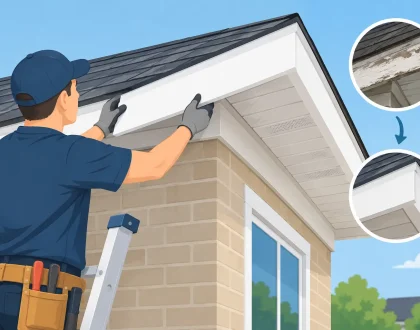
The gutter system is attached to the roofline, so inspect the fascia, soffit, and nearby wall surfaces. Peeling paint, soft timber, black staining, blistered finishes, or visible rot often suggest water has been overflowing or leaking at the same point for some time.
Pay close attention to corners, gutter joints, and the areas behind downspouts. Water can run behind a loose gutter rather than into it, soaking the fascia board out of sight. If fascia boards have deteriorated, new gutter brackets may not hold securely until the underlying timber or roofline is repaired.
Also look for moss buildup on the roof. Moss does not automatically mean a roof is failing, but large amounts can wash into gutters and create repeat blockages. It can also slow the movement of rainwater toward the gutter, making it easier for debris to accumulate at the eaves.
Use Rainfall as a Final Test
A hose test is useful, but a safe observation during rainfall can reveal issues that only occur under a heavier flow. Stand back and watch the gutters, downspouts, and ground drainage for a few minutes. Do not climb a ladder during rain or high wind.
Overflow at one point may mean a local blockage. Overflow along a whole gutter run can mean the system is undersized, incorrectly pitched, or receiving excessive water from a large roof area. This is particularly common on extensions, conservatories, and roofs where new sections have been added without upgrading the original drainage.
Take photographs of leaks, overflowing sections, and pooled water. They make it easier to compare conditions after repairs and give a gutter specialist a clear starting point if you need a quote.
When Cleaning Is Not Enough
Routine cleaning is valuable, but it cannot fix damaged components or poor installation. Arrange repairs if you find cracked sections, recurring leaks at joints, sagging gutters, loose downspouts, rust, rotten fascia, or water that still does not drain correctly after the system has been cleared.
Replacement can be better value than repeated patch repairs when an older system has multiple faults. The right choice depends on the condition of the roofline, the size and style of the property, local weather exposure, and whether you want UPVC, aluminum, or cast iron guttering. A proper assessment should explain what needs attention now and what can reasonably wait.
For most properties, inspect gutters and drainage at least twice a year, usually after fall leaf drop and again before the wettest part of the year. Homes near mature trees may need more frequent checks. A small amount of regular maintenance is far easier to manage than discovering a blocked downspout when water is already pouring down the wall.
Keep an eye on the first heavy rain after any cleaning or repair. That simple check often provides the reassurance that the whole system is doing the job it was designed to do: moving water away from your home, quietly and without causing damage.
Recommended Posts

Seamless Versus Sectional Gutters: Which Is Best?
October 16, 2026

Can Dirty Gutters Attract Pests? Yes, Here’s Why
October 14, 2026
A Guide to Replacing Fascias on Your Home
October 12, 2026