

A Gutter Bracket Failure Example Explained

by
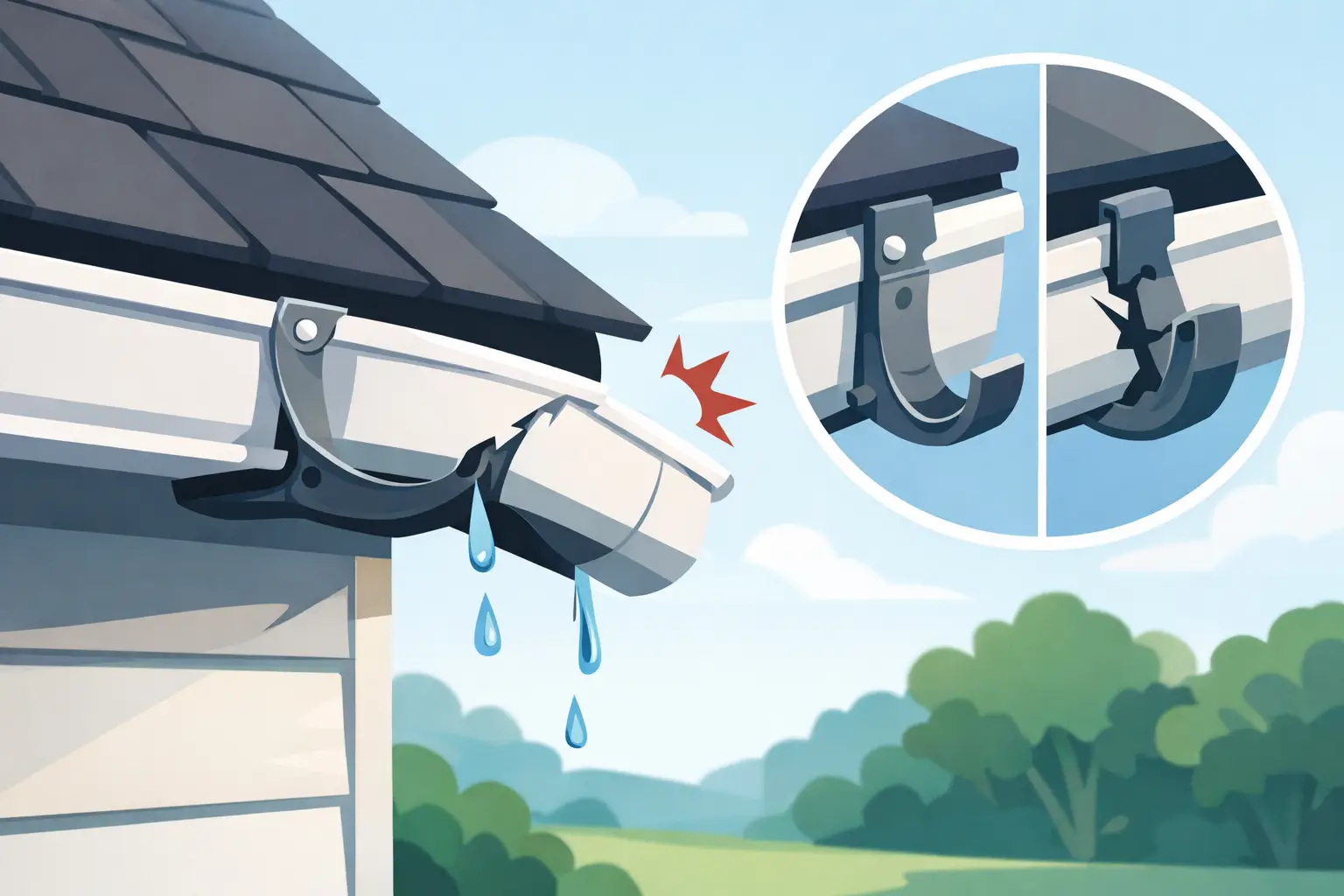
A gutter bracket failure example often starts with something that looks minor: one section of gutter sitting slightly lower than the rest. After the next hard rain, water runs over the front edge, drips down the wall, and leaves a damp line below. Left alone, a loose bracket can turn a straightforward repair into damage to fascia boards, siding, masonry, and foundations.
Gutter brackets are small fittings, but they carry the weight of the whole system. They hold the gutter at the correct slope, keep it close to the roofline, and help water reach the downspout instead of the ground beside your home. When they fail, cleaning the gutter alone will not solve the problem.
A Common Gutter Bracket Failure Example
Picture a 30-foot run of gutter along the back of a house. Leaves have built up near the downspout, and standing water has added weight for several weeks. During a heavy storm, the gutter fills, bows outward, and pulls two brackets away from the fascia board.
The brackets may not snap in half. More commonly, the screws loosen, rust, or pull from soft, water-damaged wood. Once two brackets have moved, the gutter sags between them. Water settles in the low point rather than flowing to the downspout, making the next overflow more likely.
A homeowner may notice water pouring over one spot and assume there is a simple blockage. There may be a blockage, but the gutter now also has the wrong pitch and inadequate support. Clearing debris without resetting the gutter and securing new brackets means the same problem can return with the next downpour.
Why Gutter Brackets Fail
Bracket failure is usually the result of more than one issue. Debris is often the trigger, but age, poor installation, and roofline condition decide how much strain the system can take.
Too much weight in the gutter
Wet leaves, moss, roof grit, and standing water are much heavier than they appear. In colder climates, trapped water can freeze and expand, adding even more load. A properly installed gutter system can handle normal rainfall, but it is not designed to support months of compacted debris or repeated freeze-thaw cycles.
Rotten or weakened fascia boards
Brackets need solid material behind them. If water has been leaking behind the gutter for years, the fascia board may be soft or rotted around the screw holes. Tightening a screw into damaged wood may make the bracket look secure for a short time, but it will not provide a lasting hold.
This is why a proper repair includes checking the board, not just replacing the visible fitting. In some cases, a small fascia repair is enough. In others, a longer section needs replacement before new guttering is installed.
Incorrect spacing or unsuitable fixings
Brackets must be spaced to suit the gutter type, local weather conditions, and the roofline. If they are too far apart, the gutter can flex under the weight of water. If the wrong screws were used, or if brackets were fixed into weak trim rather than sound fascia, the system may loosen early.
Older installations can also use fittings that are no longer appropriate for the gutter material. Aluminum, vinyl, steel, and cast-iron systems each have different weight and expansion characteristics. A repair should match the existing system or address the reason the original arrangement failed.
Poor drainage and incorrect slope
A gutter does not have to look dramatically crooked to drain badly. A small change in pitch can leave water sitting at one end or in the middle. That standing water adds strain to the brackets, encourages corrosion, and can spill behind the gutter during heavy rain.
The goal is not to make the gutter visibly sloped. It is to set a consistent, controlled fall toward the downspout so water moves away efficiently.
Signs You Should Check the Brackets
Look at your gutter from ground level after a rainfall. You do not need to climb a ladder to spot many early warning signs. Arrange a professional inspection if you see four or more of the following conditions, or if water is actively entering the building:
- A gutter section bows, sags, or sits away from the fascia board.
- Water spills over the front or runs behind the gutter in one area.
- Brackets are bent, cracked, missing, or pulling away from the roofline.
- There are damp marks, peeling paint, or staining on the fascia and exterior wall.
- One downspout stays dry while water pools in the gutter above it.
- The gutter makes a visible dip that holds water days after rain.
Overflow near a doorway, patio, extension, or conservatory deserves particular attention. Water repeatedly landing in the same place can stain surfaces, undermine paving, and create slippery access routes.
What a Proper Repair Should Include
The right repair depends on the condition of the gutter, brackets, fascia, and downspout. There is no benefit in replacing every part of a system that is otherwise sound. Equally, replacing only one loose bracket can be false economy if the wood behind it is failing or several brackets are already under strain.
A thorough repair begins with clearing the gutter and checking the downspout for obstructions. The gutter can then be tested for standing water and inspected for cracks, failed joints, loose outlets, and incorrect fall.
Next comes the roofline assessment. A tradesperson should identify whether the brackets can be refastened into solid material, whether damaged fascia needs attention, and whether the gutter has distorted beyond a practical repair. New brackets should be correctly spaced and firmly secured, then the gutter should be reset to drain toward the downspout.
Water testing matters. A gutter can look level and tidy from the ground while still holding water in the wrong place. Running water through the repaired section confirms that it flows, the joints stay sealed, and the downspout carries it away.
Repair or Replacement: Which Makes Sense?
If the gutter is relatively new, the fascia is sound, and only one or two fittings have loosened after a blockage, a targeted repair is often the sensible choice. Cleaning the system, replacing the affected brackets, and correcting the slope can restore it for a reasonable cost.
Replacement becomes more practical when the gutter has several leaks, widespread corrosion, brittle sections, repeated bracket failures, or extensive damage behind the roofline. A new gutter installed onto deteriorating fascia is not a full solution, so it is worth dealing with both issues at the same time.
For older properties, the choice may also depend on appearance and material. Cast-iron guttering can often be repaired where appropriate, while a badly aged lightweight system may be better replaced with a modern alternative. The best option is the one that gives reliable drainage without paying repeatedly for short-term fixes.
Preventing the Next Failure
Regular cleaning is the simplest way to reduce bracket strain, especially if your property is near trees or has a mossy roof. Most homes benefit from an inspection and clean at least once or twice a year, with additional checks after severe weather.
Do not overlook the downspouts. A clear-looking gutter can still overflow if water cannot leave through a blocked downspout or underground drain connection. Checking the whole drainage path is what separates a complete gutter service from a quick debris removal job.
Avoid leaning ladders directly against gutters, and do not use the gutter as a handhold when working near the roof. Small movements can loosen older brackets or crack a brittle section. If you notice a sag, an overflow, or a bracket pulling loose, deal with it before the next prolonged spell of rain. A timely inspection can protect the roofline and keep a manageable repair from becoming a larger job.
Recommended Posts
Seamless Versus Sectional Gutters: Which Is Best?
October 16, 2026
Can Dirty Gutters Attract Pests? Yes, Here’s Why
October 14, 2026
A Guide to Replacing Fascias on Your Home
October 12, 2026