

How to Maintain House Roofline and Stop Water Damage


by
A roofline problem rarely starts with a dramatic leak. More often, it begins with water spilling over one gutter corner, a downspout that drains slowly, or paint lifting from a fascia board. Knowing how to maintain house roofline components means spotting these small warnings before water reaches the walls, roof structure, or foundation.
Your roofline is not just there to finish the appearance of a house. Gutters, downspouts, fascia boards, soffits, and roof edges all work together to move rainwater away safely. When one part fails, the damage can spread quickly. Regular, practical maintenance is usually far less expensive than replacing rotten wood, repairing plaster, or dealing with a damp interior wall.
What Is Included in a House Roofline?
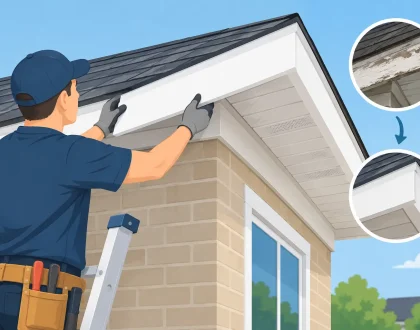
The roofline is the area around the lower edge of the roof where several important components meet. Gutters catch rainwater, while downspouts carry it down to ground level. Fascia boards run behind the gutters and provide a secure fixing point. Soffits sit underneath the roof overhang and help ventilate the roof space.
Some homes have painted timber fascia and soffits, while others have low-maintenance uPVC. Older properties may have cast iron gutters, and newer homes often use uPVC or aluminum systems. The maintenance approach changes slightly depending on the material, but the main purpose stays the same: keep water moving freely and keep the roof edge dry.
How to Maintain House Roofline Components Properly
The best approach is to inspect the whole system rather than treating gutter cleaning as a separate job. A clear gutter is useful, but it will still overflow if the outlet is blocked, the downspout is obstructed, or the gutter has dropped out of position.
Start by looking from the ground after rainfall. Check whether water is flowing evenly toward the downspouts. Water pouring over the front edge of a gutter, running down exterior walls, or dripping from a joint points to a problem that needs attention.
Look for sagging gutter runs, loose brackets, gaps at joints, and sections that appear to hold standing water. Gutters need a slight fall toward the outlet. If water sits in one area after the rain has stopped, the gutter may be poorly aligned, blocked, or weighed down by debris.
Also inspect fascia and soffits for peeling paint, staining, soft spots, cracks, or visible gaps. Timber that stays wet can rot behind the gutter where the damage is not immediately obvious. With uPVC, look for loose panels, damaged seals, and heavy dirt buildup around joints and vents.
Clean Gutters and Downspouts on a Routine Schedule
For most homes, gutters should be checked and cleaned at least twice a year: once after fall leaf drop and again in spring. Properties below trees, near tall hedges, or exposed to moss from nearby roofs may need more frequent attention.
Leaves are only part of the problem. Moss, roof grit, twigs, birds’ nests, and windblown soil can collect in gutters and outlets. Over time, this debris forms a heavy, compacted blockage that holds moisture against the roofline. It can also force water behind the gutter and onto fascia boards.
Clearing the gutter channel is not enough. The downspout should be tested as well. A hose run through the system can show whether water is reaching the bottom freely or backing up at the outlet. If the downspout is blocked, water may overflow at roof level even when the gutter itself looks clean.
Be careful with high-pressure water. It can shift loose gutter joints, drive water into weak areas, and make a mess around the property. A controlled flush is generally more useful than blasting the system at full pressure.
Check Gutter Joints, Brackets, and Fall
Gutters expand and contract with changing temperatures. Over time, seals can shrink, joints can leak, and brackets can loosen. Small drips at a joint should not be ignored, especially if they are landing on timber fascia, siding, or a doorway below.
Check that brackets are firmly fixed and evenly spaced. A gutter that bows between brackets will collect water and debris. In winter, that standing water can freeze and add even more weight. If the gutter is pulling away from the fascia, the fixing point may also need repair rather than simply pushing the gutter back into place.
Correct alignment matters. A gutter should have enough slope to direct water to the downspout, but not so much that it looks noticeably uneven. Re-setting a long run of guttering is often a job for an experienced exterior maintenance professional, particularly where damaged fascia or hidden rotten timber may be involved.
Keep Fascia and Soffits Clean and Dry
Fascia and soffits are often neglected because they are above eye level, but they are exposed to rain, condensation, insects, and dirt throughout the year. Cleaning them periodically helps you see their true condition.
For uPVC, use a soft brush or cloth with mild soapy water. Avoid harsh abrasives that can dull the surface or scratch it. Stubborn staining may need a specialist exterior cleaner, but aggressive scrubbing is rarely the answer.
Painted timber needs closer attention. Flaking paint, dark staining, or soft wood can mean moisture is getting in. Repainting may protect sound timber, but it will not solve rot underneath. Any damaged area should be assessed properly, particularly where gutters have leaked directly onto the board.
Soffit vents must remain clear. These openings allow air to circulate through the roof space, helping control condensation. Blocking them with paint, debris, insulation, or insect nests can contribute to moisture problems in the attic.
Watch the Roof Above the Gutter
A clean gutter will block again if the roof is shedding large amounts of moss or debris. Moss holds water against roof coverings and can break loose in clumps during heavy rain. Those clumps often lodge at gutter outlets and create sudden overflows.
From the ground, look for moss buildup, slipped shingles, broken tiles, damaged flashing, and debris sitting in roof valleys. Do not walk on a roof unless you have the right training, access equipment, and safety measures. Roof surfaces can be more fragile and slippery than they appear.
Roof cleaning can be worthwhile when moss is causing regular gutter blockages, but the method matters. High-pressure cleaning is not suitable for every roof type and can damage older materials or force water beneath the covering. The right treatment depends on the roof’s age, condition, pitch, and material.
Use Seasonal Checks to Avoid Emergency Repairs
A quick check after severe weather is sensible, especially after high winds, heavy rain, or freezing conditions. Storms can loosen brackets, dislodge downspouts, and fill gutters with fresh debris in a single day.
In fall, focus on leaves and blocked outlets. In winter, watch for ice buildup, overflowing gutters, and loose sections under extra weight. Spring is a good time to check for damage that developed over the colder months. During summer, inspect paintwork, uPVC, and roof ventilation while conditions are dry.
If you manage a rental property, commercial building, or several homes, keep a simple record of cleaning dates, repairs, and recurring problem areas. This makes it easier to spot a downspout that blocks repeatedly or a gutter run that needs replacement rather than another temporary repair.
Know When to Call a Professional
Ground-level observations and basic cleaning are useful, but ladders create real risks. If access is awkward, the ground is uneven, or the roofline is more than a simple one-story height, it is safer to arrange a professional inspection.
You should also get help when gutters are leaking at multiple points, fascia boards look damaged, downspouts remain blocked after flushing, or water is entering the property. These are signs that cleaning alone may not be enough.
A proper roofline service should include more than removing debris. It should check gutter condition, joints, brackets, downspouts, fascia, soffits, and the path water takes away from the building. That is the difference between a quick clean and maintenance that actually protects the property.
A well-maintained roofline is easy to overlook, which is exactly the point. When gutters drain properly, fascia stays dry, and soffits remain sound, rainwater does its job without making itself known inside your home.
Recommended Posts

Seamless Versus Sectional Gutters: Which Is Best?
October 16, 2026

Can Dirty Gutters Attract Pests? Yes, Here’s Why
October 14, 2026
A Guide to Replacing Fascias on Your Home
October 12, 2026