

What Causes Fascia Board Rot?

by
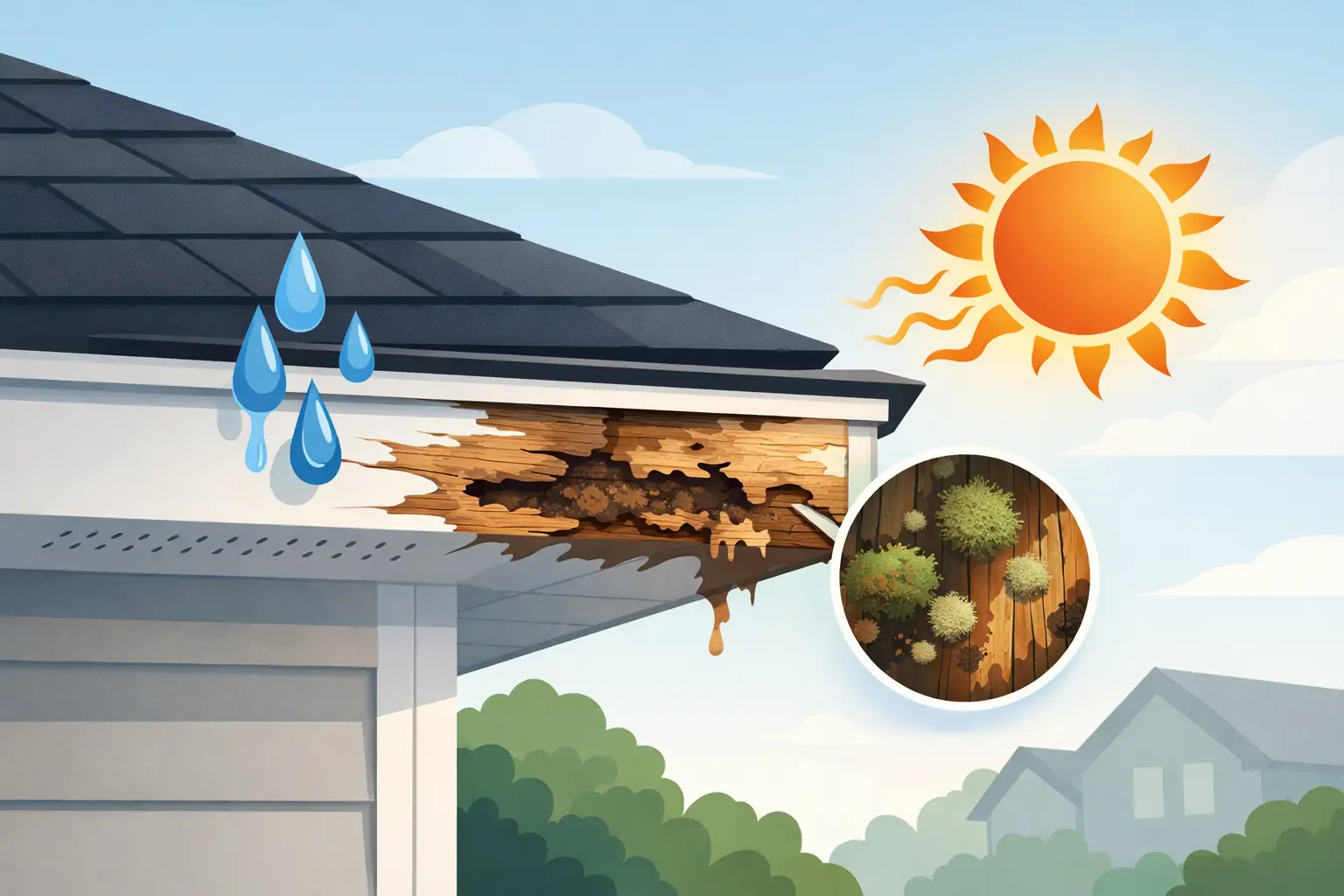
A fascia board rarely rots out of nowhere. Most of the time, it has been taking water for months or years because something higher up the roofline is not doing its job. If you are wondering what causes fascia board rot, the short answer is repeated moisture exposure, but the real cause is usually a mix of failing gutters, poor drainage, damaged paint, and neglected maintenance.
That matters because fascia boards are not just trim. They support the gutter line, protect the roof edge, and help keep water away from the rafters and soffits. Once rot sets in, the problem can spread well beyond one soft section of wood.
What causes fascia board rot most often?
In day-to-day exterior maintenance, the biggest cause is water getting trapped where it should be draining away. Gutters are meant to catch roof runoff and move it safely to the downspouts. When they are blocked, leaking, loose, or pitched incorrectly, water can spill behind the gutter and soak the fascia over and over again.
That constant wetting is what starts the damage. Wood does not need a dramatic leak to rot. It just needs to stay damp long enough for decay to take hold. A board that never has a chance to dry properly will eventually soften, split, and fail.
Paint failure also plays a part. Once the protective coating cracks, peels, or blisters, rain can soak into the timber far more easily. If the top edge of the fascia is exposed, or the drip edge is missing or poorly fitted, water can run straight behind the face of the board and sit there.
Ventilation matters too. In some homes, moisture from the attic or roof void contributes to the problem, especially when condensation builds up and the soffit and fascia area stays damp from the inside as well as the outside. It is not always one single fault. Quite often, rot is the result of several small issues happening together.
The main sources of moisture that damage fascia boards
Overflowing gutters are a common starting point. Leaves, moss, silt, and roof debris stop water from flowing freely, so it backs up and spills over the front or behind the gutter. Homeowners often notice the overflow, but they do not always see the water running onto the fascia until staining, peeling paint, or soft timber appears.
Leaking gutter joints and corners can do the same thing on a smaller scale. A slow drip hitting the same section of fascia every time it rains may not look serious at first, but over time it can cause concentrated decay in one area. The same goes for downspout connections that leak near the roofline.
Loose or sagging gutters are another major culprit. If the brackets pull away or the gutter line drops, water can pool instead of draining. That standing water adds weight, stresses the fixings, and increases the chance of overflow behind the gutter. In older properties, the fascia itself may be weakened enough that the gutter starts pulling away from rotten timber, which makes the water problem worse.
Roof issues should not be ignored either. Broken shingles, failed flashing, or poor drip edge installation can channel water straight toward the fascia. On some homes, wind-driven rain regularly gets into vulnerable roof edges, especially if previous work was done cheaply or in a hurry.
Why blocked gutters are such a common cause
If there is one issue that comes up again and again, it is neglected guttering. A blocked gutter does more than look untidy. It changes the path of rainwater, and once water starts spilling in the wrong place, the fascia takes the hit.
This is why fascia rot and gutter problems so often appear together. You might spot flaking paint on the roofline, but the real fault is the gutter above it holding debris and water. Many quick-clean providers will remove visible buildup and leave it at that, but if the gutter pitch is wrong, a joint is leaking, or the downspout is partially blocked, the same problem soon returns.
A proper inspection should look at the whole run – gutter alignment, bracket condition, joints, outlets, downspouts, and the state of the fascia behind the gutter. Cleaning alone is not always enough.
Signs your fascia boards may already be rotting
Some warning signs are obvious, and some are easy to miss from ground level. Peeling or bubbling paint is one of the earliest clues. So is staining along the fascia or soffit line. If the board looks swollen, cracked, or warped, moisture has likely been getting in for some time.
Soft spots are a stronger sign. If a contractor presses the timber and it gives way, that is not surface wear. It usually means the wood fibers have started to break down. You may also see gutters pulling away from the house, nail heads loosening, or sections of the roofline looking uneven.
In more advanced cases, the damage spreads into the soffit ends, rafter tails, or roof decking. That is when a straightforward repair can turn into a larger carpentry job. The earlier it is caught, the better the odds of keeping the repair local and the cost under control.
What causes fascia board rot besides rain?
Rainwater is the main driver, but it is not the only one. Poor-quality timber, old age, and lack of regular painting all shorten the life of a fascia board. If the material was installed without proper sealing or with exposed end grain, it will absorb water faster.
Pests can contribute as well. Insects are more likely to target damp, weakened wood, and once the surface is compromised, decay accelerates. Ice can also play a role in colder spells. If gutters freeze and thaw repeatedly, trapped water may sit against the fascia for long periods.
Then there is condensation. In homes with poor attic ventilation, moist air can collect around the eaves and create persistent dampness from the inside. It is less common than gutter overflow, but it does happen, especially where insulation and ventilation have not been balanced properly.
Can fascia board rot be repaired, or does it need replacement?
It depends on how far the damage has gone. If the rot is limited to a small section and the surrounding timber is still sound, a localized repair may be possible. That could mean cutting out the damaged area, treating adjacent wood, and making sure the water source is properly fixed.
If the board is soft along a long run, if the gutter fixings are no longer secure, or if the rot has spread into structural roof-edge timber, replacement is usually the better option. Patching over advanced decay is false economy. It may look tidy for a while, but the underlying weakness remains.
Material choice matters here too. Traditional timber can still be a good option when installed and maintained correctly, but many property owners now choose UPVC fascia and soffit systems because they are lower maintenance and less vulnerable to rot. That said, even UPVC rooflines can suffer if the guttering is blocked or leaking, so the drainage issue still needs to be dealt with.
How to stop fascia boards from rotting again
The fix is not complicated, but it needs to be complete. First, the water has to be controlled. That means clearing gutters and downspouts, sealing leaks, correcting sagging sections, and checking that rainwater is flowing to the outlets properly.
Next, the roof edge needs to be inspected. If the drip edge, flashing, or shingles are letting water track back toward the fascia, that must be corrected. There is no point replacing a fascia board if the same roof detail is going to soak it again next month.
Ongoing maintenance makes the difference. Regular gutter cleaning, especially after heavy leaf fall or roof moss buildup, helps prevent the repeat cycle of blockage and overflow. Periodic checks after storms are worthwhile too, because loose brackets and small leaks often start then.
For homeowners and property managers, the practical approach is simple: do not wait for visible rot. If your gutters are overflowing, staining the fascia, or pulling away from the house, get the roofline checked properly. A reliable contractor should be able to tell you whether the problem is maintenance, repair, or replacement, and show you what is actually going on rather than guessing from the ground.
At Steve’s Gutters, that is the difference we believe matters – not just clearing debris, but checking the full system so the same issue does not keep costing you money. Fascia board rot usually starts small, stays hidden, and gets expensive when left alone. Catch it early, fix the cause, and your roofline has a much better chance of staying solid for years to come.
Recommended Posts
Seamless Versus Sectional Gutters: Which Is Best?
October 16, 2026
Can Dirty Gutters Attract Pests? Yes, Here’s Why
October 14, 2026
A Guide to Replacing Fascias on Your Home
October 12, 2026