

Residential Gutter Repairs Done Right

by
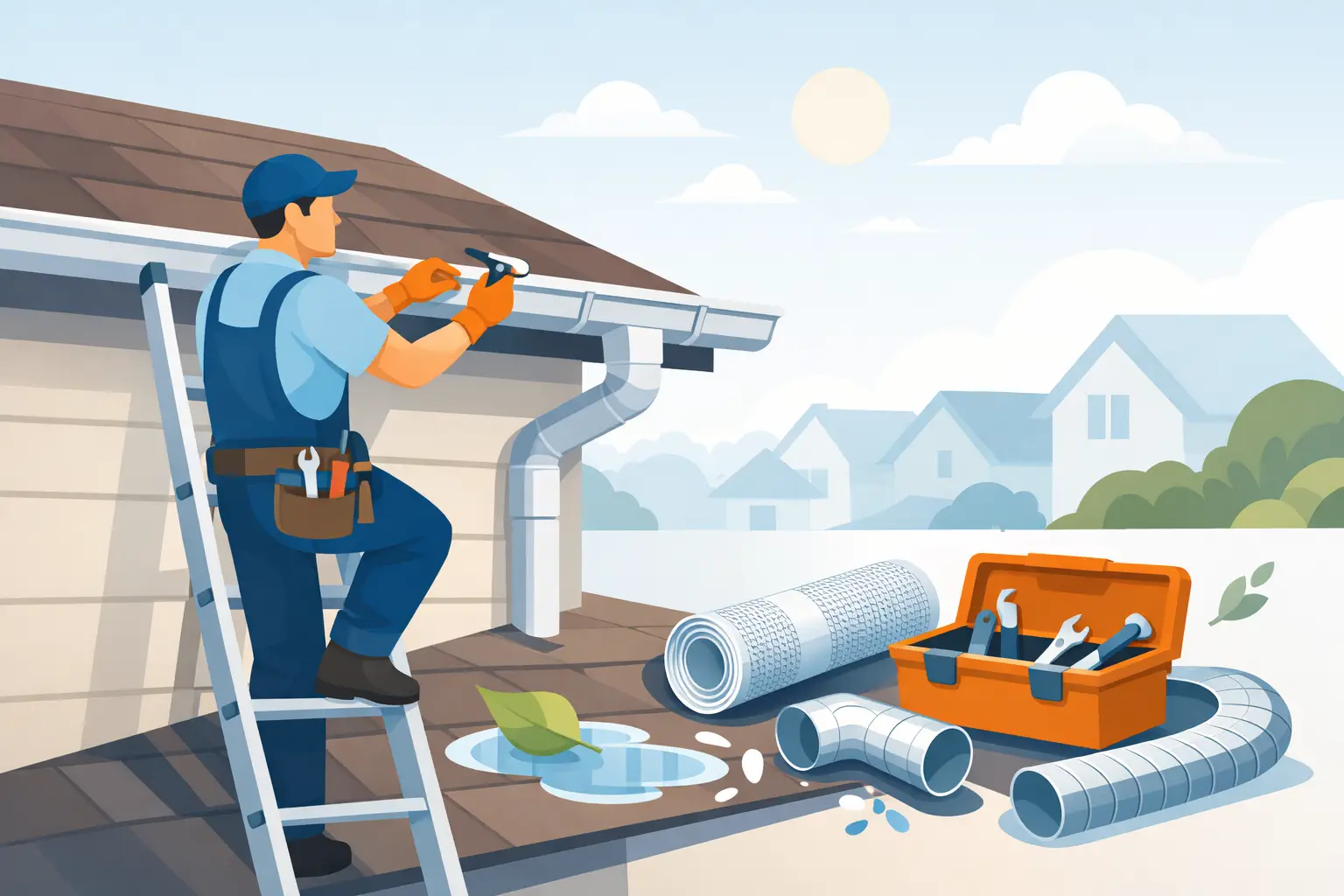
A gutter problem usually starts small. A drip over the front door, a dark patch on the siding, water spilling over one corner in a storm. Leave it alone, and that small fault can turn into damaged fascia, stained brickwork, damp around the foundation, and expensive repair work that had nothing to do with the original issue. That is why residential gutter repairs matter. Done at the right time, they protect the rest of the house and save you from paying for bigger jobs later.
At a glance, gutters look simple. In practice, they are part of a working drainage system. The trough has to hold the flow, the brackets have to support the weight, the joints have to stay watertight, and the downspouts have to move water away from the property. If one part fails, the rest of the system starts struggling. That is also why a proper repair is never just about patching one visible leak and walking away.
What usually goes wrong with residential gutter repairs
Most homeowners call when the problem is obvious. Water is pouring over the edge, there is a joint leaking, or a section is hanging loose. Those are common issues, but they are rarely random.
Clogs are one of the biggest causes. Leaves, moss, silt, and general debris build up inside the channel and slow the flow. Once water backs up, it finds the lowest point and starts spilling over. The extra weight can also pull brackets out of line, especially on older systems or where the fascia has already weakened.
Joint failure is another regular problem. Sealant does not last forever. Over time, heat, cold, movement, and standing water break it down. That is when you start seeing drips at the seams or damp marks below a connector.
Pitch problems are common as well. Gutters need a slight fall toward the downspout. If sections sag in the middle or were installed poorly to begin with, water sits where it should be draining. Standing water puts strain on the system and speeds up wear.
Then there is physical damage. Ladders placed badly, storm debris, ice, or simple age can crack plastic sections, split joints, loosen clips, or bend metal runs. Sometimes the gutter is still attached, but it is no longer doing the job properly.
Why quick fixes often fail
A lot of gutter trouble gets treated with a surface fix. Someone clears the visible blockage, adds a bit of sealant, or pushes a loose section back into place. That can stop the symptom for a short while, but it does not always solve the cause.
For example, a leaking joint may not just need resealing. If the run is carrying too much weight because the brackets are too far apart, or if the gutter is holding water because the slope is wrong, the joint will keep failing. In the same way, clearing one clogged downspout does not help much if the rest of the system is full of debris and overflowing at every heavy rainfall.
This is where experience matters. A proper gutter repair starts with inspection, not guessing. You need to know whether the issue is blockage, alignment, failed sealant, broken fittings, weak fascia, or a combination of problems. Otherwise, you end up paying twice.
When a repair makes sense
Not every damaged gutter needs replacing. In many cases, residential gutter repairs are the sensible option, especially when the overall system is still sound.
A repair usually makes sense when the problem is local rather than widespread. One leaking joint, one cracked corner, a loose bracket line, or a blocked downspout can often be put right without replacing the full run. If the material is still in decent condition and the fascia behind it is solid, a targeted repair can restore proper performance and keep costs under control.
Older systems can still be worth repairing too, particularly if they were installed well and only have a few worn components. Cast iron, aluminum, and quality UPVC systems can often be kept going with the right maintenance. The key question is whether you are fixing an isolated defect or chasing repeated failures across the whole roofline.
When replacement is the better call
There are times when repair work starts becoming false economy. If multiple joints are leaking, several sections are warped, the brackets have pulled away in a number of places, or the fascia is rotten, it may be better to replace part or all of the system.
The same applies if the guttering is undersized for the roof area or was installed badly from day one. You can repair around those problems, but you are still working with a setup that struggles in heavy rain. A replacement gives you the chance to correct the fall, improve the outlet positions, and fit a system that matches the property properly.
Good contractors will tell you honestly which side of that line you are on. If a repair is enough, they should say so. If the system is past its useful life, they should explain why replacing it will save money and hassle in the long run.
What a proper gutter repair should include
A decent repair service does more than fix the most obvious leak. It should start with a full visual check of the gutter runs, outlets, joints, brackets, downspouts, and the fascia and soffit areas supporting them.
The gutter should be cleared first if there is debris inside. There is little point repairing a system while it is still clogged. Once cleaned, defects are easier to see and test. Brackets can be reset or replaced, leaking joints can be resealed or renewed, cracked sections can be swapped out, and alignment can be adjusted so water flows correctly to the outlet.
Downspouts matter just as much as the horizontal runs. If they are blocked or disconnected at ground level, water backs up quickly. A proper job includes checking that the full system drains freely and sends water away from the building as intended.
This is one reason homeowners often prefer a specialist over a basic clean-only service. Cleaning has its place, but if the company on site cannot repair what they find, you are still left arranging another visit, another quote, and more delay.
The signs you should not ignore
Some gutter faults are easy to spot. Others show up as damage around the home before the gutter problem is noticed.
Watch for water cascading over the edge during rain, stains on siding or masonry, damp patches around the base of the house, peeling paint near the roofline, plant growth in the gutter, or sections that look uneven from the ground. You may also see puddling near entryways or hear dripping after rain has already stopped.
If a gutter is pulling away from the fascia, do not leave it. That often means the fix is becoming more involved, and the supporting timber may already be taking on water. Catching it early can be the difference between a straightforward repair and a broader roofline job.
Choosing the right company for residential gutter repairs
This is not just about who can get a ladder up quickest. You want a company that understands how the whole roof drainage system works and can deal with cleaning, repair, and replacement if needed.
Look for clear quoting, insured work, and someone willing to explain what has failed and why. Ask whether they check downspouts, brackets, joints, and fascia rather than only removing debris. If a contractor offers only vacuum cleaning and cannot handle broken fittings or misaligned sections, that is a limitation worth knowing upfront.
For homeowners who want the job handled properly the first time, practical experience counts for a lot. A family-run specialist like Steve’s Gutters builds trust by doing the full job, not the quickest version of it. That means finding the cause, making sound repairs, and being honest when replacement is the better value.
Preventing repeat problems
The best repair is one that lasts, and that usually means combining repairs with routine maintenance. Gutters that are cleaned regularly, checked after storms, and kept free-flowing put far less strain on joints and brackets.
Properties near trees often need more frequent attention. Homes with extensions, conservatories, or awkward roof valleys may also collect debris faster and overflow sooner. There is no one schedule that fits every house. It depends on the setting, the roof design, and how quickly material builds up.
A little routine care goes a long way. It keeps minor faults from turning into structural damage and helps you plan work before it becomes urgent. If your gutters are already showing signs of leaking, sagging, or overflowing, the sensible next step is not to wait for the next heavy storm. Get them looked at properly, fix what can be fixed, and protect the rest of the house while the problem is still manageable.
Recommended Posts
Seamless Versus Sectional Gutters: Which Is Best?
October 16, 2026
Can Dirty Gutters Attract Pests? Yes, Here’s Why
October 14, 2026
A Guide to Replacing Fascias on Your Home
October 12, 2026