

Soft Wash Roof Cleaning Done Right

by
Dark streaks on a roof are not just a cosmetic issue. They usually mean algae, moss, lichen, and built-up grime are holding moisture where it does not belong. Soft wash roof cleaning is the safer way to deal with that problem because it treats the growth instead of blasting the roof surface and hoping for the best.
What soft wash roof cleaning actually means
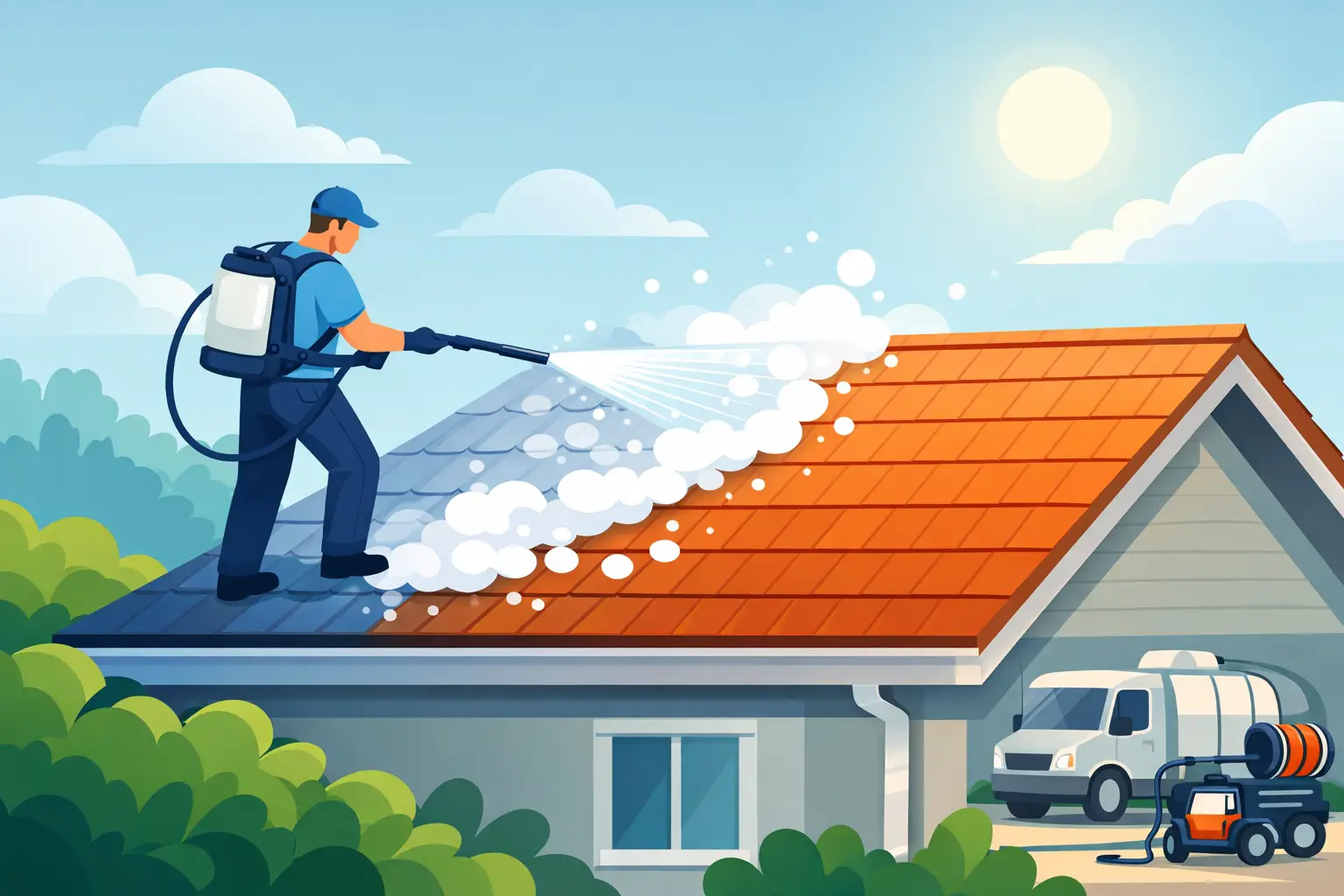
Soft wash roof cleaning uses low-pressure water and specialist cleaning solutions to break down organic growth on the roof. The aim is not brute force. It is to kill the algae, loosen the dirt, and clear the surface without damaging shingles, tiles, flashing, or the roofline.
That matters because a roof is not the place for guesswork. High pressure may look impressive for a few minutes, but on many roofs it can strip protective granules, force water under materials, disturb pointing, and shorten the life of the surface. A proper soft wash approach is slower, more controlled, and far better suited to routine roof maintenance.
Why pressure washing a roof is often the wrong call
A lot of homeowners assume pressure washing is the quickest answer because it removes visible dirt fast. The trouble is that roofs are not driveways. Asphalt shingles, older tiles, ridge areas, and flashing details can all be vulnerable if too much pressure is used.
When moss and algae are blasted off aggressively, the roof can be left clean-looking but compromised. Granules can be lost from shingles, water can be pushed into weak spots, and guttering can end up packed with debris. In some cases, the damage does not show up until the next heavy rain.
Soft washing is not about doing less. It is about using the right method for the material. If a roof needs careful treatment to avoid unnecessary wear, low pressure is usually the sensible option.
What soft wash roof cleaning removes
Most roof staining is caused by living growth. Algae often shows as black streaks, especially on shaded slopes. Moss builds up in clumps, traps water, and can lift edges or sit between overlaps. Lichen is even more stubborn and tends to grip the surface tightly.
A soft wash treatment is designed to deal with all three, along with general grime and environmental buildup. The cleaning solution does the real work by treating the cause, not just the appearance. That is why the results often keep improving after the service, as the remaining dead growth weathers away naturally.
On some roofs, especially those with heavy moss coverage, manual scraping may be needed before the wash is applied. That depends on the amount of buildup, the roof type, and the condition of the materials. There is no one-size-fits-all answer, which is why a proper inspection comes first.
The real benefits are more than appearance
A cleaner roof obviously helps curb appeal, but that is only part of the value. Moss and algae hold moisture against the roof surface, and prolonged moisture is never good for building materials. It can encourage faster wear, add weight to sections of the roof, and increase the amount of debris washing into gutters and downspouts.
That link between roof cleaning and gutter performance is often overlooked. When moss breaks loose in wet weather, it does not disappear. It usually ends up in the gutters, blocking water flow and creating overflow at the roof edge. That is when you start seeing staining on walls, damp around fascia boards, and water running where it should not.
A proper roof clean helps reduce those risks. When it is carried out by a company that also understands guttering, downspouts, and roofline condition, you are far more likely to get the whole issue dealt with instead of a surface-level clean.
Not every roof should be cleaned the same way
This is where experience matters. A newer asphalt shingle roof needs a different approach from an older concrete tile roof. A roof with damaged flashing, fragile pointing, or loose ridge sections may need repairs before any cleaning starts. If there are signs of long-term neglect, cleaning alone may not be the whole answer.
That is why a dependable contractor will not promise the same result, price, or process for every property without looking first. Roof pitch, access, surrounding landscaping, amount of moss, and the condition of gutters all affect the job.
There are also situations where the timing matters. If gutters are already blocked, it makes sense to clear them as part of the visit or immediately after the roof work. If the roof is shedding moss into old or damaged guttering, you may uncover repair needs that were hidden before. Honest advice matters more than a quick sales line.
What to expect from a professional service
A proper roof cleaning job should start with an inspection, not a ladder-and-hope approach. The contractor should assess the roof covering, check for obvious defects, note the amount of moss or staining, and think through safe access before any work begins.
The area below the roof should be protected as needed, especially around patios, planting, and entrances. Moss may be removed by hand first if there is heavy buildup. After that, the soft wash solution is applied carefully and at low pressure. The aim is even coverage and controlled treatment, not flooding the roof.
Good service also means looking beyond the roof itself. Gutters should be checked for fallen debris, downspouts should be flowing, and roofline components such as fascia and soffits should be considered if dirt and staining have spread. That practical, whole-property view is what separates specialist exterior maintenance from a basic clean-only visit.
How long do the results last?
That depends on the roof location and local conditions. If the roof sits under overhanging trees, gets limited sun, or stays damp for long periods, regrowth can return sooner. A more open, sun-exposed roof often stays cleaner for longer.
In general, soft washing lasts better than surface-only cleaning because it treats the biological growth rather than just removing what is visible. Even so, no honest contractor should tell you it is permanent. Exterior surfaces are exposed to weather year-round, and maintenance is part of protecting the property.
The best approach is usually routine inspection and treatment before the buildup becomes severe again. That is cheaper, safer, and easier on the roof than leaving it for years and dealing with a heavy moss problem later.
Choosing the right company for soft wash roof cleaning
Price matters, but it should not be the only thing you compare. Roof cleaning is one of those jobs where the cheapest quote can become the expensive one if damage is caused or important defects are missed.
Look for a company that is insured, experienced, and able to assess more than just the dirt on the roof. If they also handle gutters, downspouts, fascia, soffits, and roofline repairs, that is often a good sign. It usually means they understand how water moves around the property and what small signs can point to bigger trouble.
It also helps to choose a contractor who explains the method clearly. If someone wants to attack a delicate or aging roof with high pressure without talking about material type, runoff, gutter clearance, or condition checks, that should raise a flag.
This is exactly why many property owners prefer a specialist team such as Steve’s Gutters. The value is not just in washing a roof. It is in spotting issues early, keeping the whole roofline working properly, and doing the job in a safe, insured, straightforward way.
Is soft washing worth it?
If the roof is stained, moss-covered, or feeding debris into the gutters, usually yes. Soft wash roof cleaning can improve appearance, help protect the roof surface, reduce moisture-holding growth, and support better drainage around the home. It is one of those maintenance jobs that costs far less than dealing with water damage, premature roof wear, or overflowing gutters later on.
That said, the method only works well when it is matched to the roof condition and carried out properly. A careful inspection, the right treatment, and attention to the gutters and roofline make all the difference.
A roof does not need flashy promises. It needs the right clean, the right checks, and the kind of workmanship that prevents the next problem instead of passing it on.
Recommended Posts
Seamless Versus Sectional Gutters: Which Is Best?
October 16, 2026
Can Dirty Gutters Attract Pests? Yes, Here’s Why
October 14, 2026
A Guide to Replacing Fascias on Your Home
October 12, 2026