

How to Fix Sagging Guttering Properly

by
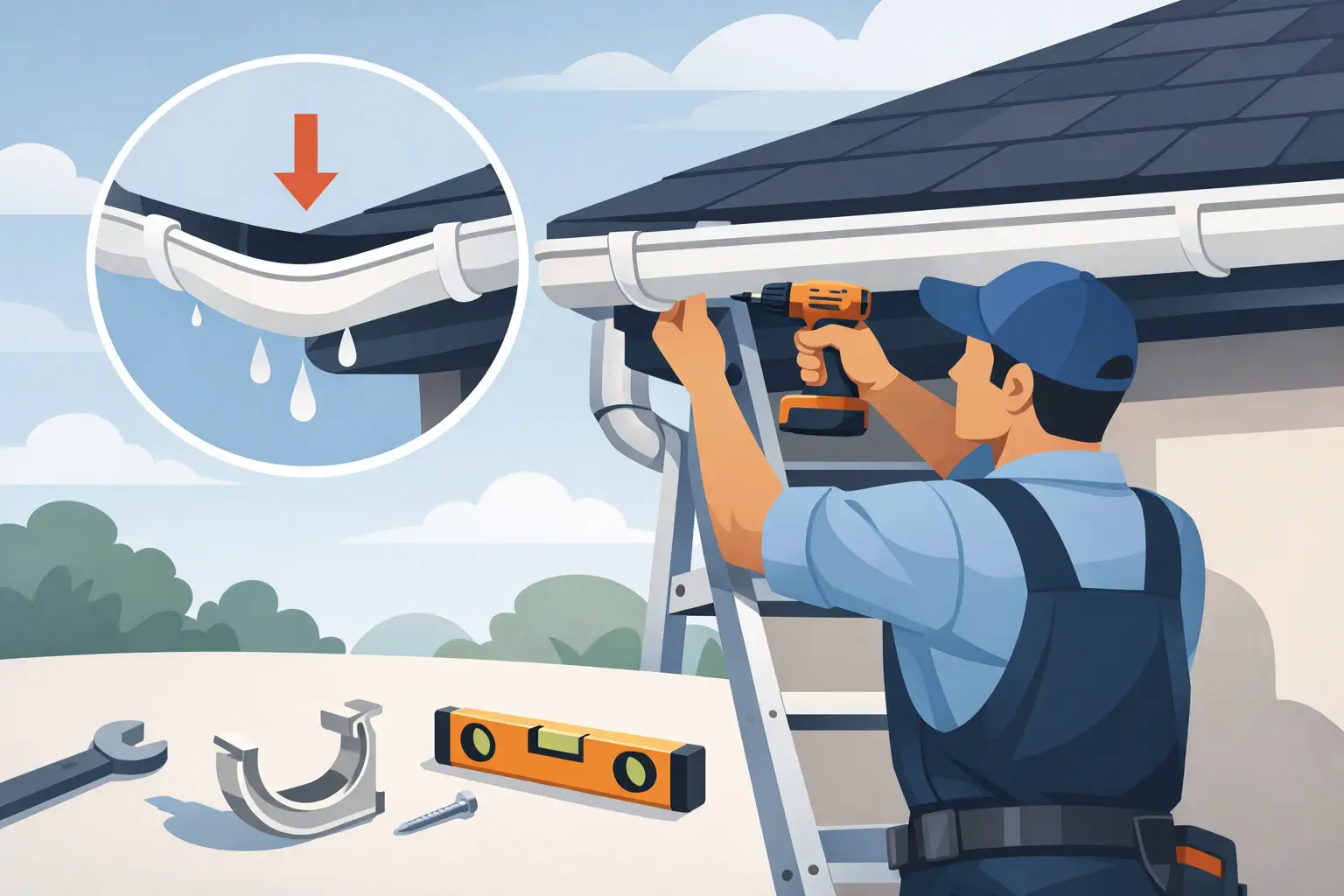
A gutter that sags in the middle is not just untidy. It usually means water is sitting where it should be flowing, and that is when you start seeing overflow, staining on brickwork, damp around walls, and pressure pulling at the joints. If you are looking up how to fix sagging guttering, the first thing to know is that the dip itself is only part of the problem. The real cause is often blockage, failed brackets, bad alignment, or guttering that has simply reached the end of its working life.
What causes guttering to sag?
In most cases, sagging starts with weight. Gutters are designed to carry rainwater away quickly, not hold standing water for long periods. When leaves, moss, and general debris build up, water has nowhere to go. That extra load puts strain on the brackets and fixings, especially during heavy rain.
Age also plays a part. Older plastic guttering can warp, become brittle, or pull away from the fascia over time. Metal systems can sag if the brackets loosen or rust. Sometimes the problem comes from poor installation from the start. If the spacing between brackets is too wide, or the fall was never set correctly, the gutter will eventually dip.
On some properties, roof moss is a big contributor. During wet weather, moss washes down into the gutter and creates dense blockages. It is common to see one section overloaded while the rest looks fine. That is why a proper repair is not just about pushing the gutter back into place and hoping for the best.
How to spot whether it is a simple repair or a bigger issue
Before you decide how to fix sagging guttering, check what is actually happening along the run. A short section bowing between two brackets is often repairable. A full length that is twisted, cracked, leaking at multiple joints, or pulling the fascia with it may be telling you replacement is the better value option.
Look for standing water after rain, not just visible droop. Check whether the joints are separating, whether the brackets are snapped or missing, and whether the downspout is blocked. Also look at the fascia board behind the gutter. If the timber is rotten or the fixing points are weak, new brackets alone will not hold for long.
If the gutter is sagging around a conservatory, extension, or awkward roof junction, the cause can be more than debris. You may be dealing with poor pitch, undersized guttering, or too much roof area draining into one section.
How to fix sagging guttering step by step
The right repair starts with safe access. If the gutter is above a porch, extension roof, or uneven ground, this is not the job for a shaky ladder and guesswork. Falls happen fast, and guttering repairs often involve working at a height while handling tools and debris.
Once the access is safe, clear the gutter completely. Remove leaves, moss, sludge, and anything compacted around the outlet. Then flush the run with water to see whether it drains properly. A gutter can look repaired after cleaning, but if water still pools in the low spot, you know the alignment or support is still wrong.
Replace or reposition damaged brackets
This is the most common fix. If the brackets have loosened, cracked, or pulled out, the gutter loses support and drops between fixing points. Remove the affected section if needed, inspect the brackets, and replace any that are worn or broken. New brackets should be fitted at the correct spacing for the type of gutter system, with enough support to stop future bowing.
If the brackets are sound but in the wrong place, they may need repositioning. The aim is to create a steady fall toward the downspout so water runs off instead of sitting in the channel. Too flat, and water pools. Too steep, and you can affect flow and appearance.
Check the fall of the gutter run
A lot of sagging complaints are really drainage complaints. The gutter may not be badly bent at all, but if it has no proper slope, water will sit in the middle and make it appear worse. After cleaning and securing the brackets, check the pitch of the run and adjust as needed.
This part matters more than many homeowners realize. A gutter can be firmly attached and still fail if the line is off. That is why quick patch repairs often do not last.
Inspect joints and seals
When guttering sags, the movement often stresses the joints. Seals can shift, clips can loosen, and small leaks develop at connection points. Once the gutter is back in position, inspect every nearby joint. Replace worn seals if required and make sure each section is clipped together correctly.
It depends on the age of the system. On newer guttering, a fresh seal and secure bracket may solve it. On older runs, once one joint starts going, others are often not far behind.
Clear the downspout as well
A blocked downspout can cause the same symptoms as sagging. Water backs up, the gutter stays full, and the extra weight causes strain. If you repair the support but leave the outlet blocked, the problem will return in the next heavy rain.
Always run water through the system after the repair. If it does not discharge freely at ground level, the blockage is still there.
When a repair is not worth forcing
There is a point where repair becomes false economy. If the gutter is cracked in several places, badly warped, or repeatedly pulling away, spending money on one bracket here and one seal there may not make sense. The same goes for very old systems where replacement parts are hard to match.
You also need to think about what is behind the gutter. Rotten fascia boards, loose roofline trim, or poor original installation can all undermine a repair. In those cases, the gutter is not the only issue. It is just the part you can see.
For homeowners and property managers, this is where experience matters. A proper assessment should tell you whether the issue is local and fixable or whether the full run needs replacing. Honest advice saves money in the long run.
Common mistakes people make when fixing sagging guttering
The biggest one is skipping the cleanout and going straight to refastening the gutter. If the debris stays in place, the weight problem stays too. Another mistake is reusing old brackets that have already distorted. They may hold for a short while, but they usually fail again.
Some people also add a bracket in the middle without correcting the fall. That can reduce the visible dip but still leave standing water. Others use sealant to mask leaking joints when the real issue is movement and poor support. Sealant has its place, but it is not a cure for a gutter that is misaligned or overloaded.
Then there is the safety side. Working from height is the part that gets underestimated most. Even a straightforward gutter repair can become risky if access is awkward, the ladder footing is poor, or the section being handled is longer than expected.
How to prevent sagging from coming back
Regular maintenance makes the biggest difference. If the gutter is cleaned before debris builds up, the brackets and joints are not carrying extra weight for months at a time. Roof moss should be dealt with too, especially on older roofs where it sheds heavily into the gutter system.
It also helps to have the full roofline checked rather than treating the gutter in isolation. Fascia, soffits, joints, corners, and downspouts all affect how well the system performs. A company that only vacuums out debris may leave behind failed brackets, poor alignment, or blocked downspouts that keep causing trouble.
That is why many property owners prefer a service that includes inspection, repair capability, and replacement where needed. At Steve’s Gutters, that practical approach matters because a clean gutter is only useful if it is still fixed properly and draining the way it should.
Should you fix it yourself or call a professional?
If the sag is minor, access is safe, and you are confident working on ladders, a simple cleanout and bracket replacement may be manageable. But if the gutter is high, leaking in multiple places, attached to damaged fascia, or part of a larger drainage problem, professional repair is usually the safer and more reliable option.
The trade-off is simple. DIY can save money on a small, obvious issue. A professional visit is better value when you need the cause identified properly, the fall corrected, and the whole system checked at the same time.
Sagging guttering rarely improves by itself. Once you see a dip, overflow, or joint movement, the best step is to deal with it before water starts damaging walls, soffits, or foundations. A proper repair is not about making the line look straight from the ground. It is about making sure the gutter can do its job the next time the rain comes down hard.
Recommended Posts
Seamless Versus Sectional Gutters: Which Is Best?
October 16, 2026
Can Dirty Gutters Attract Pests? Yes, Here’s Why
October 14, 2026
A Guide to Replacing Fascias on Your Home
October 12, 2026