

Cast Iron Gutter Replacement: What to Expect

by
A gutter that looks solid from the ground can still be failing at the joints, rusting through at the back, or pulling away from the fascia. That is usually when cast iron gutter replacement stops being a cosmetic decision and becomes a property protection job. If water is spilling onto walls, soaking masonry, or running down behind the gutter line, waiting too long often means paying for more than just new gutters.
Cast iron has a lot going for it. It suits period homes, lasts well when maintained properly, and gives a building the right finish in a way modern plastic often cannot. But it is heavy, it needs proper fixing, and once corrosion gets established, repairs are not always the best value. For homeowners and property managers, the real question is not whether cast iron is good. It is whether the existing system is still worth saving.
When cast iron gutter replacement makes more sense than repair
Some cast iron systems can be repaired successfully. A leaking joint, a failed bracket, or a localized crack does not always mean the whole run has to go. If most sections are sound and the problem is limited, a proper repair can buy useful time.
That said, there is a point where patching becomes false economy. If multiple joints are leaking, sections are badly rusted, and alignment has gone out across several elevations, replacement is usually the better route. The same applies when gutters have been repaired repeatedly but still overflow because the falls are wrong or the outlets are poorly positioned.
You also need to look beyond the gutter itself. Water damage to fascia boards, staining on walls, damp around the roofline, and saturated ground below can all point to a system that has been failing for longer than it first appeared. A proper inspection matters here because what looks like a small leak can be hiding a broader drainage problem.
What causes cast iron gutters to fail
Age is the obvious factor, but it is rarely the only one. Cast iron lasts well when it is cleaned, painted, and checked at intervals. Problems usually build when maintenance slips. Debris sits in the channel, water holds around joints, coatings fail, and rust gets to work.
Movement is another common issue. Older properties shift over time, and heavy guttering does not forgive poor support. Brackets loosen, joints strain, and sections begin to sag. Once the line is out, water stops flowing as it should and starts ponding in places it never should reach.
Previous poor workmanship also catches up with people. We see systems where repairs have been done with the wrong sealants, mismatched parts, or inadequate fixings. That may hold for a while, but not for long. A proper cast iron installation needs the right spacing, sound fixings, clean outlets, and attention to every joint.
Cast iron gutter replacement or a change of material?
This is where it depends on the property.
If you own a period home, listed building, church, or an older commercial property where appearance matters, replacing like for like is often the right decision. Cast iron keeps the original character and gives you the strength and profile the building was designed for. On some properties, switching to plastic looks wrong straight away. On others, it may also affect value or planning expectations.
For more straightforward homes, some owners choose to replace cast iron with aluminum or UPVC instead. That can reduce cost and ongoing maintenance, but there is a trade-off. Modern materials are lighter and easier to fit, yet they do not always deliver the same look or long-term feel as cast iron. Aluminum is often the middle ground if you want a neater finish than plastic without the full weight and upkeep of traditional iron.
The best choice comes down to the building, your budget, and whether you want to preserve the original appearance or simply solve the drainage issue in the most cost-effective way.
What happens during cast iron gutter replacement
A proper replacement job starts with inspection, not guesswork. The contractor should assess the condition of the gutter runs, downspouts, brackets, outlets, and the roofline they are fixed to. There is little point installing heavy new guttering onto rotten fascia or unstable fixing points.
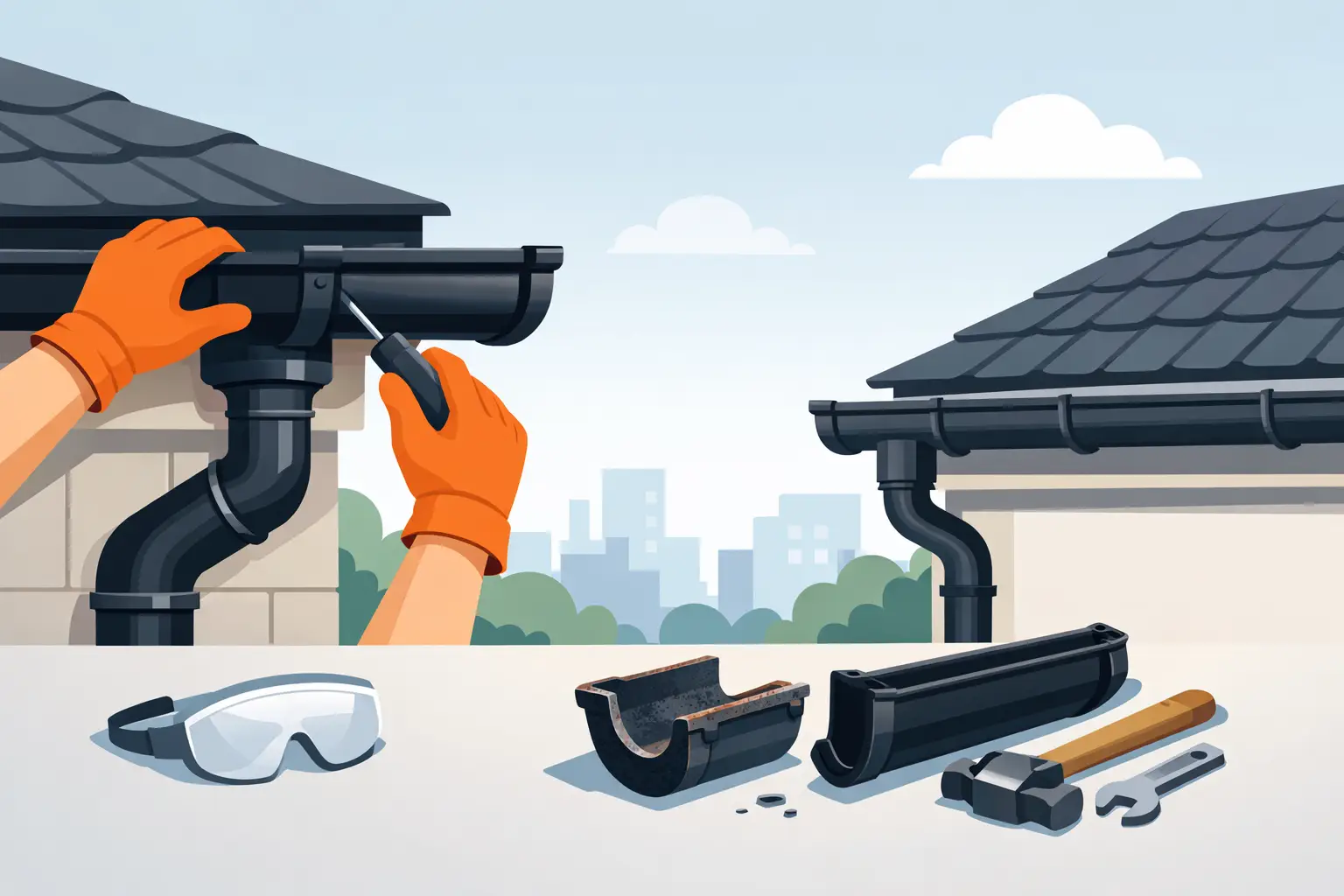
The old system is then removed carefully, section by section. Cast iron is heavy and often brittle in places, so safe handling matters. This is not a quick vacuum-and-go service. It needs the right access equipment, safe working methods, and installers who understand how these systems are put together.
Once removed, the new line should be set out correctly with the right fall toward each outlet. Brackets need secure fixing at the proper spacing, joints need to be assembled cleanly, and downspouts need to be checked all the way to discharge level. If the downspouts are blocked, undersized, or damaged, replacing the gutters alone will not solve the problem.
Good contractors also look at the wider roofline while they are there. If there are slipped tiles, moss causing runoff issues, or failing soffits and fascia boards, it is better to address those points before the new system is asked to do its job.
Cost factors homeowners should expect
There is no honest one-price-fits-all answer for cast iron gutter replacement because the cost depends heavily on access, property type, and the amount of detailing involved.
A simple single-story run on a standard house is one thing. A tall period property with multiple levels, corners, hopper heads, ornate fittings, and awkward access is another. Labor is also a bigger part of the cost than many people expect, because cast iron is heavier to handle and slower to install correctly than lighter alternatives.
Condition matters too. If brackets have failed because the timber behind them has decayed, or if masonry needs local repair before new fixings can go in, that affects the final scope. The same goes for replacing downspouts, renewing outlets, or upgrading sections that have been altered badly in the past.
The cheapest quote is not always the best value. If someone is pricing cast iron replacement without discussing access, fixings, downspouts, and roofline condition, they may be pricing only part of the job.
Why experience matters with cast iron work
Cast iron guttering is not difficult in the hands of the right team, but it is unforgiving of shortcuts. Weight, alignment, jointing, and support all matter. A poor installation may look fine on day one and start leaking under the first heavy spell of rain.
That is why property owners are usually better off choosing a contractor who understands gutter repairs, replacements, downspout clearing, and roofline issues together. The job is not just hanging new sections. It is making sure rainwater is actually being carried away from the building as it should be.
For that reason, many customers prefer a specialist company rather than a basic cleaning-only service. A full inspection, honest advice on repair versus replacement, and the ability to deal with related defects on the same visit often saves time and money. That practical approach is a big part of how Steve’s Gutters works across homes and commercial properties.
How to know you are getting the right solution
Ask simple questions. Is the contractor recommending a local repair, a partial replacement, or a full cast iron gutter replacement, and why? Have they checked the downspouts? Have they looked at fascia condition and fixing points? Are they insured, and is the workmanship guaranteed?
You want clear answers, not vague promises. A reliable contractor will explain what is failing, what can stay, and what should go. They will also tell you where a lower-cost repair is sensible and where it is likely to waste your money.
If your gutters are leaking in several places, showing heavy rust, or pulling away from the building, replacement is often the more dependable long-term fix. Done properly, it protects the walls, foundation, and roofline, and it saves you from repeated callouts every time the weather turns.
A good gutter system should be something you stop thinking about. When rain hits the roof, it should collect, flow, and disappear where it is meant to – quietly, safely, and without leaving you a bigger repair bill later.
Recommended Posts
Seamless Versus Sectional Gutters: Which Is Best?
October 16, 2026
Can Dirty Gutters Attract Pests? Yes, Here’s Why
October 14, 2026
A Guide to Replacing Fascias on Your Home
October 12, 2026