

Blocked Downpipe Clearance Done Properly

by
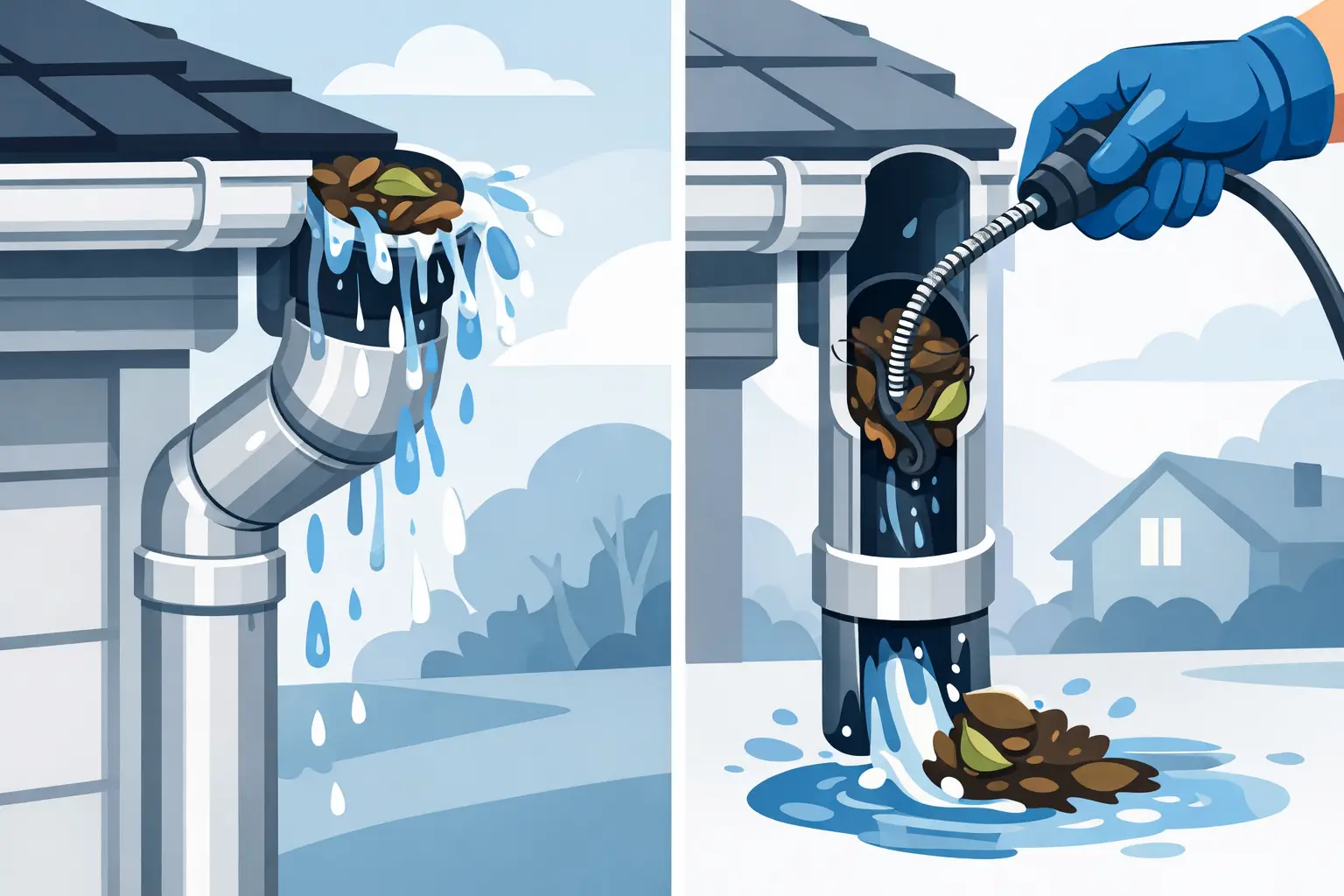
When rainwater starts spilling over the gutter edge instead of running down the pipe, the problem is usually already bigger than it looks. Blocked downpipe clearance is not just about pushing a clog through and hoping for the best. If the downpipe is blocked, water backs up fast, joints take extra strain, and the overflow can end up soaking brickwork, windows, fascia boards, and the ground around your property.
That is why this job needs to be done properly. A quick surface clean may improve how the gutter looks from below, but if the downpipe is still packed with leaves, moss, silt, or roof debris, the water has nowhere to go. For homeowners and property managers, that often means the same issue comes back with the next heavy spell of rain.
Why blocked downpipe clearance matters
A downpipe has one job – carry rainwater safely from the gutter to the drain below. When it cannot do that, the whole gutter system starts underperforming. Water collects in the run, overflows at the weakest point, and can start finding its way into places it should never reach.
On a house, that may show up as damp patches on outside walls, staining under the gutter line, pooling near the foundation, or splashback around doors and patios. On extensions, garages, and conservatories, the risk can be even more obvious because these rooflines often have less margin for error. Once water starts spilling repeatedly, you are no longer dealing with a minor maintenance issue. You are dealing with preventable wear that can lead to repairs.
For commercial properties and managed buildings, the stakes are similar. Overflowing guttering looks neglected, creates slip hazards below, and can damage entrances, signage, and masonry over time. In both cases, proper blocked downpipe clearance protects the building as much as it restores drainage.
Common causes of a blocked downpipe
Most blockages build up gradually. Leaves are the obvious one, especially around trees, but they are rarely the only material in the pipe. Moss from the roof often washes down into the gutter and then compacts inside bends and outlets. Fine grit from tiles can settle and harden. Birds may pull nesting material into the roofline. In some cases, the blockage is lower down where mud and debris have collected near the drain connection.
The shape of the system matters too. Older guttering, poor alignment, undersized outlets, and damaged joints can all make blockages more likely. A downpipe with multiple bends may trap debris more easily than a straight run. Cast iron systems can behave differently from modern UPVC, and older properties sometimes have drainage layouts that make the problem less obvious until overflow appears.
This is where experience counts. Clearing a blockage is one part of the job. Understanding why it happened helps prevent the same problem from coming back a few months later.
Signs you may need blocked downpipe clearance
Some signs are easy to spot, especially during rain. Water spilling over the front or back of the gutter is a clear warning. So is water pouring from a joint, running down the wall, or dripping heavily from one section while the rest of the system looks quiet.
Other signs show up in dry weather. You may notice dark staining on brickwork, green algae streaks, plant growth in the gutter, or a downpipe that sounds solid when tapped because it is full of compacted debris. At ground level, standing water near the base of the pipe can point to a blockage lower down.
It is also worth paying attention if one area of the property keeps having the same issue. Repeated overflow at the same corner usually means more than a simple one-off clean is needed. There may be a blockage in the outlet, a problem with fall, or a repair issue that was missed last time.
What proper clearance should include
A proper service goes beyond removing visible debris from the top of the gutter. The outlet needs checking, the downpipe needs testing, and the full water path needs to be confirmed as clear. If a contractor only vacuums what can be reached from above and leaves the pipe unchecked, you may still have a hidden blockage sitting inside the system.
Good blocked downpipe clearance should start with inspection. That means identifying where the blockage is, checking whether the gutter run is holding water, and looking for damage caused by the backup. The clearance itself may involve removing sections, flushing through, clearing compacted debris by hand, or working from both top and bottom depending on the layout.
Just as important is the check afterward. Water should run freely through the system once the obstruction is removed. If it does not, there may be another issue such as a collapsed section, a misaligned joint, or a blocked underground drain connection. A proper tradesperson will not treat every overflow as the same problem.
Why a cheap quick fix often falls short
This is one of those jobs where cutting corners usually costs more later. A low-cost clean that ignores the downpipes can leave the actual blockage untouched. From the ground, the gutters may look tidier, but the next heavy rain tells the real story.
There is also a safety side to it. Working at height around rooflines, extensions, conservatories, and awkward access points is not something to take lightly. For taller buildings or difficult sections, the right equipment and insurance matter. So does the ability to spot loose brackets, split joints, failing seals, or sagging gutter runs while the system is being cleared.
That is one reason experienced exterior maintenance companies offer more than cleaning alone. If a fault is found during blocked downpipe clearance, it can be dealt with properly rather than patched over or ignored.
When the problem is not just the blockage
Sometimes the downpipe is only part of the issue. If water has been overflowing for a long time, the surrounding guttering may already be under strain. Brackets can loosen, joints can separate, and fascia boards can start showing signs of moisture damage. On older systems, there may be corrosion or cracking that only becomes obvious once the debris is removed.
It also depends on the condition of the roofline. Heavy moss on the roof will keep feeding the gutters until that source problem is addressed. Poorly installed sections may continue to trap debris because the water flow is wrong from the start. In these cases, clearing the downpipe is still necessary, but it is not the full answer.
A dependable contractor will tell you that plainly. Sometimes all you need is a straightforward clearance. Sometimes you need a small repair, a realignment, or a wider clean and inspection to stop repeat blockages.
Residential and commercial properties need the same practical approach
Whether it is a family home, a rental property, an office, or a small retail unit, the principles are the same. Water needs to be carried away cleanly and safely. The difference is usually scale, access, and how quickly a problem needs resolving.
For homeowners, blocked downpipe clearance is often about protecting the property before staining, damp, or costly repair work starts. For property managers, it is also about presentation, tenant concerns, and avoiding bigger maintenance callouts. In both cases, a clear quote, a proper inspection, and work carried out with care matter more than fancy promises.
That straightforward approach is exactly why many customers prefer a specialist rather than a clean-only provider. A company such as Steve’s Gutters can inspect, clear, repair, and advise in one visit when needed, which saves time and avoids the common problem of one contractor spotting an issue and another having to come back later to fix it.
The right time to get it checked
If water is already overflowing, now is the right time. Waiting rarely improves anything, especially through periods of heavy rain, falling leaves, or roof moss wash-off. Even if the issue seems minor, repeated overflow can leave lasting marks and hidden moisture problems.
Preventive checks also make sense if your property sits under trees, has had roof moss removed, or has not had the guttering properly serviced in a while. The goal is not to overcomplicate it. It is simply to deal with small drainage faults before they turn into repairs.
A blocked downpipe is easy to ignore when the weather is dry. The trouble is, rain always finds the weakness first. Getting it cleared properly means the whole system works as it should, and that gives you one less property problem to worry about the next time the weather turns.
Recommended Posts

Seamless Versus Sectional Gutters: Which Is Best?
October 16, 2026

Can Dirty Gutters Attract Pests? Yes, Here’s Why
October 14, 2026
A Guide to Replacing Fascias on Your Home
October 12, 2026