

Commercial Gutter Maintenance Checklist


by
A commercial building rarely gives you much warning before gutter problems start costing money. One blocked outlet can send water over the edge, stain brickwork, soak entrances, and put extra strain on the roofline. That is why a proper commercial gutter maintenance checklist matters. It helps property managers, business owners, and facilities teams catch small issues before they turn into repairs, complaints, or insurance headaches.
For commercial sites, gutters do more than keep rain off the walls. They protect loading bays, storefronts, walkways, foundations, landscaping, and sometimes even internal stock areas. If the system fails, the damage is not always dramatic at first. More often, it starts with minor overflow, standing water, rust marks, or a downspout that cannot cope during a heavy storm. Left alone, those signs usually get worse.
What a commercial gutter maintenance checklist should cover
A useful checklist is not just a cleaning reminder. It should cover inspection, flow testing, repairs, and the condition of connected roofline components. That is where many basic services fall short. A quick vacuum clean may remove visible debris, but if no one checks joint seals, brackets, downspouts, or discharge points, the root problem can stay in place.
For most commercial properties, the right approach depends on the building type, roof design, nearby trees, and the amount of foot traffic below. A warehouse, school, office block, retail unit, and apartment building all have different demands. Flat and low-slope roofs also need closer attention because drainage problems tend to build up faster.
Inspection points that should never be skipped
Start with the gutter runs themselves. Look for silt, leaves, moss, litter, nesting material, and any buildup that slows water movement. Even a small amount of compacted debris can hold moisture and add weight, especially after repeated rain.
Check for standing water in the channel. Water that sits in the gutter usually points to poor pitch, a blockage, or sagging sections. None of those issues fix themselves. If standing water is left there, it can accelerate corrosion in metal systems and increase joint failure in older installations.
Next, inspect all joints and seams. Commercial gutters often have long runs and multiple connection points, so leaks at joints are common. Staining beneath a joint, damp marks on the wall, and drip lines on dry days are all signs that seals may have failed.
Brackets and supports also need close attention. If fixings are loose, bent, or pulling away from the fascia or wall, the system may no longer be carrying weight properly. This matters even more on larger buildings where long gutter sections collect a lot of water during storms.
Downspouts deserve the same level of care. Check for blockages, poor drainage at the base, loose clips, impact damage, and signs of backflow. A gutter can be clean at roof level and still overflow because the downspout is partially blocked lower down.
Finally, review the discharge area. Water should move away from the building cleanly. If it pools near entrances, foundations, service yards, or paved walkways, the drainage setup may need adjustment rather than just another cleaning.
A practical commercial gutter maintenance checklist
If you are managing regular inspections, this is the standard worth following:
- Check gutters for leaves, moss, silt, trash, and nesting debris
- Remove blockages from outlets and downspouts
- Look for standing water and poor pitch
- Inspect joints, seams, and end caps for leaks
- Check brackets, hangers, and fixings for movement or failure
- Review downspouts for cracks, separation, and poor drainage
- Inspect fascia, soffits, and roof edges for water damage
- Look for staining on walls, mold, algae, or overflow marks
- Test water flow where access allows
- Record repairs needed, not just cleaning completed
That last point matters. A checklist should create action, not just paperwork. If a contractor notes a leak but leaves it unresolved, the maintenance visit has only done half the job.
How often commercial gutters should be checked
There is no single schedule that suits every building. Twice a year is a sensible baseline for many sites, usually in spring and late fall. But some properties need more frequent checks.
If the building sits near trees, collects roof moss, or has a history of overflowing gutters, quarterly inspections are often the better choice. Restaurants, schools, retail parks, and multi-unit residential blocks can also benefit from more regular maintenance because blocked drainage quickly affects safety and appearance.
After major storms, high winds, or freezing weather, an extra inspection is a smart move. Storm debris, slipped joints, and damaged brackets often show up after bad weather rather than during routine service windows.
Common problems found during commercial gutter maintenance
Blocked gutters are only part of the picture. On commercial properties, technicians often find failed seals, corroded sections, poor alignment, split outlets, and downspouts that have separated from the wall. In older systems, rust and repeated patch repairs can make replacement more cost-effective than continued fixes.
There is also the issue of capacity. Some older gutter systems were not designed for today’s rainfall patterns or for roof alterations added later. If a building has been extended, reroofed, or modified, the original drainage setup may now be undersized. In that case, regular cleaning helps, but it will not solve overflow during heavy rain.
This is why maintenance needs an experienced eye. It is not just about clearing what is visible. It is about spotting when a system is beginning to fail structurally or when the design itself needs to be improved.
Why documentation matters for property managers
For commercial sites, a checklist works best when paired with clear records. Dates of inspection, photos of issues, notes on repairs completed, and any recommendations for future work all help build a maintenance trail. That can be useful for budgeting, compliance, lease obligations, and insurance questions if water damage later becomes an issue.
It also helps avoid repeat callouts for the same problem. If one area overflows every few months, records can show whether the issue is debris, a faulty downspout, poor pitch, or inadequate drainage design. Without that history, the same symptoms keep getting treated instead of the cause.
Cleaning alone is not always enough
This is where building owners and managers can waste money. A low-cost clean may seem fine on paper, but if the provider cannot handle repairs, you may end up paying twice. First for debris removal, then again for leak repairs, bracket replacement, downspout clearing, or section replacement.
A more complete service is usually better value because the system is inspected as a whole. That means the gutters, outlets, downspouts, fascia line, and visible roof edge are checked together. If something is loose, cracked, or failing, it can be dealt with before it causes more damage.
That practical approach is one reason experienced contractors stand apart from clean-only operators. A proper service should leave the system flowing correctly and identify anything that could shorten its life.
When repair turns into replacement
Some gutter systems are simply at the end of the road. If there are repeated leaks in multiple joints, severe corrosion, sagging runs, or mismatched patched sections, replacement may be the more sensible option. The same applies when the gutters are too small for the roof area or when previous repairs have become a patchwork of temporary fixes.
Replacement does not always mean a full building-wide project. Sometimes one elevation or one damaged run can be upgraded while the rest of the system stays in service. It depends on age, material, access, and whether the failures are isolated or widespread.
A trustworthy contractor will tell you which side of that line you are on. If a repair is enough, they should say so. If replacement is the better long-term call, they should explain why in plain terms.
Using a commercial gutter maintenance checklist the right way
The checklist is there to support decisions, not replace judgment. It helps standardize inspections, but every commercial property has its own weak points. One building may struggle with constant leaf buildup. Another may have no debris at all but suffer from poor fall, undersized outlets, or impact damage from vehicles below.
The best results come from regular inspection, proper cleaning, and repair capability in one service. That is how problems get solved fully instead of pushed down the road. For businesses and property managers, that means fewer surprises, safer walkways, cleaner exteriors, and less risk of water getting where it should not.
If you keep one principle in mind, make it this: gutters are cheap to maintain and expensive to ignore.
Recommended Posts

Seamless Versus Sectional Gutters: Which Is Best?
October 16, 2026

Can Dirty Gutters Attract Pests? Yes, Here’s Why
October 14, 2026
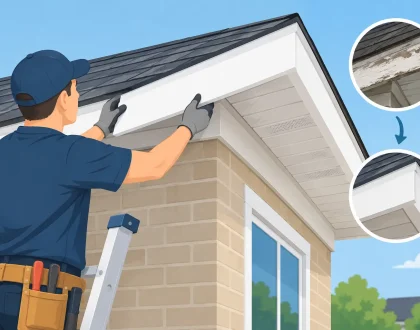
A Guide to Replacing Fascias on Your Home
October 12, 2026