

How to Remove Roof Moss Safely

by
A roof covered in moss might not look urgent from the ground, but it can quietly create expensive problems. If you are wondering how to remove roof moss, the main job is not just making the roof look better. It is stopping trapped moisture, shingle wear, blocked gutters, and water drainage issues before they turn into repairs.
Moss is common on shaded, damp roof slopes, especially under overhanging trees or anywhere the roof stays wet for long periods. Once it takes hold, it spreads into the gaps between shingles and starts holding water against the roof surface. That can shorten the life of roofing materials and send debris into gutters and downspouts.
Why roof moss needs dealing with
Moss is different from a bit of surface dirt. It behaves more like a sponge. It holds moisture against shingles, and over time that can cause edges to lift, granules to loosen, and roof surfaces to age faster than they should.
In colder weather, trapped moisture can be even harder on the roof. Water gets into small gaps, expands when temperatures drop, and adds stress to materials that are already wearing down. Even in milder climates, moss buildup often leads to another problem homeowners notice sooner – clogged gutters full of moss clumps and grit.
That matters because roof care and gutter care go together. If moss is removed from the roof but the gutters and downspouts are left blocked, rainwater still cannot drain properly. You end up solving half the problem.
Before you remove moss, check the roof condition
Before doing anything, look at the roof from ground level first. If shingles are already cracked, loose, curling, or missing, cleaning needs extra care. A heavily worn roof can be damaged by aggressive brushing or the wrong cleaning treatment.
This is also where the height and pitch of the roof matter. A small, low garage roof is one thing. A steep two-story roof with awkward access is another. A lot of homeowners start by asking how to remove roof moss, when the more useful question is whether the roof is safe to work on at all.
If access is poor, the roof is steep, or the moss is thick across a large area, professional removal is usually the safer and more cost-effective option. A proper service should not just clear the moss. It should also check gutters, downspouts, and any signs of roofline wear while the job is being done.
How to remove roof moss without damaging shingles
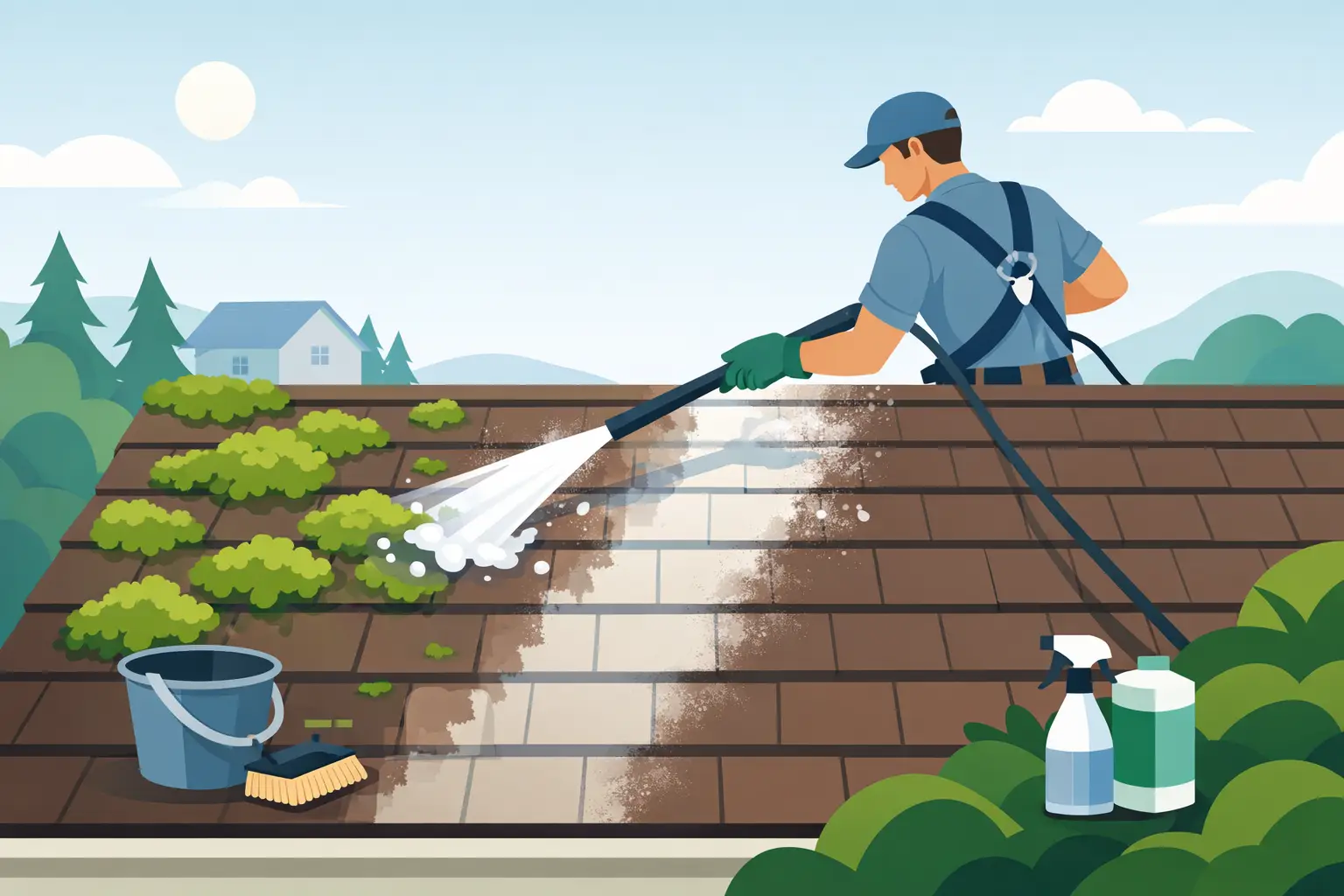
The safest method is usually a careful manual removal followed by a roof-safe treatment. Start by choosing a dry day with good visibility. Wear proper footwear with grip, use suitable ladder safety, and avoid stepping carelessly on the roof surface. If there is any doubt about stability or access, stop there and call a professional.
Use a soft-bristle brush or a tool made for roof cleaning, and work downward with the slope of the shingles. That part matters. Scrubbing upward can catch shingle edges and lift or break them. The aim is to loosen the moss gently, not to attack the roof.
Remove the heavier growth first, but do not expect to scrape the roof completely clean in one pass. Moss often leaves behind roots and residue. That is why a treatment step is important after brushing. A roof cleaning solution made for moss control can kill the remaining growth so it dries out and clears naturally over time.
What you should not do is use a pressure washer on asphalt shingles. It is one of the quickest ways to shorten the life of a roof. High pressure can strip protective granules, force water underneath shingles, and leave the roof more vulnerable than the moss did.
Should you use a moss killer or homemade mix?
There are roof treatment products designed specifically for moss, algae, and lichen. These are usually the best option because they are made for roofing materials and come with application guidance. Even then, it is worth checking that the product suits your roof type.
Some homeowners try homemade mixes, often involving bleach or other household cleaners. That can work in a limited sense, but it comes with trade-offs. Strong mixtures can affect nearby plants, stain surfaces, and damage certain roofing materials if used incorrectly. Runoff can also leave marks on siding, patios, or painted areas below.
A purpose-made treatment is usually the better route if you are doing the job yourself. It gives you a clearer idea of how much to use, how long to leave it, and whether it is suitable for shingles, tile, or other roof coverings.
What to do with the moss once it comes off
This part gets overlooked all the time. Once moss is brushed away or treated, the debris has to go somewhere. Usually that means onto lower roof sections, into valleys, and straight into the guttering.
If the gutters are not cleared afterward, rainfall can push moss into the outlets and block the downspouts. That is when you get overflowing gutters, water running down walls, and damp patches where they should not be. So if you are dealing with roof moss, plan to clean the gutters as part of the same job.
For many properties, that combined approach is where professional help makes the most sense. It is more efficient to have the roof inspected, the moss removed, the gutters cleared, and any minor issues picked up before they become bigger repair bills.
How to stop roof moss from coming back
Anyone looking up how to remove roof moss usually wants to know how to keep it from returning too. The honest answer is that moss can come back if the conditions stay the same. Shade, moisture, and debris are what feed it.
Start with the obvious causes. Trim back overhanging branches if possible so the roof gets more daylight and airflow. Keep leaves and organic debris off the roof because they hold moisture and help moss establish itself. Make sure gutters are flowing properly so water is draining away instead of backing up along the roof edge.
A follow-up treatment can also help slow regrowth. Some homeowners choose zinc or copper strips near the ridge line, which can reduce moss growth as rainwater washes trace particles down the roof. These can help, but they are not a fix for poor drainage or constant heavy shade.
The key point is that prevention is ongoing maintenance, not a one-time cure. A roof in a shaded area will always need more attention than one in full sun.
When DIY is fine and when to call a pro
A light patch of moss on a low, easy-to-reach roof may be manageable for a careful homeowner. If the roof is in good condition, access is simple, and you are using the right tools and treatment, a small job can be handled safely.
But if the moss is widespread, the roof is steep, or the shingles are older, it is usually smarter to bring in a specialist. The same goes for properties where gutter issues are already showing up. Overflowing gutters, blocked downspouts, or visible roofline wear often mean the problem is bigger than the moss you can see from the yard.
An experienced exterior maintenance company will usually spot issues a basic clean misses. That might include damaged gutter brackets, split joints, loose tiles, or fascia and soffit problems caused by ongoing moisture. That is the difference between a quick clean and a proper maintenance job.
For homeowners who want the work done safely and checked properly at the same time, a company like Steve’s Gutters can make more sense than trying to patch it together with separate services.
Common mistakes to avoid when removing roof moss
The biggest mistake is being too aggressive. Hard scraping, pressure washing, and harsh chemical use can do more harm than the moss itself. Another common issue is only treating the visible area and ignoring the rest of the roof. Moss often grows more heavily on one slope first, but the underlying conditions may affect other sections too.
The other mistake is skipping inspection. If moss has been sitting on the roof for a while, there may already be damage underneath or nearby. Cleaning the surface without checking the roofline, gutters, and drainage leaves too much to chance.
If you want the roof to last, think of moss removal as part of overall exterior maintenance. The roof sheds the water, but the gutters and downspouts have to carry it away. If one part is failing, the rest will usually start feeling the strain.
A clean roof always looks better, but the real value is in protecting the structure underneath. Deal with moss early, use the right method, and if the job looks unsafe or more involved than expected, get it handled properly before a small maintenance task turns into a repair project.
Recommended Posts
Seamless Versus Sectional Gutters: Which Is Best?
October 16, 2026
Can Dirty Gutters Attract Pests? Yes, Here’s Why
October 14, 2026
A Guide to Replacing Fascias on Your Home
October 12, 2026