

How to Prevent Water Damage From Gutters

by
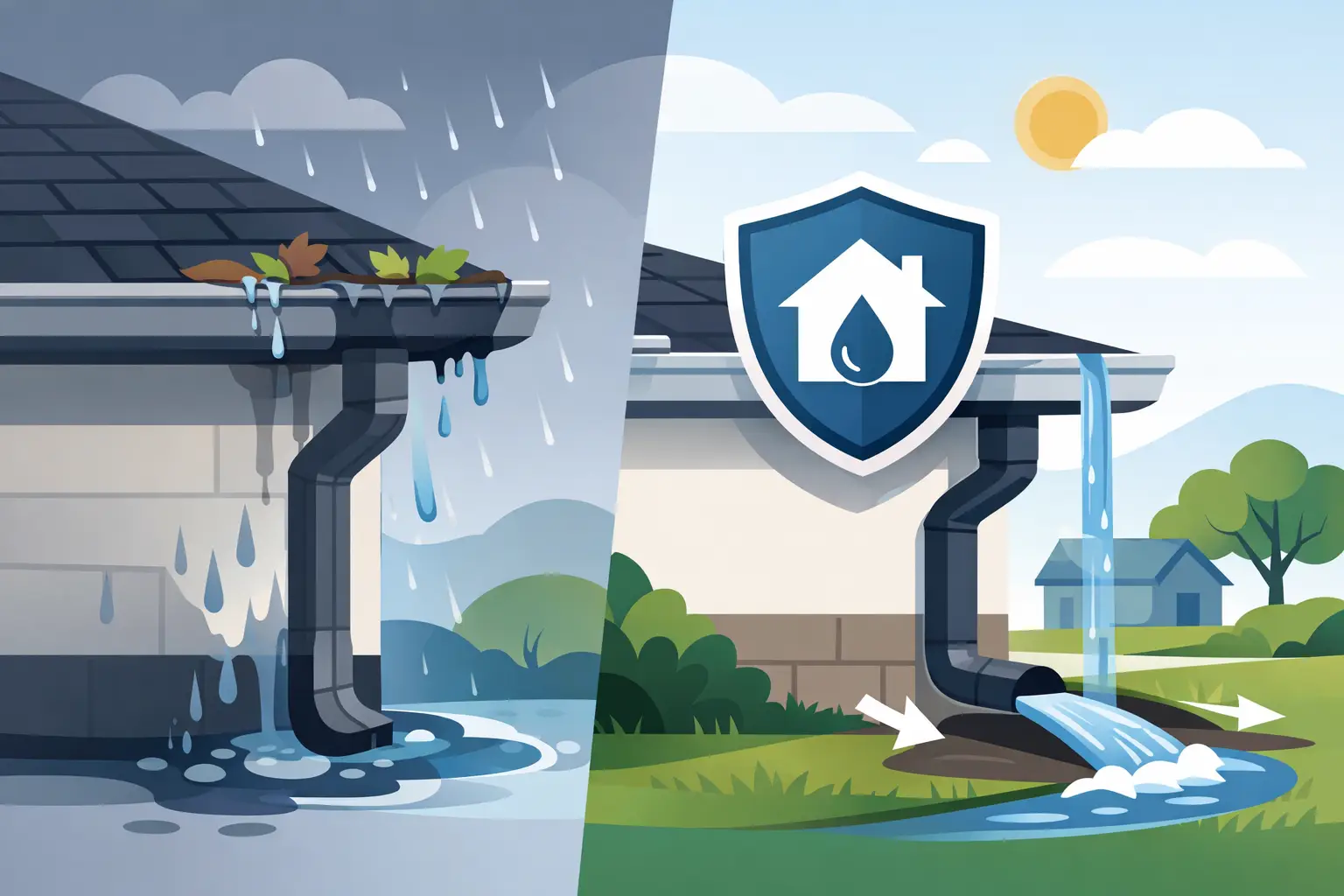
Water marks on siding, peeling paint near the roofline, and damp patches around the base of a property usually start the same way – with a gutter system that is no longer doing its job. If you want to prevent water damage from gutters, the key is not just cleaning out leaves once in a while. You need the whole system checked, cleared, and kept in proper working order so rainwater moves away from the building instead of back into it.
For homeowners and property managers, this matters because gutter problems rarely stay small for long. Overflowing sections can soak fascia boards, stain brickwork, weaken soffits, flood planting beds, and send water toward foundations. On commercial buildings, the stakes can be even higher, especially where repeated overflow affects entrances, walkways, or wall surfaces.
Why gutters cause water damage in the first place
Gutters are simple in principle. They collect rainwater from the roof and direct it into downspouts, which carry it safely away. The trouble starts when there is any break in that route.
A blockage is the most obvious issue. Leaves, moss, silt, and roofing debris build up inside the gutter channel and stop water from flowing freely. During heavier rain, the water has nowhere to go, so it spills over the edge. That overflow often lands exactly where you do not want it – onto walls, windows, doors, and the ground directly beside the property.
The next problem is damage or poor alignment. A gutter can be clean and still fail if it is sagging, leaking at the joints, pitched the wrong way, or pulling away from the fascia. Cracks and split seals let water escape in concentrated areas, which is often worse than a general overflow because the same spot gets soaked every time it rains.
Downspouts also get overlooked. A blocked downspout can make the entire system back up. Water rises in the gutter run, then pours over the sides, even though the actual blockage is lower down. That is one reason proper servicing should never stop at surface cleaning.
The best way to prevent water damage from gutters
The most reliable way to prevent water damage from gutters is regular maintenance with a proper inspection. That means checking more than visible debris. The condition of brackets, joints, outlets, downspouts, fascia boards, and nearby roofline areas all matter.
A lot of property owners wait until they see water cascading over the gutter in a storm. By then, the system has already been under strain for some time. A better approach is to have gutters cleaned and assessed before peak rainfall seasons, and again if your property sits near trees or collects heavy roof moss.
Routine maintenance usually costs far less than repairs to internal damp, damaged render, rotted timber, or foundation drainage issues. That is where experienced gutter specialists earn their keep. A proper service does not just remove debris. It identifies the reason the gutter is failing and puts it right.
Cleaning matters, but it is not the whole job
There is a difference between emptying a gutter and making sure it works properly. A quick vacuum clean may remove loose debris, but it will not always reveal a leaking joint, a misaligned run, or a downspout obstruction further down.
That is why hands-on inspection is so important. If brackets are loose, the gutter may dip and hold standing water. If outlets are partially blocked, flow will still be restricted after cleaning. If seals are worn, the gutter may leak even on a dry debris-free day. Cleaning without checking these points can leave the real problem in place.
Small repairs stop bigger bills later
Minor faults are usually the point where water damage can still be avoided. Re-sealing a joint, refixing loose brackets, correcting the pitch, or clearing a blocked downspout is a straightforward job when caught early. Leave it too long, and the same issue may lead to timber rot, staining, mold, or damaged masonry.
This is especially true around fascia and soffit boards. Once overflowing water repeatedly soaks roofline materials, cosmetic damage soon turns into structural wear. What could have been a small gutter repair then becomes a larger roofline replacement job.
Warning signs your gutter system is failing
Some signs show up during heavy rain, but others are visible in dry weather if you know what to look for. Streaks on walls, green growth on brickwork, paint bubbling near the roof edge, sagging gutter runs, and puddling near the base of the building are all common clues.
You may also notice joints dripping long after rain has stopped. That can point to poor drainage, standing water in a low section, or a seal failure. In winter, recurring ice formation around the same areas often tells the same story.
Inside the property, damp patches near upper walls or around window heads can sometimes trace back to overflowing gutters outside. People often assume these are roofing issues first, but gutter failure is regularly part of the problem.
How often should gutters be checked?
It depends on the property. A home surrounded by mature trees will usually need more frequent attention than a newer building in an open area. Properties with extensions, conservatories, valleys, or complex roof shapes also tend to collect more debris and need closer watching.
As a general rule, most homes benefit from at least annual inspection and cleaning. Twice a year is often better where leaf fall is heavy or moss builds up on the roof. Commercial properties may need a more planned schedule, especially if public access areas are affected by overflow.
The important part is consistency. Gutter maintenance works best when it is preventive rather than reactive.
Repairs or replacement – which makes more sense?
Not every failing gutter needs replacing. If the main runs are still sound, a targeted repair can restore performance at sensible cost. Loose clips, leaking joints, localized cracks, and blocked outlets are often worth fixing.
Replacement becomes the better option when the system is old, brittle, poorly fitted, or failing in multiple sections. Repeated patch repairs on worn guttering can cost more over time than installing a new system that drains properly from the start. Material matters too. UPVC is common and cost-effective, while aluminum and cast iron can suit certain buildings better depending on appearance, durability, and budget.
This is where honest advice matters. A dependable contractor should tell you when a repair is worthwhile and when replacement will save money in the longer run.
The role of the roofline and drainage below
Gutters do not work in isolation. If the roof is shedding large amounts of moss, the gutters will clog faster. If fascia boards are weak, gutter brackets may not stay secure. If downspouts discharge poorly at ground level, water can still collect near the property even when the gutters themselves are clear.
That is why a full exterior view is useful. Roof cleaning, fascia and soffit condition, downspout flow, and the way water leaves the building all play a part. The best results come from treating gutter maintenance as part of overall property care, not as a one-off task.
For many homeowners, that practical approach is what makes the difference. Companies like Steve’s Gutters build trust by handling inspection, cleaning, repairs, and replacement as one joined-up service instead of offering the bare minimum.
DIY or professional service?
Some single-story properties with easy access may allow for basic homeowner checks, but there are limits. Working at height brings real risk, and gutter faults are not always obvious from the ground. What looks like a simple blockage may actually be a pitch problem, hidden leak, or failing bracket line.
A professional service is usually the safer and more effective option, especially on taller homes, commercial sites, and properties with extensions or conservatories. It is not just about getting debris out. It is about making sure the whole system sheds water properly and safely.
Prevent water damage from gutters before the next storm
If your gutters only get attention when water is already pouring over the edge, you are working on borrowed time. The smart move is to inspect early, repair small faults promptly, and replace worn sections before they start affecting the building around them.
A well-maintained gutter system protects more than the roofline. It helps protect walls, windows, foundations, walkways, and the value of the property itself. A little attention at the right time can save a very expensive mess later.
Recommended Posts
Seamless Versus Sectional Gutters: Which Is Best?
October 16, 2026

Can Dirty Gutters Attract Pests? Yes, Here’s Why
October 14, 2026
A Guide to Replacing Fascias on Your Home
October 12, 2026