

How Often Clean Gutters at Your Home?


by
That stain running down the siding after a rainstorm is usually the first clue. If you are wondering how often clean gutters should be part of your home maintenance, the short answer is at least twice a year for most properties. The longer answer depends on trees, roof size, local weather, and whether your gutters are already showing signs of wear.
For some homes, spring and late fall cleaning is enough. For others, especially properties near large trees or with frequent storms, once or twice a year will not cut it. Gutters do a simple job, but when they are neglected, the damage spreads fast – overflowing water, rotted fascia, foundation issues, stained brickwork, and soaked landscaping are all common results.
How often clean gutters for most homes
A good working rule is twice a year. One clean in the spring clears out seed pods, winter debris, and any buildup left behind after colder weather. Another in the fall removes leaves before they sit wet in the gutter system and block the flow.
That schedule suits many average homes in suburban neighborhoods. If your roofline is straightforward, your downspouts run freely, and you do not have overhanging trees, twice a year is often enough to stay ahead of problems.
But twice yearly is not a magic number. It is a starting point. A house tucked under oak, pine, or sycamore trees usually needs more attention, sometimes every three months. The same goes for properties where moss from the roof drops into the channels or where strong winds regularly fill gutters with twigs and dirt.
When you should clean gutters more often
The biggest factor is tree cover. Leaves are the obvious issue, but they are not the only one. Blossoms, helicopters, pine needles, moss, and small twigs all build up over time. Pine needles are especially troublesome because they pack tightly and can slip into downspouts before you notice a problem.
Roof design also matters. Multi-level roofs, valleys, dormers, and extensions can dump water and debris into certain sections much faster than others. A conservatory roof below the main roofline can add another problem, as overflow from blocked gutters often ends up staining frames or pooling where it should not.
Weather plays a part too. Heavy storms can wash grit from the roof into gutters and downspouts. In colder areas, trapped debris holds moisture, adding weight and speeding up wear on brackets and joints. If your area gets regular wind-driven rain, even a partial blockage can become obvious quickly.
Commercial properties and larger buildings often need a more planned schedule. Flat roof outlets, larger catchment areas, and higher volumes of runoff mean one blocked section can affect a much wider area. For those buildings, inspections every few months are usually more sensible than waiting for visible overflow.
Homes that usually need quarterly service
Some properties are better off on a four-times-a-year schedule. That includes homes surrounded by mature trees, older homes with aging gutters, and houses where previous blockages have already caused leaks or overflow. If you have had to deal with a blocked downspout once, there is a fair chance the same trouble spot will return.
Quarterly cleaning also makes sense for landlords and property managers who want fewer emergency callouts. Regular service is usually cheaper than repairing water damage, repainting stained siding, or replacing timber that has been repeatedly soaked.
Signs your gutters need attention now
You do not always need to wait for a set date on the calendar. Gutters usually give a few warnings before they fail properly.
Overflow during rain is the clearest sign. Water should move through the gutter and downspouts without spilling over the front edge. If it pours over the side, either debris is blocking the flow or the system is damaged and no longer draining correctly.
Sagging sections are another warning. Gutters get heavy when they are full of wet debris, and that weight strains brackets, joints, and fixings. You may also notice plants growing in the gutter, black streaks on the exterior wall, damp patches near the foundation, or water pooling near entryways and patios.
Inside the home, the signs are less obvious but more serious. Damp around upper walls, peeling paint near roof edges, or moisture in basements can all begin with poor rainwater drainage outside.
Why cleaning alone is not always enough
This is where many homeowners get caught out. A gutter can be cleared and still not be working properly. Joints may be leaking, brackets may be loose, the fall may be wrong, or the downspout may still be partially blocked below ground level.
That is why proper gutter service should include more than just removing debris. It should involve checking the downspouts, looking for separated joints, testing water flow where needed, and spotting wear before it turns into a repair bill. A quick vacuum clean can make a gutter look maintained from a distance, but it does not fix mechanical faults.
For that reason, regular inspection matters as much as regular cleaning. An experienced gutter specialist will usually spot early signs of failure that most property owners miss from the ground.
The best times of year to schedule gutter cleaning
Late spring and late fall are the most practical times for most homes. Spring clears what winter left behind and gets the system ready for heavier seasonal rain. Fall cleaning is about removing leaves before they sit in the gutter for months.
If your home has lots of nearby trees, an extra summer visit can be worthwhile, especially after seed drop or storm season. And if you notice overflow in winter, do not leave it until spring just because it is not on the planned schedule. Water damage does not wait for a convenient month.
In many cases, timing should be based on what is around your home rather than a fixed calendar date. A heavily wooded property may need service after leaves fall, again after winter debris, and once more after storm season.
Can gutter guards reduce how often you clean gutters?
They can help, but they are not a complete answer. Gutter guards reduce the amount of large debris entering the channel, which can lower cleaning frequency. They are often useful on homes with persistent leaf problems.
Still, guards do not stop everything. Small debris, roof grit, moss, and fine needles can still build up. Some guard systems also allow debris to collect on top, which can affect water flow in heavy rain. So while guards may reduce the number of full cleans, they do not remove the need for inspection and maintenance.
That is the trade-off. They can save time in the right setting, but they are not a reason to forget the gutters altogether.
DIY or professional gutter cleaning?
Some homeowners are comfortable cleaning low-level gutters themselves. If the house is single story, access is safe, and the system is in good condition, that may be manageable. But many gutter problems happen on second-story sections, over conservatories, above garages, or in awkward roof valleys where access is not straightforward.
The real issue is not just getting debris out. It is doing the job safely and spotting the difference between a simple blockage and a gutter that needs repair or replacement. Working at height carries obvious risk, and hidden defects are easy to miss without experience.
A professional service is usually the better option for taller homes, commercial buildings, and any property with recurring overflow. A proper visit should leave you with clean gutters, checked downspouts, and a clearer idea of the overall condition of the roofline. That is the standard we believe in at Steve’s Gutters – solve the issue properly, not just make it look better for a week.
A practical schedule to follow
If you want a simple answer, start with twice a year. Move to three or four visits a year if your property has heavy tree cover, frequent blockages, or past water overflow. And if your gutters are already leaking, sagging, or spilling during rain, book service now rather than waiting for the next season.
Well-maintained gutters rarely get much attention, which is exactly the point. A small bit of routine care keeps water moving where it should and helps you avoid the kind of exterior damage that is far more expensive to put right later. A quick check at the right time can save a very messy repair job down the line.
Recommended Posts

Seamless Versus Sectional Gutters: Which Is Best?
October 16, 2026

Can Dirty Gutters Attract Pests? Yes, Here’s Why
October 14, 2026
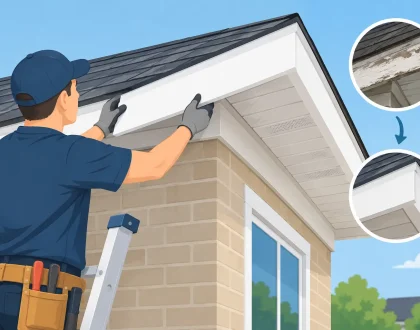
A Guide to Replacing Fascias on Your Home
October 12, 2026