

Roof Moss Removal Service Done Right

by
Moss on a roof rarely stays a cosmetic issue for long. Once it gets established, it holds moisture against the surface, creeps under edges, and sends debris into gutters and downspouts. That is why a proper roof moss removal service is not just about making a home look cleaner. It is about protecting the roofline, reducing avoidable water problems, and dealing with the cause before it turns into a repair bill.
For many homeowners, the first sign is green buildup on shaded roof sections or clumps washing into the gutters after heavy rain. Property managers often notice something else first – overflowing gutters, blocked downspouts, or damp patches where roof drainage is no longer working as it should. Moss contributes to all of it. Left alone, it traps moisture, slows runoff, and adds unnecessary strain to parts of the exterior that are already exposed to the weather year-round.
What a roof moss removal service should actually include
A decent service goes beyond scraping off what you can see from the ground. The roof needs to be assessed properly, the moss removed with care, and the rest of the roofline checked for related issues. Moss does not grow in isolation. If a roof is holding debris, if gutters are partly blocked, or if water is draining poorly, those conditions usually feed the problem.
That is where many cheap clean-only jobs fall short. A contractor may clear the visible growth but miss cracked mortar, blocked valleys, loose gutter brackets, or downspouts packed with roof debris. The result is a roof that looks better for a short while but still has the same underlying drainage issue. A more complete approach saves money over time because it tackles the system, not just the surface.
In practical terms, that means looking at roof sections where moss is thickest, checking what has fallen into the gutters, and making sure water can move away from the property properly once the roof is cleared. If repairs are needed, it helps to have one company that can handle them rather than sending you off to find someone else.
Why roof moss causes more damage than people expect
Moss thrives in damp, shaded areas, especially where leaves and dirt collect. It may look soft, but on a roof it behaves more like a sponge. It holds moisture against shingles and roof coverings for longer than they were meant to stay wet. In freezing weather, that extra moisture can expand and worsen small weak points.
On some roofs, moss works its way into the edges of shingles or between overlaps. On others, it encourages debris buildup that slows drainage and redirects water where it should not be going. The effect depends on the roof material, its age, and how much shade the property gets. A newer roof with isolated moss patches may only need maintenance. An older roof with heavy spread may need a more careful inspection before any removal starts.
There is also the gutter issue. Once moss loosens, it does not disappear. It usually ends up in the gutters and downspouts. That can trigger overflows, standing water, and staining on walls, fascia, and soffits. In heavier cases, the added wet weight can contribute to gutter strain. This is one reason roof cleaning and gutter service often need to go hand in hand.
The safest way to remove roof moss
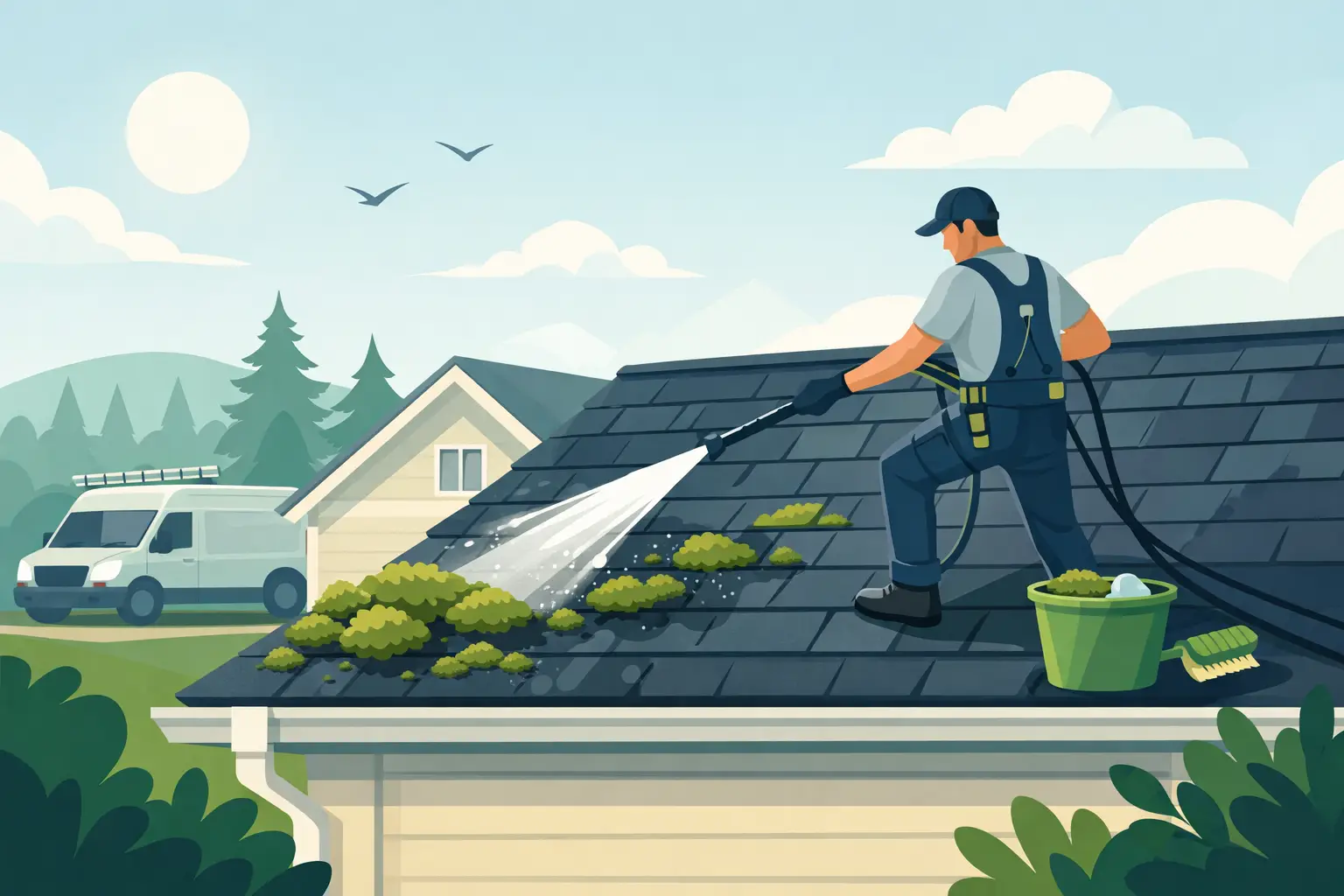
There is a right way to remove moss and several wrong ones. Pressure washing is the method many people ask about first because it sounds quick. On the wrong roof, it can also do real damage. High pressure can strip protective surfaces, dislodge shingles, force water under roofing materials, and shorten the life of the roof. That risk goes up on older roofs and any roof already showing signs of wear.
A professional roof moss removal service will usually use a more controlled method. That may involve manual removal, careful brushing, low-pressure treatment, or a combination depending on the roof type and condition. The point is not speed for its own sake. The point is removing the moss without damaging what you are trying to protect.
It also matters who is doing the work. Roof access is a safety issue, especially on higher properties, extensions, garages, and awkward rooflines. A fully insured contractor with proper equipment is not a nice extra. It is part of doing the job responsibly.
Roof moss removal service and gutter performance
Homeowners often treat roof moss and gutter problems as separate jobs. In reality, one commonly feeds the other. Moss breaks loose, gutters fill, downspouts slow down, and then water starts backing up where it should be flowing away. If you only clear the gutters, more roof debris may arrive with the next storm. If you only clean the roof, the gutters may remain blocked with what has already fallen.
That is why experienced exterior maintenance companies tend to inspect the full roofline. Gutters, brackets, joints, downspouts, fascia, and soffits all play a part in keeping water moving away from the property. If one section is failing, another may already be under stress.
For residential properties, this often shows up as drips near the front door, overflow onto patios, staining on siding, or dampness around extensions and conservatories. For commercial sites, the concern is usually access safety, recurring blockage, and keeping the building presentable while avoiding disruption. Either way, the principle is the same: proper maintenance works better when the roof and drainage are considered together.
When to book a roof moss removal service
If moss is visible from the ground, it is already worth dealing with. You do not need to wait until it covers the entire roof. Smaller growth is easier to remove and less likely to have caused hidden drainage issues. Waiting until moss is thick and widespread usually means more labor, more waste to clear, and a greater chance of related gutter or roofline problems.
The best timing often depends on the property. Shaded roofs under trees usually need more regular attention than roofs in full sun. Older homes may need inspection more often simply because small weaknesses are more common. If your gutters have started overflowing, if rainwater is spilling over edges, or if you are finding roof debris at ground level after bad weather, that is a good sign maintenance has been left too long.
Routine service makes the job more manageable. Emergency service becomes necessary when blocked drainage is already affecting the property. Both happen, but preventive work is usually the better value.
What to expect from a reputable contractor
A trustworthy contractor should be clear about what is included, how the roof will be cleaned, whether gutter clearing is part of the job, and if any defects have been found during inspection. Pricing should be straightforward, not vague. If repairs are recommended, you should know why.
This is where experience matters. A company that understands gutters, downspouts, roof edges, fascia, and soffits can spot issues that a basic cleaning crew may miss. That matters because moss is often a symptom of broader maintenance needs, not just a one-off cleaning problem.
For homeowners and property managers, the practical benefits are simple. You want the roof cleaned safely, the drainage checked properly, the site left tidy, and the work done by people who know what they are looking at. You do not want a quick pass that leaves you dealing with overflow, staining, or avoidable follow-up work a few weeks later.
Companies such as Steve’s Gutters have built their reputation on that more complete approach – not just clearing what is visible, but checking the parts that keep the whole roofline working properly.
Is roof moss ever harmless?
A small patch on a sheltered area is less urgent than heavy growth across multiple sections, but harmless is not the word most professionals would use. Moss always points to moisture retention, and moisture is rarely something to ignore on an exterior surface. Sometimes the right answer is immediate removal. Sometimes it is monitoring and scheduling service before the wetter season. It depends on the roof condition, drainage, and how quickly the growth is spreading.
What does not usually pay off is leaving it alone year after year. Roofs do not get easier or cheaper to maintain through neglect. A simple maintenance visit now is often the difference between a controlled job and a more expensive repair later.
If your roof is showing visible moss, your gutters are catching debris, or rainwater is no longer draining cleanly, it is worth having the roofline looked at by someone who can clean, inspect, and put right any related issues in one visit. That is the sort of work that protects a property properly, not just for appearance, but for the long haul.
Recommended Posts
Seamless Versus Sectional Gutters: Which Is Best?
October 16, 2026
Can Dirty Gutters Attract Pests? Yes, Here’s Why
October 14, 2026
A Guide to Replacing Fascias on Your Home
October 12, 2026