

Roof Cleaning vs Pressure Washing for Your Home

by
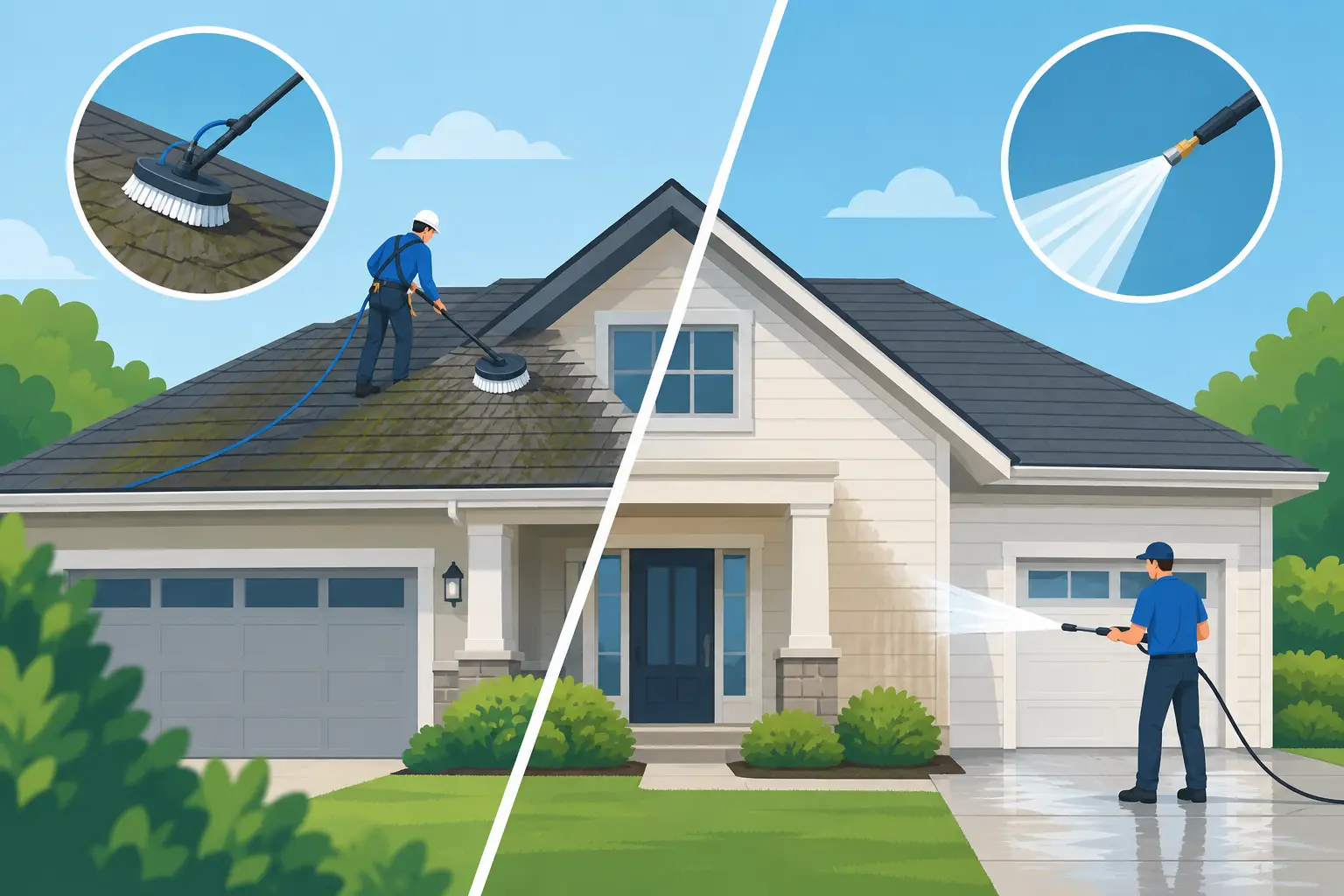
A roof covered in moss can make a well-kept home look neglected, but appearance is not the main concern. Moss holds moisture against the roof surface, can interfere with water runoff, and may contribute to blocked gutters and downspouts. When comparing roof cleaning vs pressure washing, the method matters just as much as the result. A clean roof is not worth damaged shingles, loosened flashing, or water forced into places it should not go.
For most residential roofs, pressure washing is the wrong approach. Safe roof cleaning uses a low-pressure method suited to the roof material, followed by a proper check of the gutters, downspouts, and roofline. The goal is to remove growth and debris without shortening the life of the roof.
Roof Cleaning vs Pressure Washing: The Key Difference
Roof cleaning is a general term for removing moss, algae, lichen, dirt, and loose debris from a roof. Done properly, it is a controlled process that considers the roof’s age, material, condition, pitch, and drainage. It may involve manual moss removal, a suitable treatment, gentle rinsing where appropriate, and clearing the gutters afterward.
Pressure washing uses a powerful jet of water. It has its place on hard surfaces such as concrete driveways, patios, and some exterior masonry. Those materials are designed to withstand more force. A roof is different. Shingles, tiles, ridge caps, sealants, and flashing all need to shed water, not take a high-powered blast from close range.
The distinction is simple: roof cleaning is about preserving the roof while dealing with organic growth. Pressure washing is about stripping heavy surface dirt from durable materials. Using the same method for both can create an expensive problem.
Why High Pressure Can Damage a Roof
Asphalt shingles have a protective layer of granules that helps shield them from sun and weather. High-pressure water can dislodge those granules, leaving the shingles more vulnerable to wear. It can also lift shingle edges, disturb seals, and force water underneath the roof covering.
Tile roofs may look tougher, but they are not automatically safe to pressure wash. Older concrete or clay tiles can crack, chip, or become more porous. High pressure can also damage mortar around ridge tiles and push water beneath overlaps. On any roof, the operator’s footing and equipment can cause damage if the work is not planned carefully.
There is another issue that homeowners do not always see straight away. A pressure-washed roof may look very clean immediately, but if the protective surface has been worn away, its condition can deteriorate faster over time. What seemed like a quick fix can bring forward repairs or replacement.
What Safe Roof Cleaning Usually Involves
The best method depends on the roof. A professional should inspect it before recommending work, especially where there are loose tiles, damaged shingles, failing flashing, heavy moss growth, or signs of water entering the property.
For many roofs, loose moss and debris can be carefully removed by hand or with specialist low-impact tools. This avoids driving debris under tiles or into the roof structure. A roof-safe treatment may then be used to deal with remaining moss, algae, or lichen. These treatments work over time, so the roof may not look perfectly clean the same day. That is normal and often safer than trying to blast every mark away in one visit.
The gutters and downspouts should be checked as part of the job. Moss removed from a roof has to go somewhere, and it often ends up in the gutter system. If gutters are not cleared afterward, the next rainfall can cause overflowing water, damp patches, and damage around fascia boards or walls.
A proper service also gives the contractor a chance to spot broken tiles, slipped shingles, loose gutter brackets, cracked joints, and blocked downspouts. Cleaning without inspection can miss the very faults that lead to leaks.
Soft Washing Is Not the Same as Pressure Washing
You may hear the term soft washing. This usually means applying a cleaning solution at very low pressure, then allowing it time to work on organic growth. It is commonly used for roofs, siding, and other delicate exterior surfaces.
Soft washing still needs care. The cleaning product must be appropriate for the roof material, mixed correctly, and handled with attention to nearby plants, ponds, walls, and drainage. A rushed application can mark surfaces or affect landscaping. This is why experience matters more than simply owning cleaning equipment.
Not every roof needs the same treatment. A newer roof with light algae staining may need a different approach from an older tiled roof carrying years of thick moss. The right contractor will explain what they recommend and why, rather than offering one method for every property.
When Pressure Washing Does Make Sense
Pressure washing is a useful exterior maintenance service when used on the right surfaces. Driveways, patios, paths, brickwork, and certain hard-standing areas can collect algae, grime, oil marks, and weather staining. A controlled jet wash can improve appearance and reduce slippery buildup.
Even then, pressure needs to be adjusted to suit the surface. Old paving, loose pointing, damaged concrete, and soft stone need a gentler approach. Good exterior maintenance is not about using maximum pressure. It is about using the right amount of pressure, the right equipment, and the right technique.
For a home with a mossy roof and a dirty patio, the sensible answer may be both services, but not the same method. The roof should receive specialist low-pressure cleaning, while the patio may be suitable for jet washing.
Signs Your Roof Needs Attention
You do not need to climb a ladder to know when it is time to arrange an inspection. From the ground, look for visible moss along tile edges, dark algae streaks, debris collecting in valleys, or grass-like growth near gutters. Watch for gutters overflowing during rain, water spilling behind the gutter, or damp marks appearing on exterior walls.
Inside the home, a musty smell in the attic, water stains on ceilings, or drips after heavy rain should be treated as more urgent. Cleaning alone may not solve these issues if there is already a broken tile, damaged flashing, or failed gutter joint.
Commercial properties need the same attention, particularly where flat-roof drainage outlets, gutters, or downspouts are obstructed. Standing water and poor drainage can quickly turn into a larger maintenance issue.
Choosing the Right Contractor
Before booking, ask what cleaning method will be used and whether it is suitable for your roof type. Be cautious of anyone who promises to pressure wash shingles or tiles without first inspecting the roof. A low price is not good value if the work causes damage that is only discovered months later.
Look for an insured contractor with practical roofline and gutter experience, not just a company that offers a quick surface clean. They should be able to explain how they will protect surrounding areas, manage debris, clear gutters, and identify minor defects before they become larger repairs.
At Steve’s Gutters, roof cleaning is approached as part of overall exterior maintenance. That means considering the condition of the roof, gutters, downspouts, fascia, and soffits together, rather than treating moss removal as a stand-alone cosmetic job.
A roof should be cleaned to protect the property, not simply to make it look better from the street. If you can see moss, staining, or overflowing gutters, arranging a professional assessment now is usually far easier than dealing with a leak later.
Recommended Posts
Driveway Jet Washing Benefits for Your Property
October 10, 2026

Best Signs of Failing Soffits on Your Home
October 8, 2026

Are Gutter Repairs Insured? What Homeowners Need
October 6, 2026