

How to Prevent Ice Damage to Gutters Safely

by
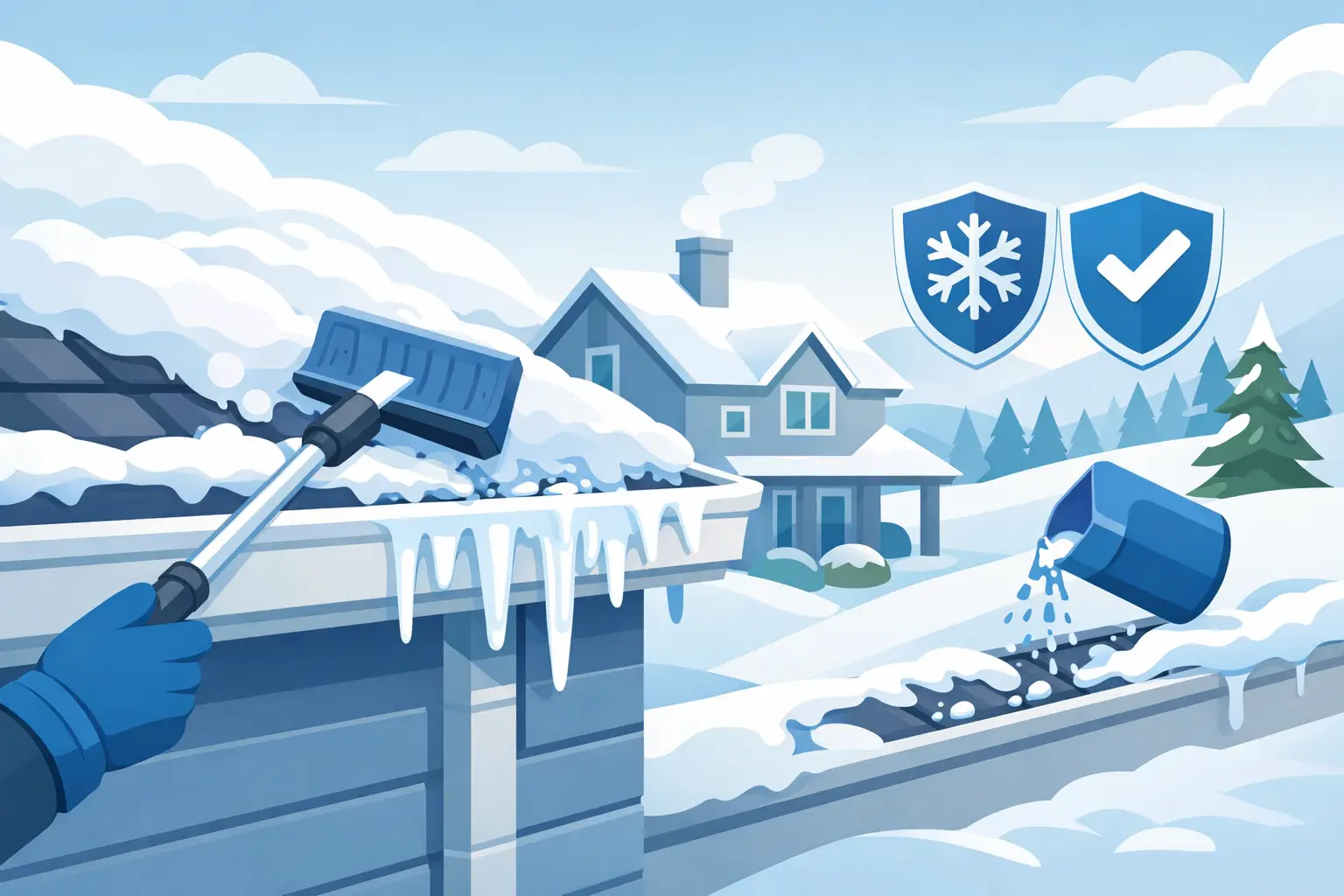
A gutter can look perfectly sound in fall and still split, pull loose, or overflow after one hard freeze. The key to prevent ice damage gutters can sustain is not simply clearing away visible ice. It is making sure water has a clear route off the roof before temperatures drop, then dealing with the roof and drainage faults that create repeat freezing problems.
Ice is heavy, and water expands as it freezes. When that happens inside a blocked gutter, at a joint, or around a downspout outlet, even a small existing weakness can quickly become a larger repair. A little practical maintenance before and during winter is far cheaper than replacing sections of guttering, damaged fascia boards, or water-stained interior walls later.
Why gutters suffer damage in freezing weather
Gutters are designed to carry moving water. They are not designed to hold standing water, snow melt, leaves, and ice for weeks at a time. When debris blocks the channel or downspout, rain and melting snow sit in the gutter. As the temperature falls, that water freezes and expands against the gutter walls, seals, brackets, and joints.
The additional weight is often the first problem. Ice can make a gutter system far heavier than its hangers were intended to support. Older brackets may bend, pull out of the fascia, or allow the gutter to sag. Once the slope is lost, water settles in the low spot and the freeze-thaw cycle gets worse.
The second problem is overflow. Ice dams can form along the roof edge, particularly where heat escaping from the home melts snow higher up the roof. The meltwater runs down, reaches a colder eave, and refreezes. If it cannot enter and move through the gutter, it can back up beneath roofing materials or spill down walls. That is why a gutter issue is sometimes a roof insulation or ventilation issue too.
Start with clean, free-flowing drainage
The most useful step to prevent ice damage to gutters is a proper clean and drainage check before winter arrives. Removing leaves from the open gutter is only part of the job. The downspouts need checking from top to bottom, including bends and underground connections where fitted.
A gutter that looks clear can still hold compacted debris at the downspout outlet. Water then pools in the gutter during rain, freezes overnight, and places pressure on the system. Test the flow with water after cleaning. It should travel steadily toward the outlet and discharge well away from the foundation.
Look for signs that the gutter is not draining as it should. These include standing water after rain, a visible dip in the run, damp marks below a joint, water spilling over one section, or a downspout that runs slowly. These faults should be repaired before the first serious freeze, not left until an icy morning when access is less safe.
For many homes, one thorough fall service and a follow-up check after heavy leaf drop is sensible. Properties below mature trees, with pine needles, or with flat or low-pitched roof sections may need more frequent attention. There is no single schedule that suits every property.
Check the gutter pitch, joints, and supports
Clean gutters still fail if they are poorly supported or incorrectly pitched. A slight fall toward the downspout helps water leave the system. If a run has sagged between brackets, water collects in the middle. That standing water is exactly what freezes first.
Walk around the property from ground level and look along the gutter line. Notice any sections that bow, pull away from the fascia, or sit lower than the rest. Check for leaking joints, cracked end caps, missing clips, and rust on older metal systems. In cold weather, a small joint leak can freeze repeatedly and force the connection apart.
Do not assume more sealant is the answer. Sealant may help where a joint is otherwise sound, but it will not correct loose brackets, a distorted gutter, or an outlet positioned at the wrong height. A proper repair addresses the cause of the pooling water and restores the gutter’s fall.
Fascia boards also deserve attention. Rotten timber may no longer hold gutter brackets securely, while damaged soffits can point to long-term overflow. Repairing the roofline before reinstalling or replacing gutters prevents the same problem from returning.
Reduce roof-edge ice, not just gutter ice
If large ice dams form every winter despite clear gutters, the issue may be heat loss from the house. Warm air entering the attic or poor insulation warms the roof deck and melts snow unevenly. At the colder roof edge, that water refreezes into a ridge of ice.
Improving attic insulation and air sealing can help keep the roof surface closer to the outside temperature. Correct attic ventilation also matters, although the right solution depends on the roof design, existing vents, insulation depth, and local building requirements. A roofing or insulation professional can assess persistent ice dam problems rather than guessing at a fix.
Keep roof valleys and lower roof areas clear of heavy leaf buildup where it is safe to do so. Debris holds moisture and slows drainage, especially during thawing conditions. Avoid climbing onto an icy roof or leaning a ladder against a fragile gutter. The risk of a fall or further damage is not worth it.
Use gutter guards with realistic expectations
Gutter guards can reduce the amount of leaves and larger debris entering a gutter, which may help water keep moving in winter. They are useful on some homes, especially those surrounded by decididuous trees. But they are not a maintenance-free answer to ice.
Fine debris, roof grit, moss, and needles can still collect on top of or beneath guards. Snow and ice may bridge over certain guard styles, depending on roof pitch and local weather. A poorly fitted guard can also interfere with water entering the gutter during heavy rain.
If you are considering guards, first make sure the gutter is correctly sized, securely installed, and draining properly. Guards work best as part of a maintained system, not as a cover for existing sagging, leaks, or blocked downspouts.
Be careful with heat cables and de-icing products
Heat cables are sometimes used along roof edges and in gutters to create channels for meltwater. They can be useful in specific situations, but they should be selected and installed correctly. Electrical connections must be weather-rated, protected by suitable ground-fault safety measures, and installed according to the manufacturer’s instructions and local electrical requirements.
Heat cables do not solve a blocked gutter or a roof with serious insulation problems. They also add running costs and require seasonal inspection. For a home with occasional light freezing, cleaning and repairs may be all that is needed. For a property with recurring ice dams, cables may be one part of a wider plan.
Do not chip ice out with a shovel, hammer, screwdriver, or metal tool. It is easy to crack vinyl, dent aluminum, damage protective coatings, or tear roofing materials. Avoid spreading rock salt in gutters as well. It can be corrosive to metal components and may harm plants and surfaces below.
If an ice buildup needs immediate attention, the safest option is usually to manage the water risk from the ground, keep people away from the area beneath the gutter, and arrange professional help when conditions allow. Falling ice can injure people and damage vehicles, steps, and landscaping.
Know when a repair cannot wait
Some winter gutter problems need prompt action. Call for professional help if gutters are pulling away from the house, water is entering the property, downspouts are frozen solid and causing major overflow, or ice is hanging above walkways and entrances. These are not jobs for an unsteady ladder in freezing conditions.
A proper inspection should look beyond the visible ice. The work may involve clearing the gutter and downspout, correcting the pitch, replacing failed brackets, resealing joints, repairing damaged fascia, or replacing a section that has cracked beyond repair. Steve’s Gutters takes this practical approach because a clean-only visit is of limited value if the system still cannot drain correctly.
Before the next cold spell, take a look at your gutters after a steady rainfall. That simple check often reveals the small sag, slow downspout, or leaking joint that winter will turn into a costly problem.
Recommended Posts
Driveway Jet Washing Benefits for Your Property
October 10, 2026

Best Signs of Failing Soffits on Your Home
October 8, 2026

Are Gutter Repairs Insured? What Homeowners Need
October 6, 2026