

How to Clean House Soffits Without Damaging Them

by
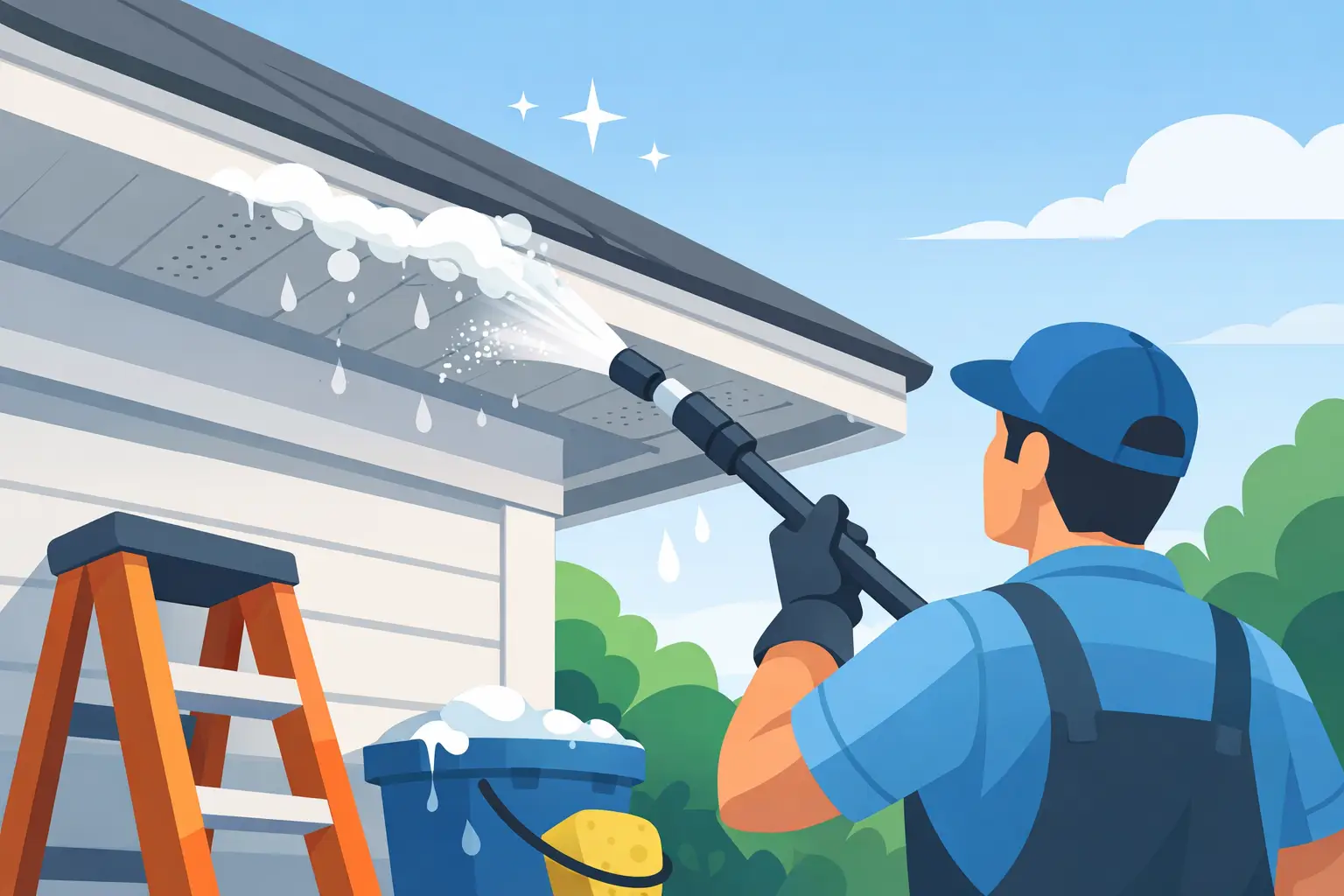
Black streaks on white soffits can make an otherwise well-kept home look neglected. Knowing how to clean house soffits properly removes dirt, pollen, cobwebs, and mildew without forcing water into the roofline or damaging the material underneath.
Soffits are the finished panels beneath the edge of the roof. They close the gap between the outside wall and the fascia board, helping keep birds, insects, and weather out of the roof space. Many also contain ventilation openings, which allow air to move through the attic. That means cleaning them is not simply a cosmetic job. Done carelessly, it can block vents, loosen panels, or hide a problem that needs repair.
For light dirt, most homeowners can clean soffits safely from the ground or a properly positioned ladder. If the roofline is high, the panels are damaged, or you can see staining around gutters and fascia, it is worth having the whole area checked rather than treating it as a cleaning-only job.
What you need to clean house soffits
Start with a gentle approach. UPVC, aluminum, vinyl, painted wood, and fiber cement soffits can all be marked or damaged by aggressive chemicals and excessive pressure.
For a typical clean, use a bucket of warm water with a small amount of mild dish soap, a soft-bristle brush or microfiber mop, clean cloths, and a garden hose with a gentle spray setting. A telescopic cleaning pole can be useful on low rooflines, conservatories, and single-story extensions.
For mildew or green algae, use a suitable exterior cleaner diluted exactly as directed. Test it first in a small, less visible area. Never assume a strong bleach mix is the answer. It may discolor painted finishes, affect nearby plants, and leave streaking on older UPVC. If you do use a cleaning product, protect your eyes and hands and rinse surrounding glass, brickwork, and planting afterward.
Avoid abrasive pads, wire brushes, solvent cleaners, and high-pressure washing directly against the soffit. A pressure washer can drive water through vent holes and joints, lifting panels or sending moisture into the roof space.
Check the roofline before you start
A quick inspection saves time and can prevent a more expensive repair later. Walk around the property and look for sagging gutters, water marks, peeling paint, loose soffit panels, gaps at the eaves, or staining concentrated beneath gutter joints.
Brown marks or black lines on soffits are not always surface grime. They may point to overflowing gutters, a leaking joint, a blocked downspout, or water tracking behind the gutter. Cleaning the visible stain without dealing with the cause means it will usually return.
Also look for signs of pests. Wasps, birds, squirrels, and insects can enter through cracked soffits or open eaves. Do not block a vent or seal a hole until you are confident there is no active nesting issue. Ventilation is a necessary part of a healthy roof space, especially in homes with insulated attics.
The safest way to wash soffits
Choose a dry, mild day. Cleaning products dry too quickly in strong sun, which can leave marks, while wet or windy conditions make ladder work unnecessarily risky.
Begin by removing loose cobwebs, dust, and leaves with a soft dry brush. This makes the wash water cleaner and helps you see cracks, failed seals, and damaged vents more clearly.
Mix your mild cleaning solution in a bucket. Dip the brush or microfiber mop into the water, then wring it out so it is damp rather than dripping. Work in manageable sections, starting at one end of the house and moving steadily along the roofline.
Use light pressure and short strokes. The aim is to lift surface dirt, not scrub hard enough to flex the soffit boards. Pay attention to the areas nearest the gutter, where grime and overflow marks tend to collect. If dirt is stubborn, let the solution sit briefly before wiping again rather than reaching for a harsher tool.
Rinse with a low-pressure spray angled outward and downward. Do not spray upward into vent slots, seams, or the gap behind the gutter. A gentle rinse should remove soap residue without soaking the eaves.
Finally, wipe any remaining drips from windows, fascia, and exterior walls. Step back and inspect the finish before packing away. A patchy result often means the soffit was cleaned in direct sun or the wash water became too dirty, not that the material needs more force.
Cleaning mildew, algae, and stubborn staining
Green growth and black mildew are common on shaded sides of a home, beneath trees, and around conservatories. These marks need a little more care because the cleaning method depends on the surface and the reason moisture is collecting there.
Apply a diluted exterior cleaner to a cool, pre-wetted surface using a cloth, sponge, or low-pressure sprayer. Keep it away from open vents where possible. Allow it to work for the recommended time, then agitate gently with a soft brush and rinse thoroughly.
If mildew returns quickly, look above it. Overflowing gutters, blocked downspouts, moss-covered roof edges, and leaking gutter corners all keep the soffit damp. Regular roofline cleaning is better value than repeatedly treating the same stain every few months.
Older painted timber soffits need particular caution. If paint flakes while you clean, the board may be weathered or damp behind the coating. Let the area dry fully before deciding whether it needs preparation and repainting. Paint is not a repair for rotten timber, loose boards, or water getting behind the fascia.
Ladder safety matters more than a clean finish
Most accidents during soffit cleaning happen because people overreach. If you cannot comfortably reach a section, climb down and move the ladder. Do not lean sideways, stand on the top steps, or rest a ladder against a plastic gutter that may crack or shift.
Set an extension ladder on firm, level ground and have another adult nearby if possible. Use a ladder stabilizer where appropriate so the ladder bears on the wall rather than the gutter. Keep both hands free while climbing, and raise tools with a bucket or tool belt rather than carrying them.
For two-story homes, steep ground, rooflines above conservatories, or awkward side passages, hiring a professional is often the safer choice. Proper exterior maintenance equipment and an experienced eye can make a significant difference, particularly when cleaning reveals loose gutter brackets, broken seals, or damaged soffit sections.
When cleaning is not enough
Call for a roofline inspection if you notice recurring stains, sagging gutters, visible gaps, water entering the home, or soffits that feel soft, bowed, or loose. These are signs that cleaning alone may only cover up a guttering or fascia issue.
A proper service should look beyond the surface. Gutters should be cleared, outlets and downspouts checked for blockages, joints inspected for leaks, and the fascia and soffit condition assessed. This is especially useful after heavy storms, during fall leaf drop, or before putting a property on the market.
Steve’s Gutters approaches roofline work as a complete maintenance job, not a quick cosmetic wash. Where needed, cleaning can be combined with gutter clearing, repair work, or replacement of worn fascia and soffit materials so the same problem does not keep coming back.
How often should soffits be cleaned?
Most homes benefit from a gentle soffit clean once a year, usually alongside gutter maintenance. Properties near busy roads, large trees, open farmland, or shaded woodland may need attention more often because traffic film, pollen, algae, and leaf debris build up faster.
A spring clean is useful for removing winter grime and checking storm damage. A second inspection in late fall is sensible if nearby trees drop heavy leaf cover. The right schedule depends on the property, but waiting until staining is severe makes the job harder and increases the chance that an underlying leak will be missed.
Clean soffits should look cared for, but the real benefit is catching small roofline faults before water finds its way behind the boards. If a stain, gap, or loose gutter keeps drawing your eye, treat it as a reason to inspect the cause, not just another spot to wash.
Recommended Posts
Driveway Jet Washing Benefits for Your Property
October 10, 2026

Best Signs of Failing Soffits on Your Home
October 8, 2026

Are Gutter Repairs Insured? What Homeowners Need
October 6, 2026