

Commercial Rainwater Drainage Guide for Buildings

by
A blocked roof drain can put thousands of gallons of water in the wrong place during one heavy storm. On a commercial property, that can mean ponding water on a flat roof, flooded entrances, damaged ceilings, unsafe walkways, and disruption for tenants or staff. This commercial rainwater drainage guide explains what property managers and building owners should check, maintain, and repair before a small drainage issue becomes an expensive water damage claim.
Why Commercial Rainwater Drainage Needs Regular Attention
Commercial drainage systems deal with large roof areas, multiple outlets, long downpipes, internal drains, and underground connections. That makes them very different from a typical house gutter. One blocked outlet or poorly pitched gutter run may affect a large section of the building quickly.
The risk is not limited to obvious overflows. Water that cannot leave the roof correctly may find its way behind fascia boards, into wall cavities, through roof seams, or along pipework inside the building. Over time, this can damage insulation, finishes, electrical systems, and structural materials.
A system may also appear to work in light rain but fail during a short, intense downpour. That is why inspections should focus on drainage capacity as well as visible debris. A gutter that is partly clear is not necessarily ready for heavy rainfall.
Know Where Water Is Meant to Go
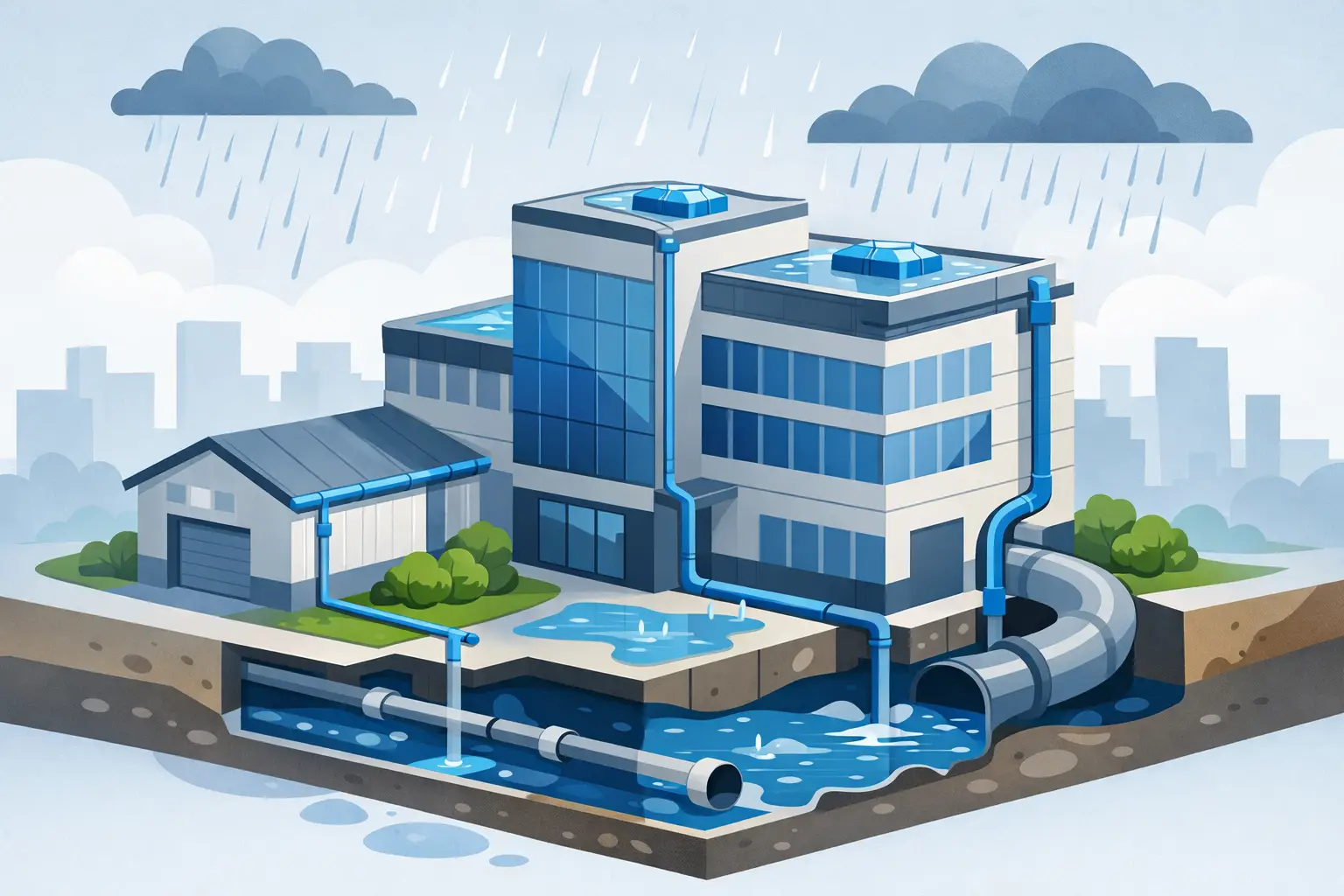
Before arranging cleaning or repairs, establish the route rainwater takes from the roof to a safe discharge point. A proper inspection follows the full run rather than stopping at the gutter line.
On many commercial buildings, water travels from roof slopes or flat roof outlets into gutters, hopper heads, scuppers, downpipes, surface drains, soakaways, or a legal stormwater connection. Larger sites may have catch basins, attenuation tanks, pumps, or detention areas designed to slow runoff before it enters the wider drainage system.
Each part depends on the next. Clearing a roof gutter will not solve the problem if the downpipe is blocked underground. Equally, replacing a leaking downpipe may not help if water is backing up from a blocked gully at ground level.
External Gutters and Downpipes
External gutters are straightforward to inspect, but they still need more than a quick vacuum clean. Look for standing water, vegetation, loose brackets, open joints, cracked sections, corrosion, and signs that water has been running down the face of the building.
Downpipes should be checked from top to bottom. A blockage may sit at a bend, shoe, hopper, or underground connection, where it cannot be seen from a ladder. Overflow marks, damp staining, or water spilling from joints during rain are all warning signs.
Flat Roof Outlets and Internal Drains
Flat roofs often use outlet drains, scuppers, internal pipework, or a combination of systems. Leaves, roofing debris, moss, and nesting material can gather around drain guards and reduce flow. If water remains on a flat roof long after rain has stopped, do not treat it as normal without checking the cause.
Persistent ponding may indicate blocked outlets, poor falls in the roof surface, undersized drainage, or a failed internal pipe. Internal drain problems need prompt attention because leaks may remain hidden until water reaches ceilings or occupied areas.
Common Problems That Cause Commercial Drainage Failures
Debris is the usual starting point, particularly around trees. Leaves, twigs, moss, litter, and roofing granules collect in gutters and roof outlets. Once material reaches a downpipe, it can compact and become much harder to remove.
However, cleaning alone does not address every fault. Age, movement, poor installation, and storm damage can all affect how water drains. The most common issues include:
- Gutters that have sagged or lost their correct fall toward the outlet.
- Loose, damaged, or corroded brackets that allow sections to pull away from the building.
- Cracked joints, failed seals, and split pipework that leak onto walls and walkways.
- Blocked gullies, drains, or underground connections at the base of downpipes.
- Roof outlets with damaged guards or inadequate emergency overflow arrangements.
- Gutters or downpipes that are too small for the roof area and local rainfall conditions.
It depends on the building whether repair or replacement is the sensible option. A sound aluminum gutter with one failed joint may only need a targeted repair. A heavily corroded system with recurring leaks and poor support may cost more to keep patching than to replace properly.
A Commercial Rainwater Drainage Guide to Inspections
A planned inspection schedule is more reliable and less costly than reacting after a leak. For most commercial properties, gutters, roof drains, and downpipes should be inspected at least twice a year, usually in spring and late fall. Buildings near mature trees, industrial areas, or busy roads may need more frequent checks.
An inspection should include the roof drainage points, gutter runs, joints, brackets, hopper heads, downpipes, gully connections, and visible ground drainage. The contractor should also look for water staining on walls, damaged fascia, deteriorating soffits, and evidence of previous overflow.
After severe wind or heavy rain, a quick visual check is worthwhile. Storms can shift gutter brackets, fill outlets with debris, damage drain guards, or bring branches onto roofs. If there is a known weak point, it is better to deal with it before the next period of bad weather.
For larger buildings, keep a simple maintenance record. Note the inspection date, areas cleaned, defects found, repairs completed, and any sections that need monitoring. This helps property managers budget for replacement work and provides a clear history if a water damage issue is later investigated.
Cleaning Is Only One Part of the Job
A clean gutter is useful, but it is not proof that the system works. Water needs to be tested through the outlets and downpipes where practical. This confirms that it is moving freely and not escaping through a hidden split or blocked connection.
Professional cleaning should remove debris by hand or with suitable equipment, bag it for proper disposal, and leave the site tidy. The work should then include a close look at the condition of the guttering and roofline. This is where experienced repair capability matters. A contractor who only removes debris may leave behind the loose bracket, cracked joint, or blocked downpipe that caused the issue in the first place.
Do not ask untrained staff to access roofs, gutters, or high-level drainage points. Commercial roof work involves fall risks, fragile surfaces, overhead hazards, and the possibility of damaging roof coverings. Use properly insured professionals with the right access equipment and a safe method of work.
When Drainage Design Needs Review
Some drainage problems return because the system was never designed for the way the building is now used. An extension may have increased roof area. A new canopy may discharge water into an existing gutter. Changes to paving or landscaping may have altered where surface water collects.
Recurring overflow in otherwise clean gutters can point to insufficient capacity, inadequate outlets, or poor gutter pitch. Water escaping near entrances may require changes to downpipe discharge, grading, or surface drainage. These are not always simple maintenance jobs, and the right solution may involve a qualified roofing, guttering, or drainage specialist assessing the whole route.
Local building requirements and stormwater rules vary, especially where work connects to public drains or changes runoff on a site. Major alterations should be planned correctly rather than treated as an afterthought. The cheapest short-term fix can create a larger compliance or flooding problem later.
Warning Signs That Should Not Wait
Active leaks inside the building, water pouring over gutter edges, bubbling paint, damp patches, standing water on a roof, or flooded pedestrian areas all need prompt attention. So do loose downpipes, visibly detached gutters, and water discharging close to foundations.
If water is near electrical equipment, ceiling tiles are sagging, or a roof is holding a significant volume of water, keep people away from the affected area and arrange urgent professional assessment. Do not assume the water will drain away on its own.
A well-maintained commercial drainage system is rarely noticed, which is exactly how it should be. Give it regular attention, repair faults while they are small, and make sure every drop has a clear route away from the building before the next heavy storm tests it.
Recommended Posts
Driveway Jet Washing Benefits for Your Property
October 10, 2026

Best Signs of Failing Soffits on Your Home
October 8, 2026

Are Gutter Repairs Insured? What Homeowners Need
October 6, 2026